
- Stone12
- Reports3
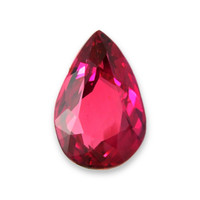
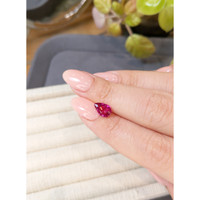
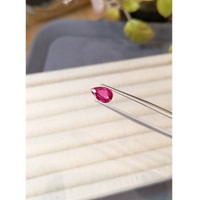
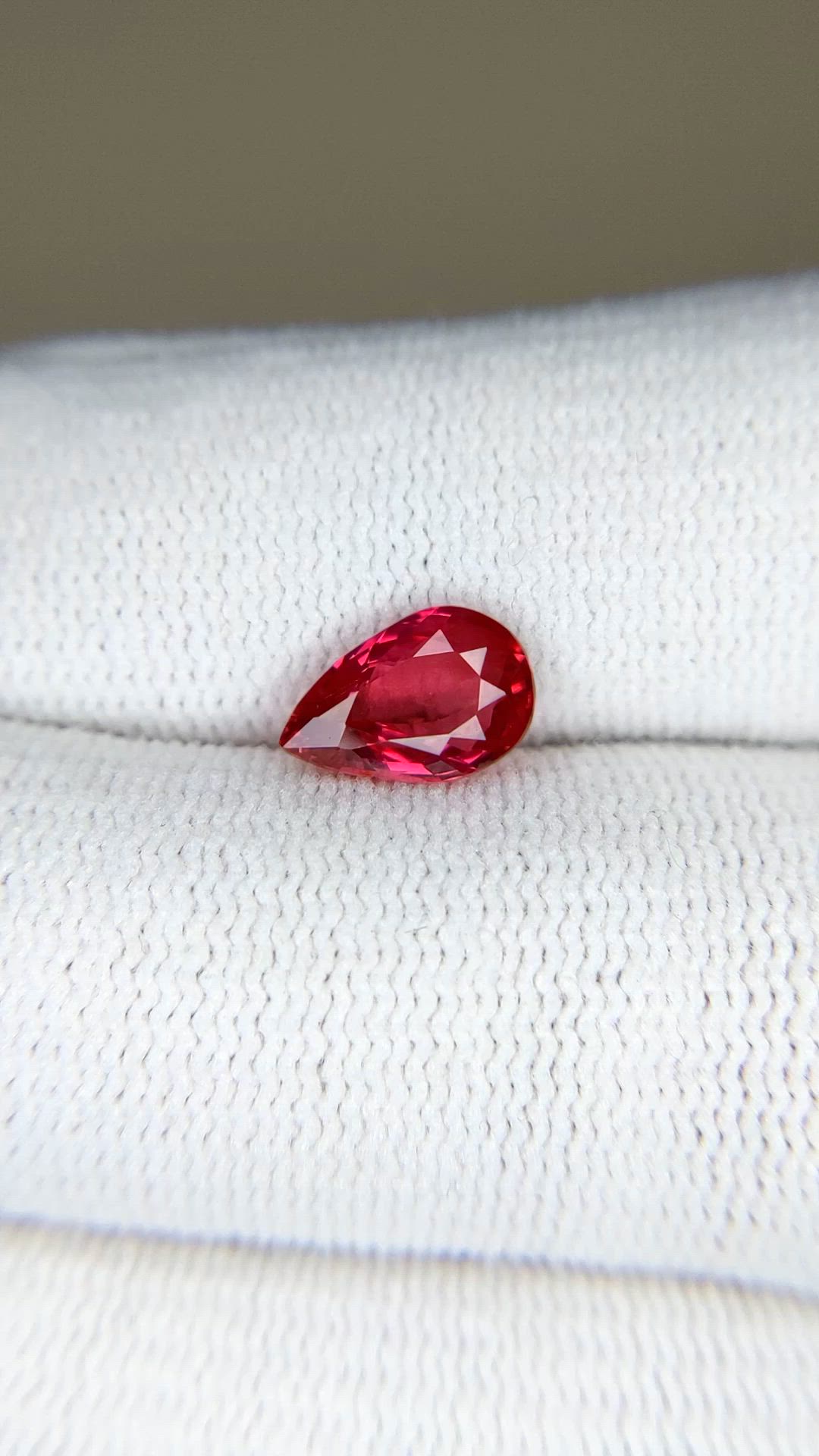
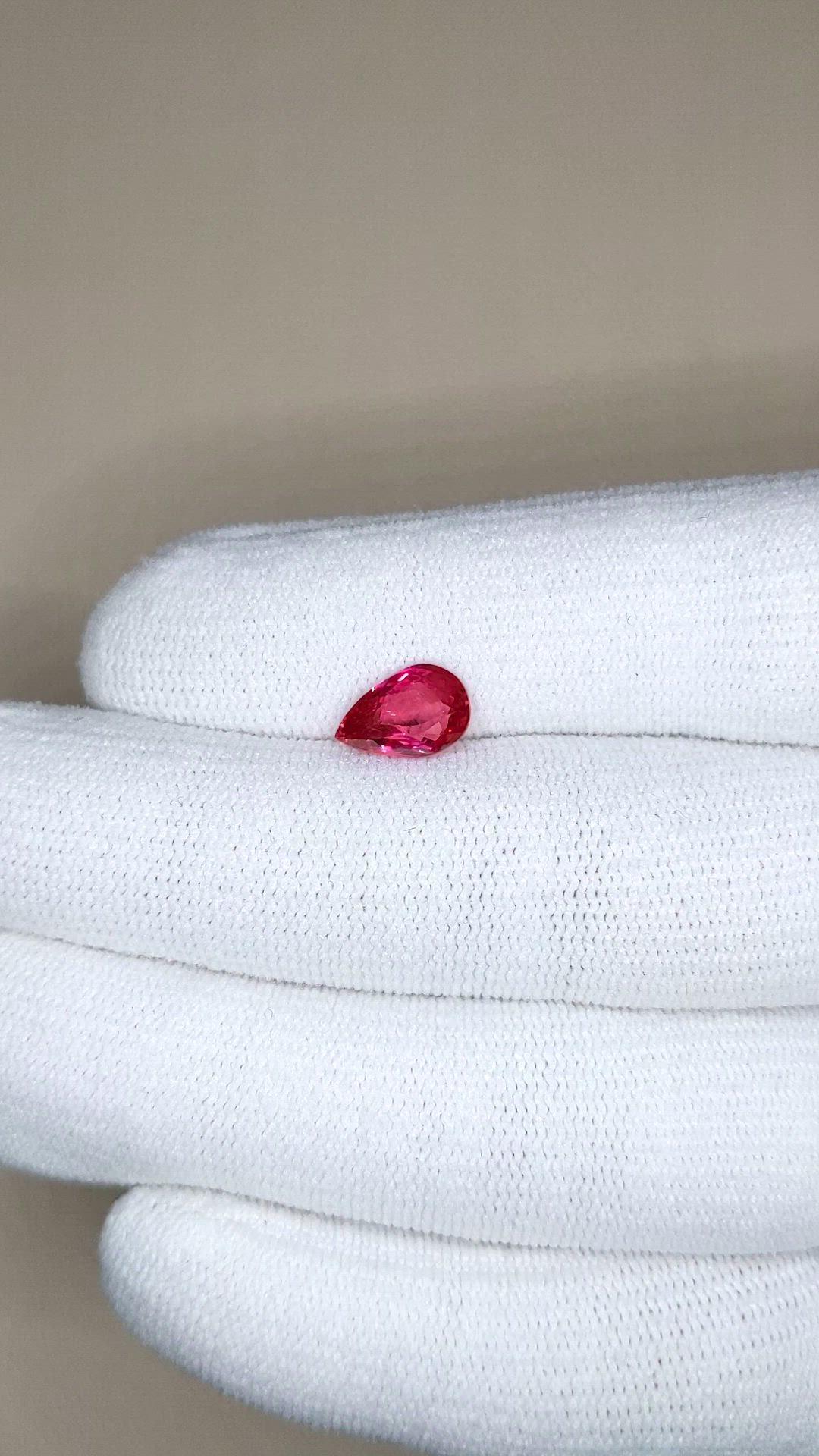
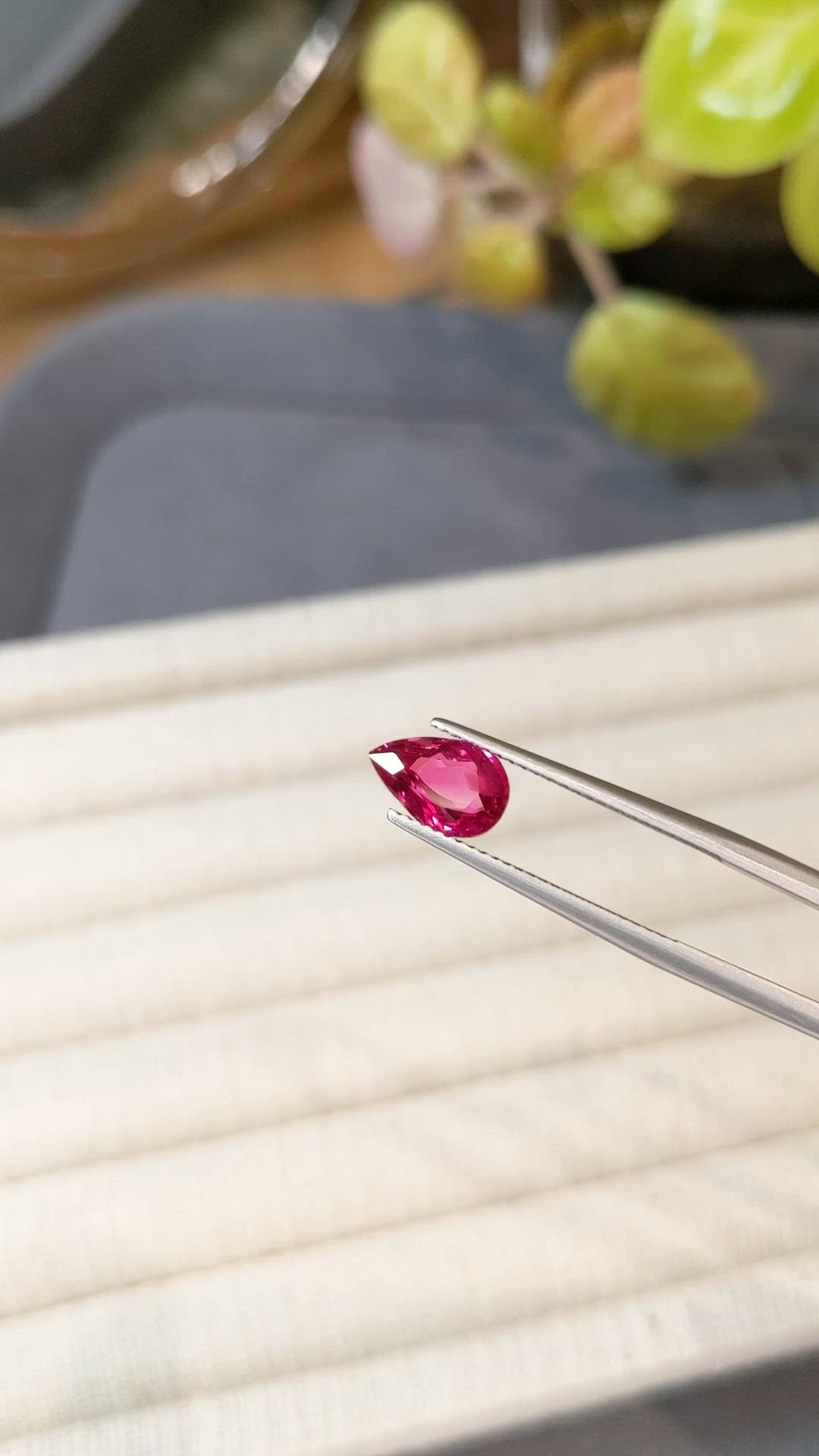
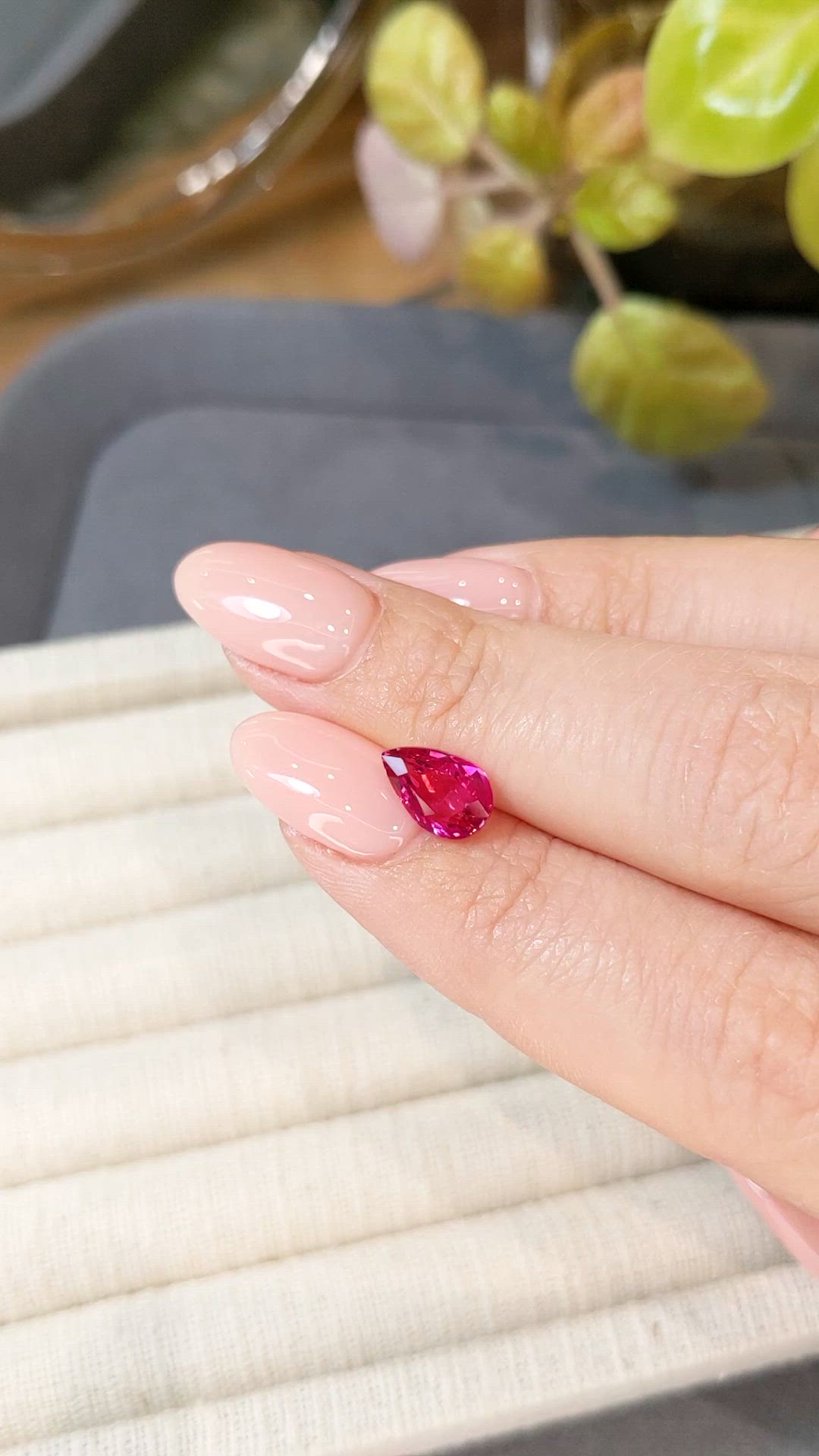

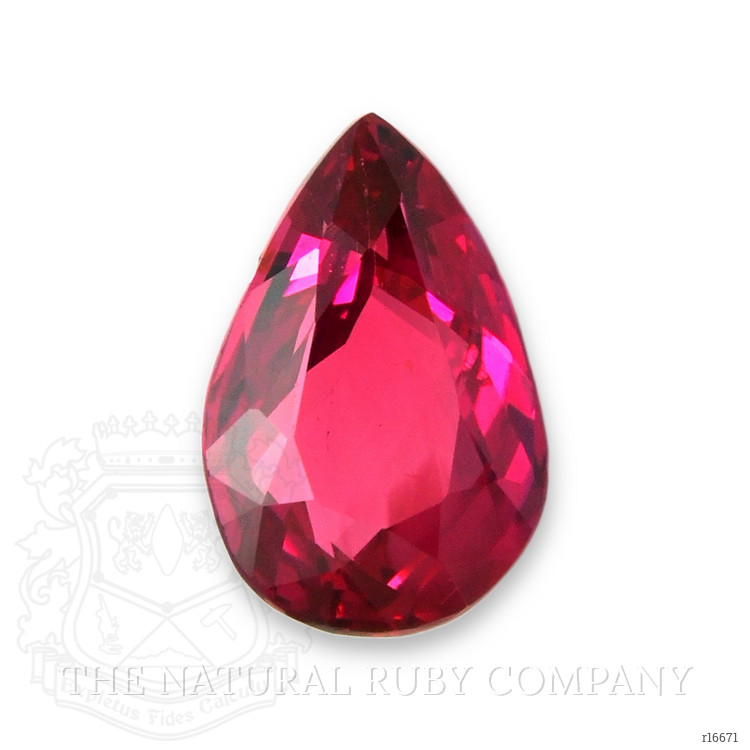
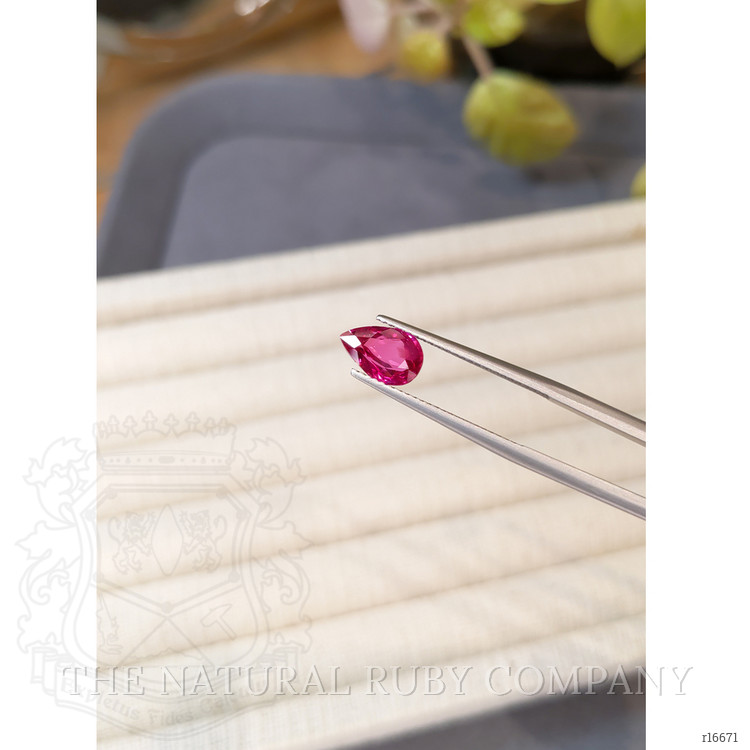

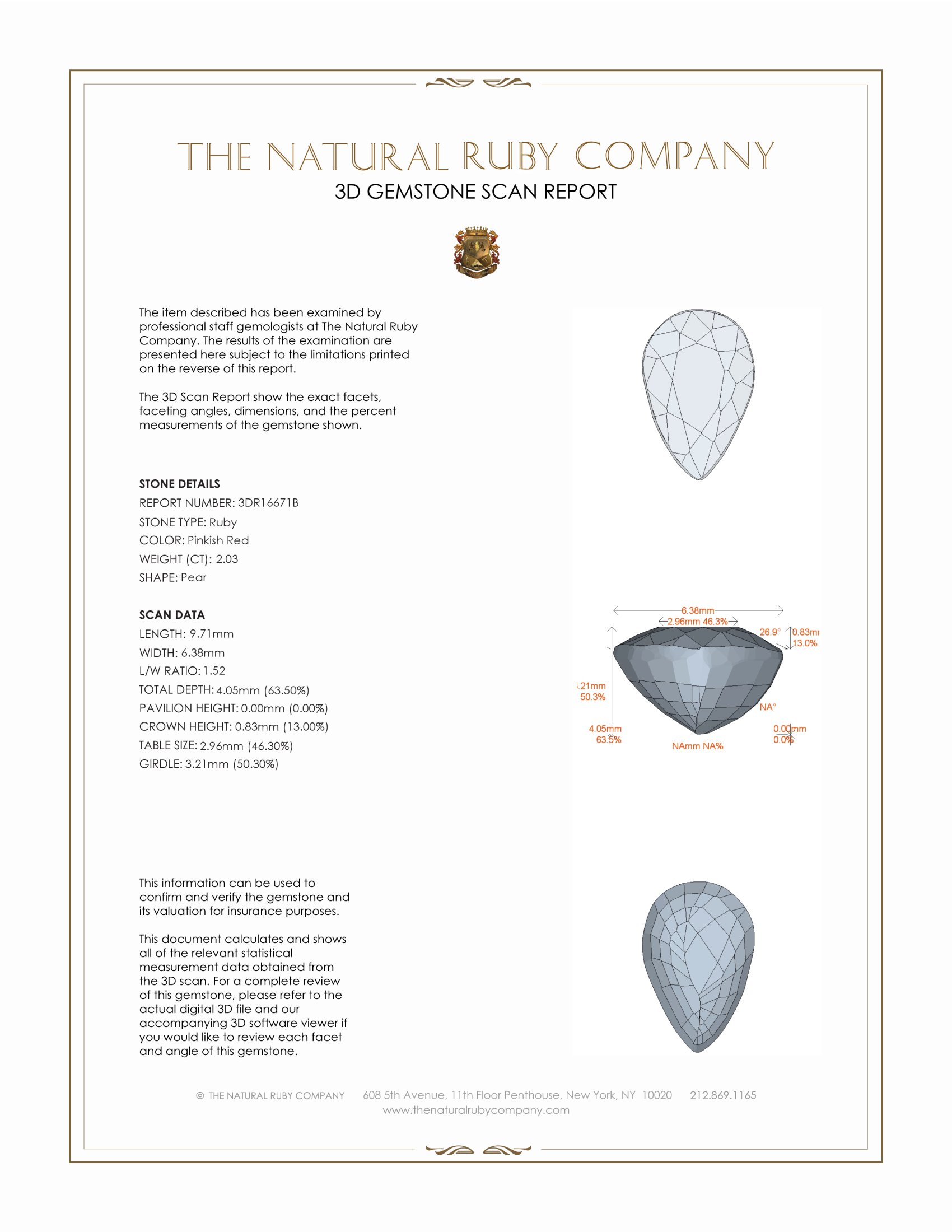
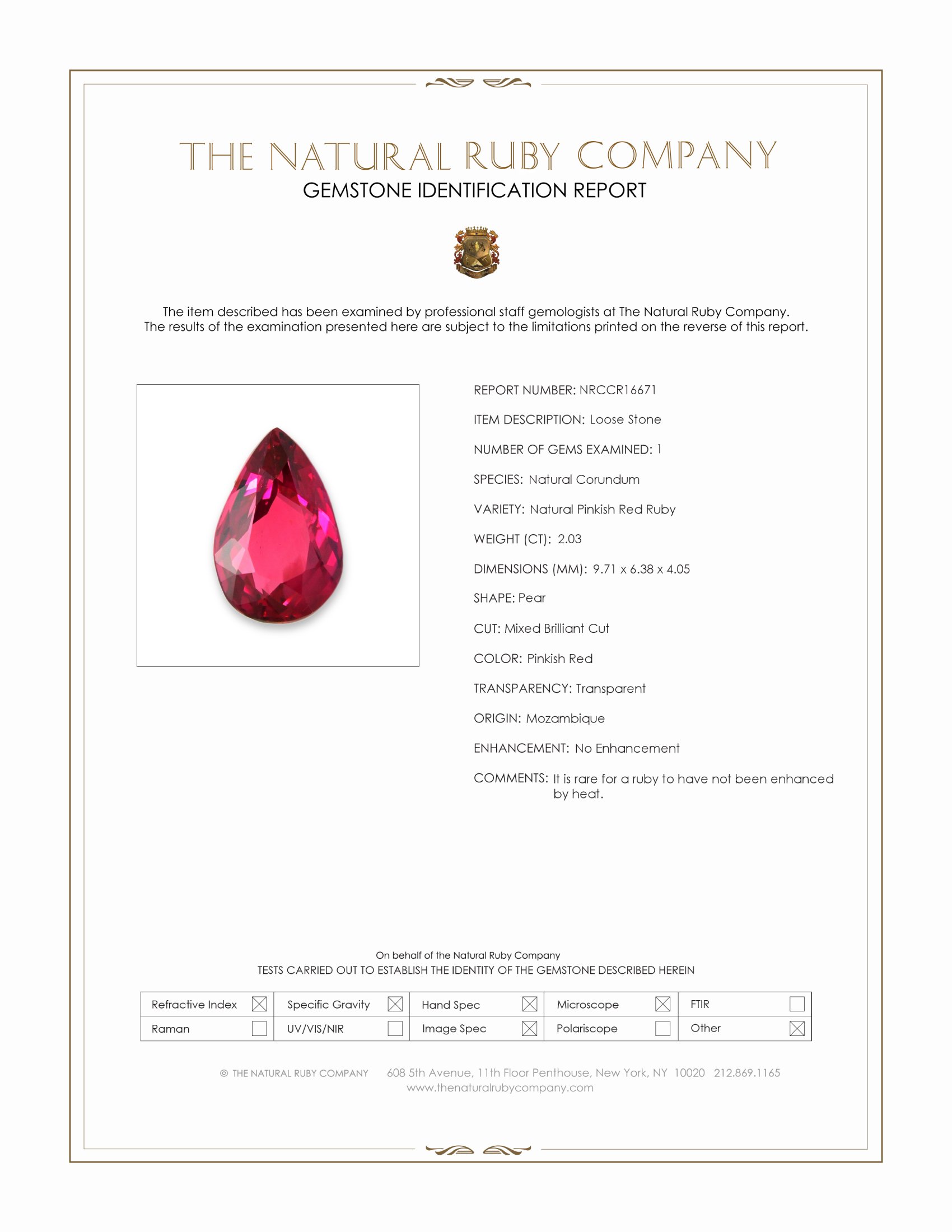
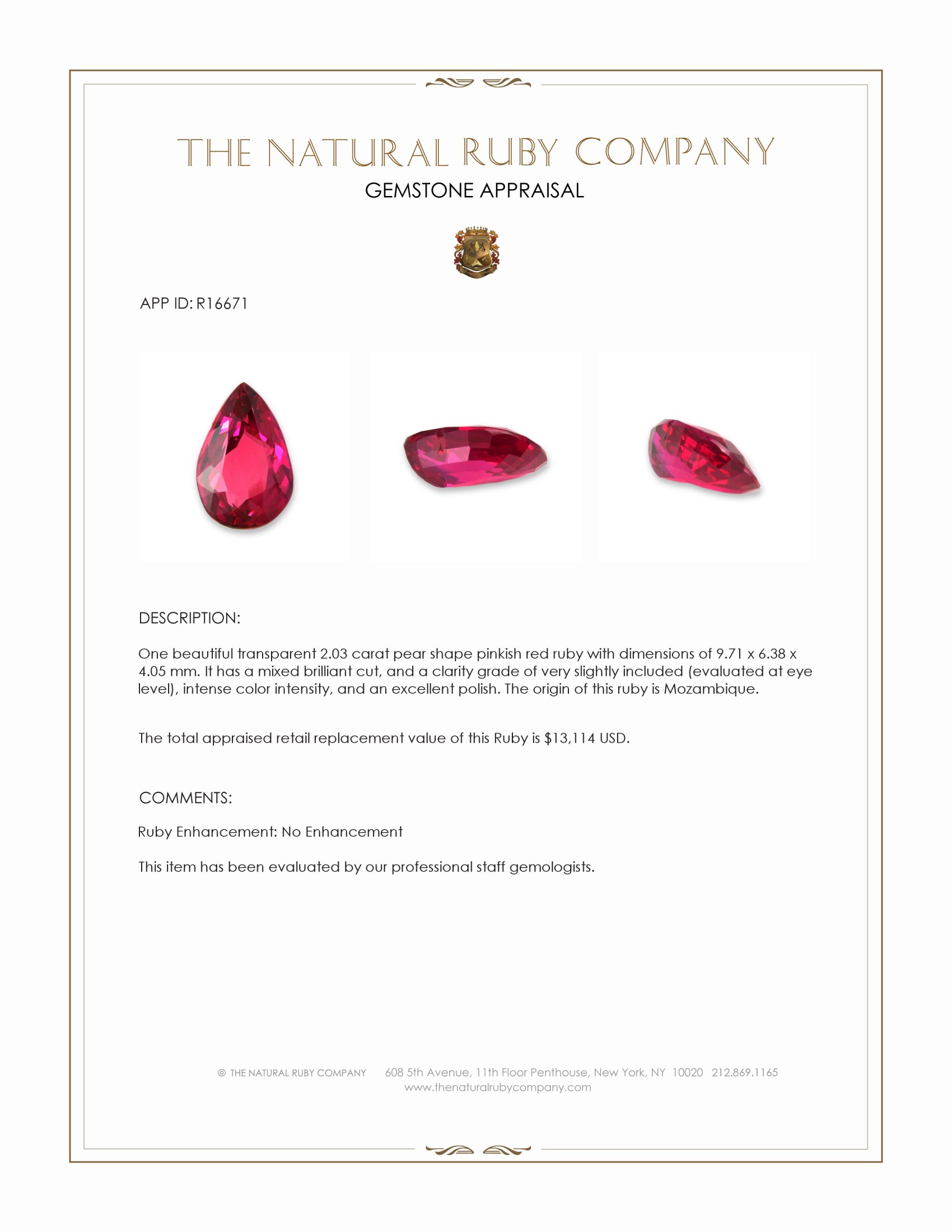
2.03 Ct. Pinkish Red Ruby from Mozambique
This loose stone ships by Nov 14
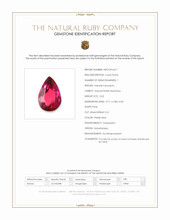
Item ID: | R16671 |
|---|---|
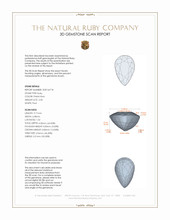
Dimensions (MM): help | Length: 9.71 Width: 6.38 Height: 4.05 |
Weight: | 2.03 Ct. |
Color: help | Pinkish Red |
Color intensity: help | Intense |
Clarity: help | Very Slightly Included |
Shape: help | Pear |
Cut: | Mixed Brilliant Cut |
Cutting style: | Faceted |
Enhancements: help | No Enhancement |
Origin: help | Mozambique |
Per carat price: help | $6,460 |
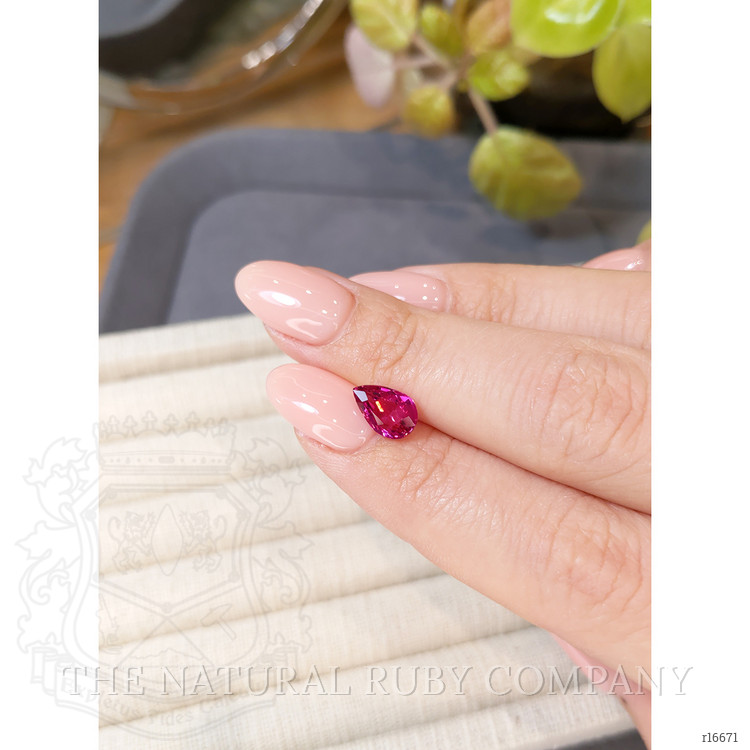
This parcel is a single, transparent pear shaped ruby weighing 2.03 carats, a weight class that places it in the upper echelon of collectible natural rubies where both visual presence and market value increase markedly, and where proportions and material quality must be exact to sustain premium grading. The measured dimensions are 9.71 by 6.38 by 4.05 millimeters, yielding a length to width ratio of approximately 1.52, which sits comfortably within the classic pear proportions that preserve elegance without elongating the pavilion at the expense of light return. The measured depth of 4.05 millimeters corresponds to a depth percentage of roughly 50.3 percent when referenced to the mean diameter, a depth that is well balanced for a mixed brilliant pear, producing strong internal reflection while avoiding an overly deep pavilion that would reduce apparent face up color intensity. At 2.03 carats, this stone delivers substantive visual weight for a single center stone in high end settings, and because it is untreated, the carat weight directly correlates to rarity and premium valuation, as untreated material of this size and vivid color is significantly less common than treated equivalents.
The cutting style is faceted, executed as a mixed brilliant cut where the crown utilizes brilliant-style facets to maximize scintillation and the pavilion is organized to combine both step and kite facet geometry for controlled light return and color saturation. In this specimen, the cutter has maintained a moderate table and a carefully articulated girdle profile to balance dispersion and face up color, and the facet junctions exhibit crisp meets and accurately placed facet planes, contributing to an excellent polish that enhances both luster and optical clarity. The pear outline demonstrates good symmetry, with the point and rounded end proportioned to minimize the common pear shape bow tie, and the pavilion angles are tuned to return light to the viewer rather than trap it, which is particularly important in a mixed cut where crown brilliance and pavilion depth must be reconciled. The mixed brilliant approach is deliberately chosen for high saturation rubies, because the combination of smaller crown facets and graduated pavilion facets preserves the body color while still producing lively scintillation under varied lighting conditions.
Clarity is graded as very slightly included when evaluated at eye level, which in trade terms indicates minimal internal features that do not detract from transparency or light performance to the naked eye. These minute inclusions can be diagnostic of natural formation and, when shallow and well-positioned, may actually assist cutters in orienting the piece to maximize color zoning and reduce extinction. The color is described as pinkish red with an intense color intensity, indicating a saturation that is strong without entering into over-dark territory; the tone sits within the desirable medium to medium dark band for ruby, where chroma is high enough to produce vibrance while retaining clarity and brilliance. Origin is Mozambique, a source known in recent decades for producing vivid, highly saturated rubies that can display a pure red to slightly purplish red hue driven primarily by chromium chromophores with variable iron content affecting the final tone, and the stone is confirmed to have no enhancement. The absence of heat or other enhancements is a critical determinant of value, and for a 2.03 carat ruby with intense, even color and very slight eye-visible inclusions, the lack of treatment places this example into a scarce category often sought by collectors and connoisseurs.
From a practical setting and presentation perspective, the stone’s dimensions and cut characteristics recommend a mounting that preserves the pavilion clearance and allows the table and crown to interact with ambient light. A four or six prong head with a slightly raised gallery will enable light to enter from multiple angles and will showcase the mixed brilliant cut’s scintillation, while a bezel should be shallow at the pavilion girdle to avoid dampening the stone’s brilliance. Orienting the pear point towards the finger tip or downward in a pendant will influence perceived length and face up color, with northerly point placement typically emphasizing elegance and southerly orientation enhancing the visual carat weight. Given the excellent polish and well-executed proportions, setting in a warm metal will subtly complement the pinkish red tone without masking it. At The Natural Ruby Company we emphasize traceability and gemological disclosure, and we are prepared to provide the appropriate documentation and photography to accompany this ruby, along with recommendations for certification if a formal report is desired. For buyers who value untreated material, exceptional cutting craft, and a substantial 2.03 carat presence, this Mozambique pear shaped ruby represents a technically refined and rare option, and we invite inquiries about bespoke mounting options and long term care recommendations to preserve its optical performance.


Other Rubies You May Like

