- Stone15
- Reports4
-pear-ruby-2.0800-cts-r15977-1.jpg?d=200x200&v=20260123032141)
-pear-ruby-2.0800-cts-r15977-lifestyleimage-1.jpg?d=200x200&v=20260215022901)
-pear-ruby-2.0800-cts-r15977-lifestyleimage-2.jpg?d=200x200&v=20260215022901)
-pear-ruby-2.0800-cts-r15977-lifestyleimage-3.jpg?d=200x200&v=20260215022901)


-pear-ruby-2.0800-cts-r15977-1.jpg?d=750x750&s=nrc&v=20260123032141)
-pear-ruby-2.0800-cts-r15977-lifestyleimage-1.jpg?d=750x750&s=nrc&v=20260215022901)
-pear-ruby-2.0800-cts-r15977-lifestyleimage-2.jpg?d=750x750&s=nrc&v=20260215022901)
-pear-ruby-2.0800-cts-r15977-lifestyleimage-3.jpg?d=750x750&s=nrc&v=20260215022901)

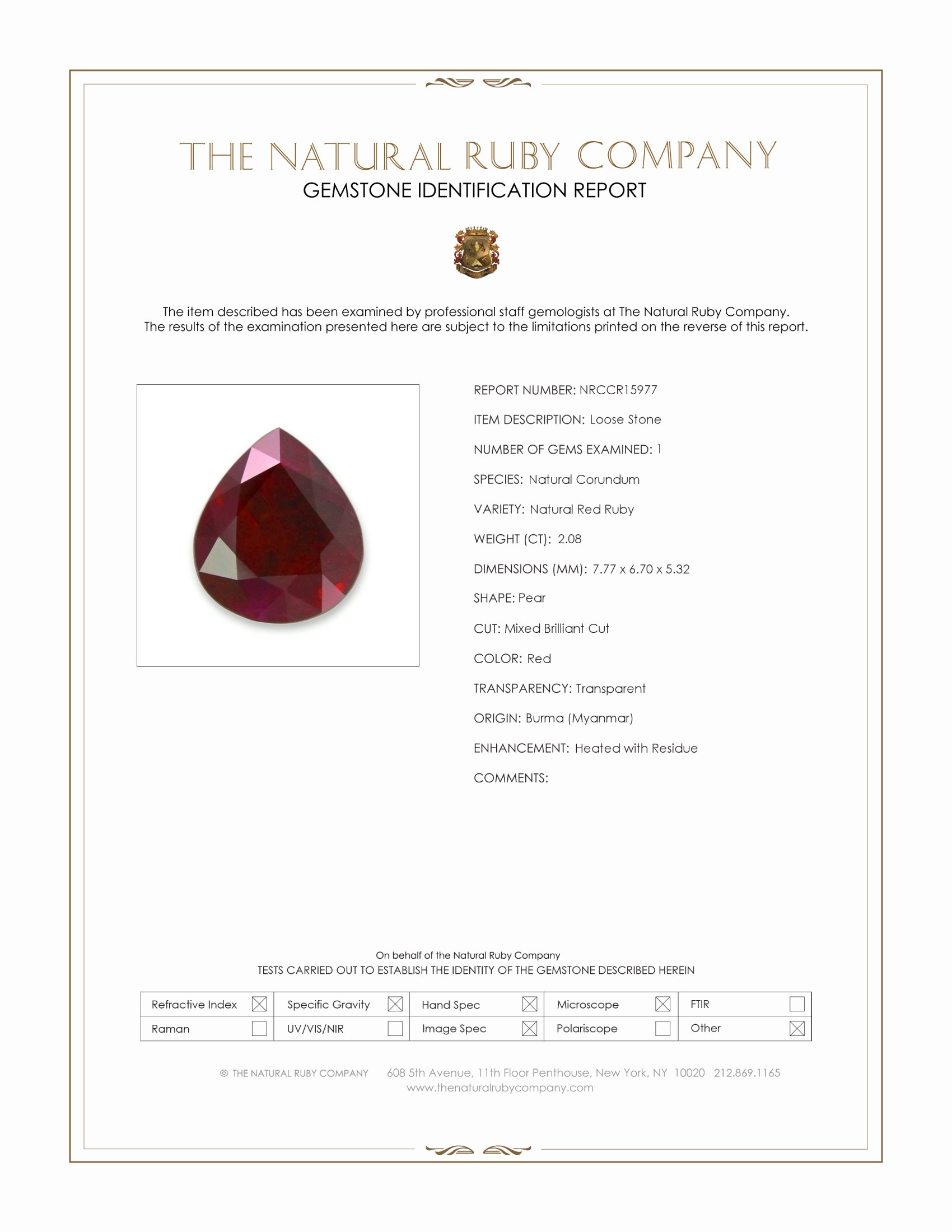
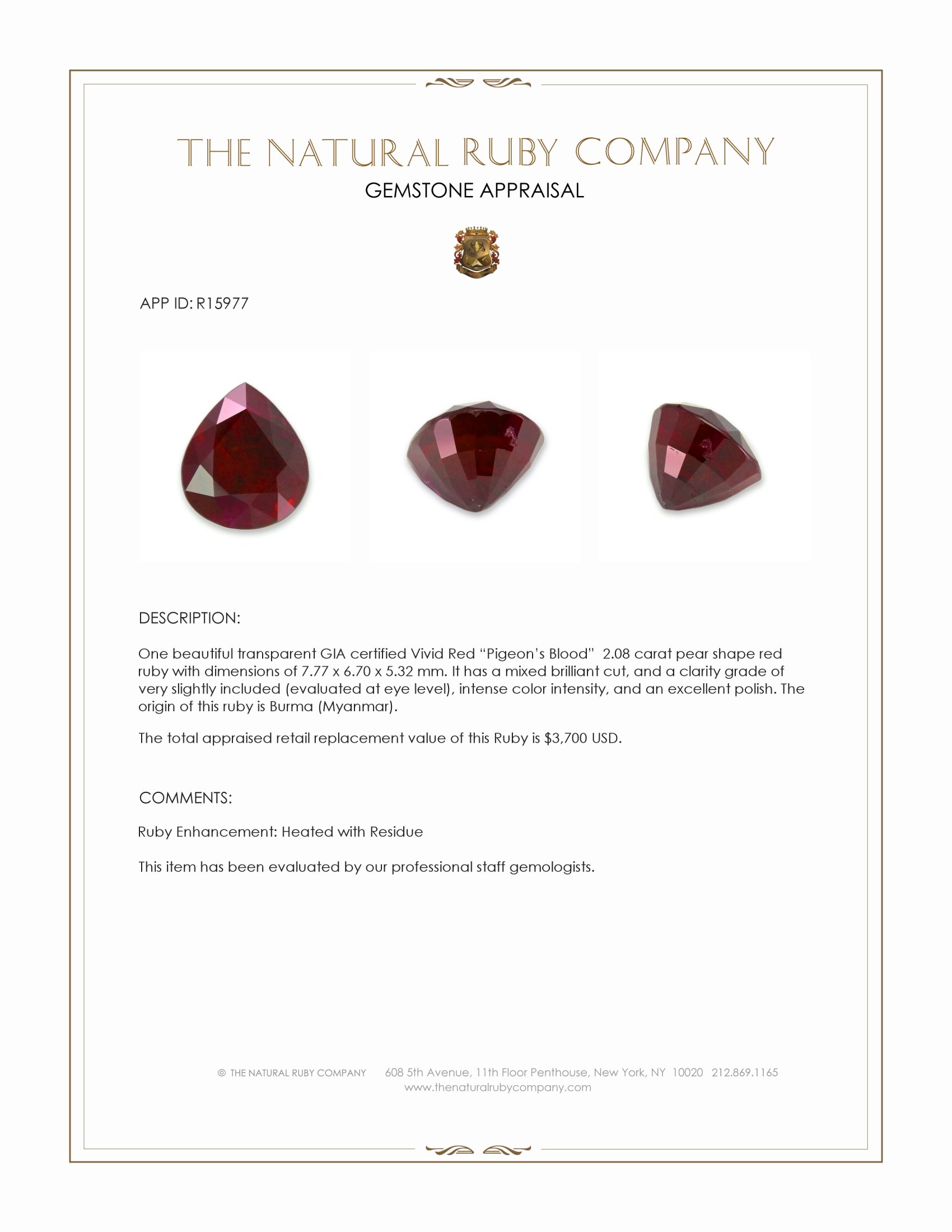
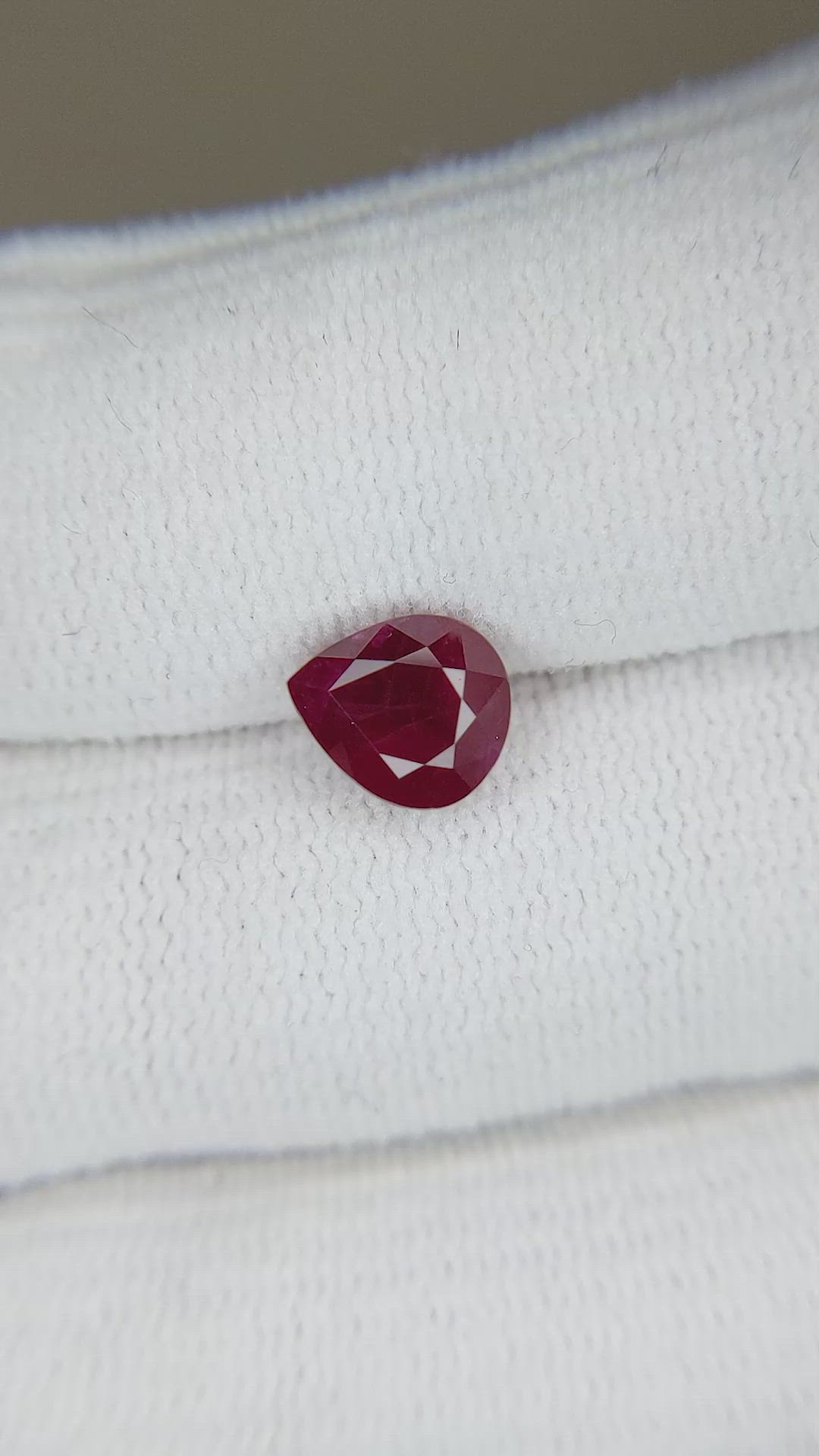
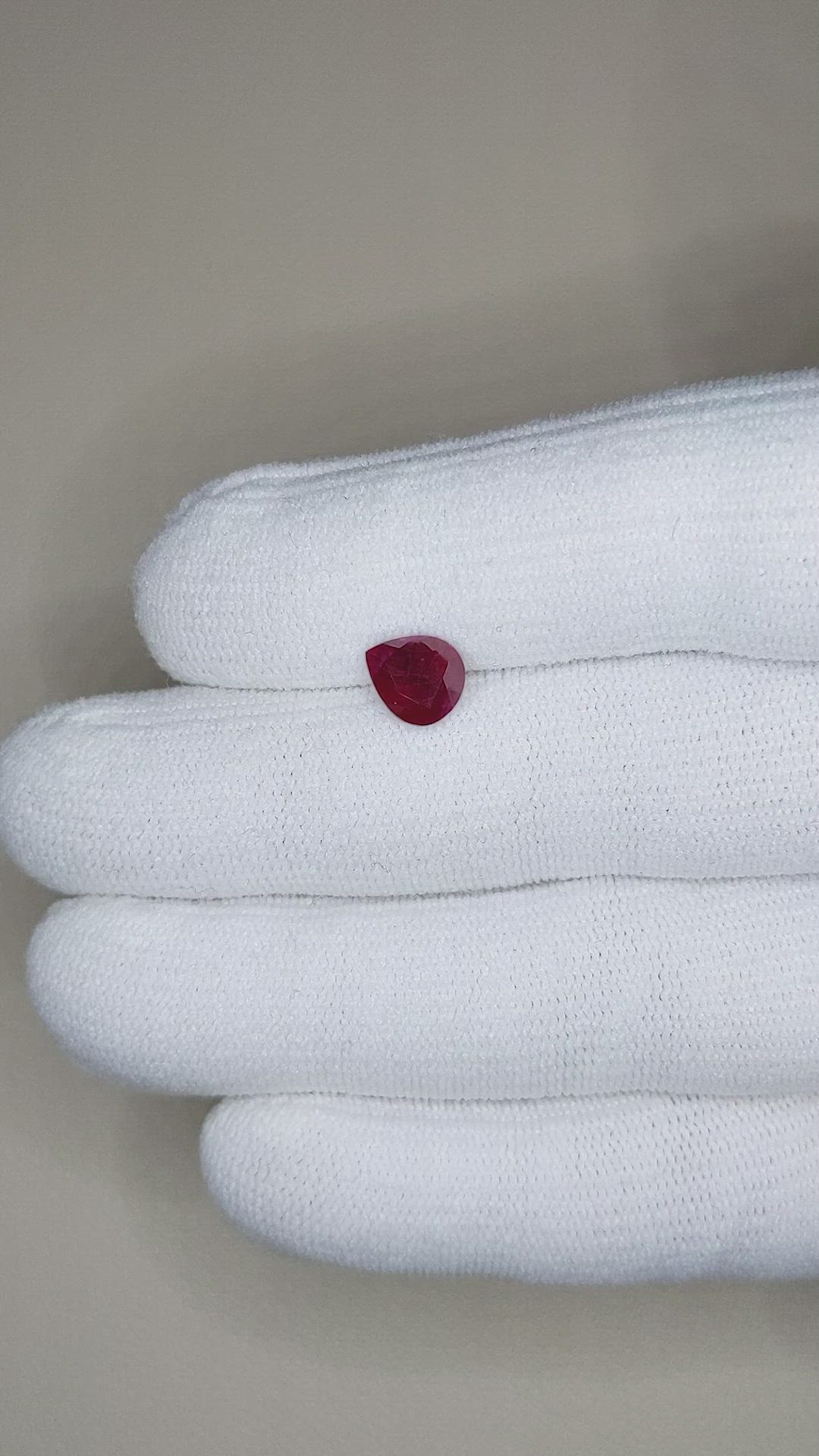
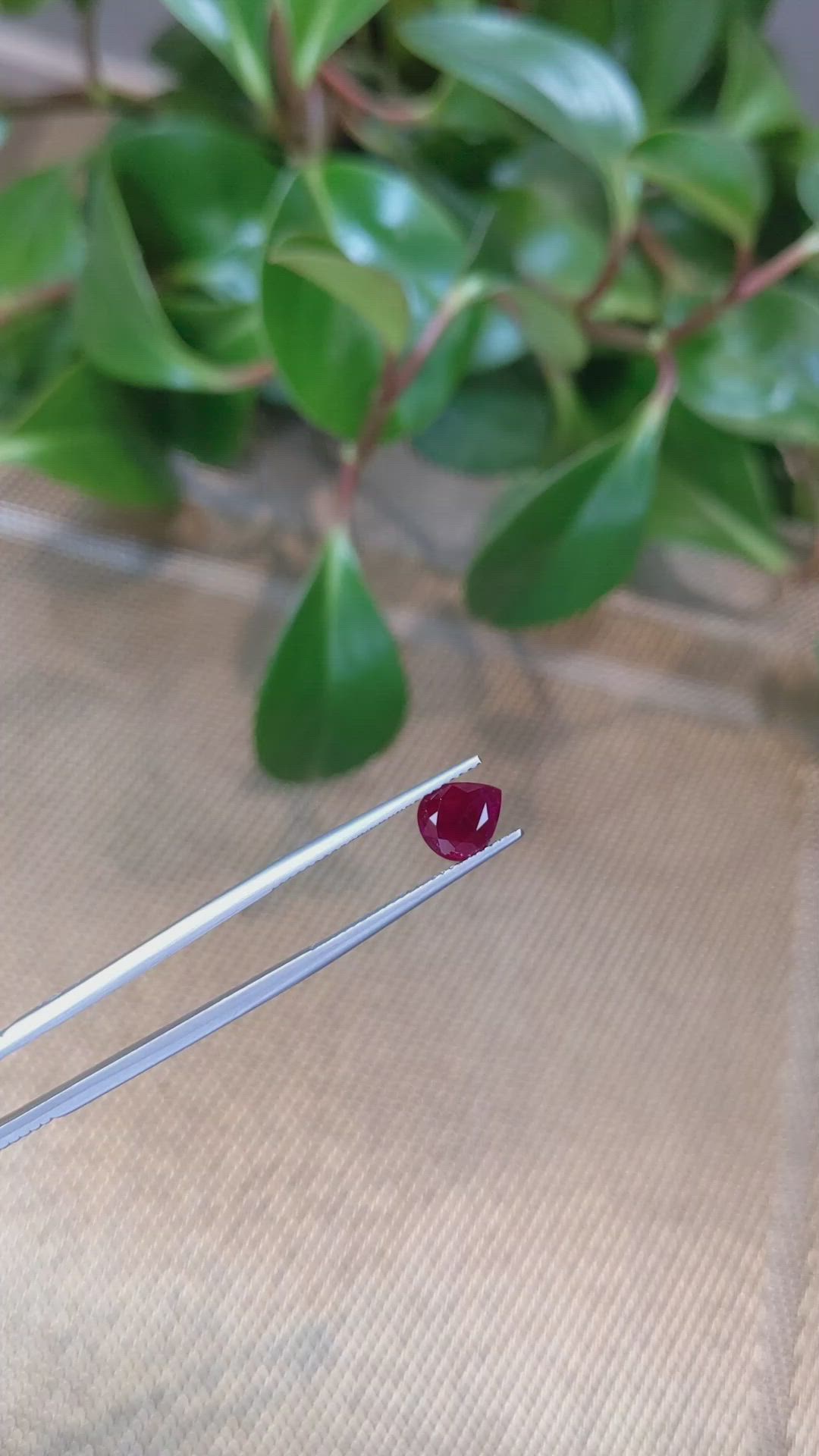
2.08 Ct. Ruby from Burma (Myanmar)
This loose stone ships by Oct 13
Item ID: | R15977 |
|---|---|
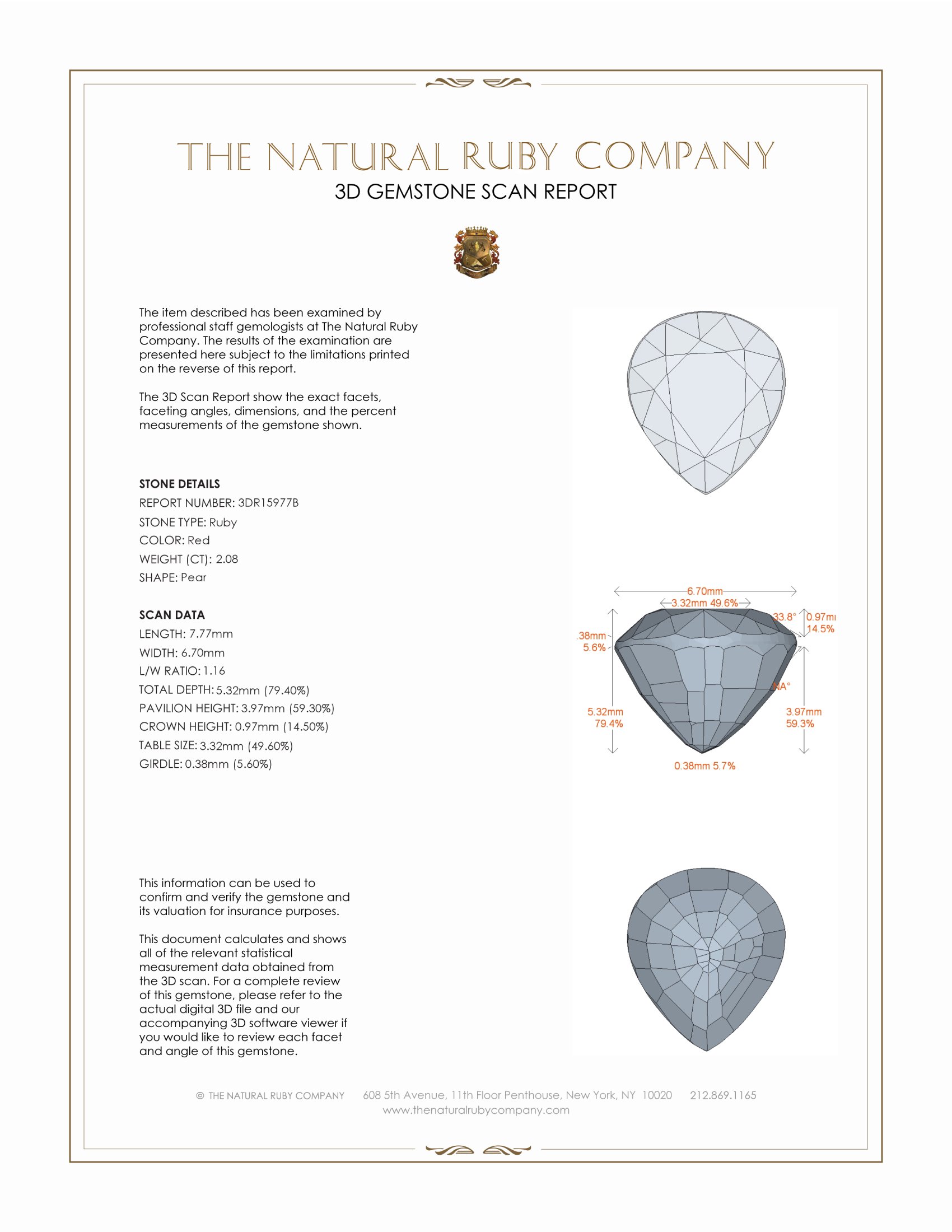
Dimensions (MM): help | Length: 7.77 Width: 6.7 Height: 5.32 |
Weight: | 2.08 Ct. |
Color: help | Red |
Color intensity: help | Intense |
Clarity: help | Very Slightly Included |
Shape: help | Pear |
Cut: | Mixed Brilliant Cut |
Cutting style: | Faceted |
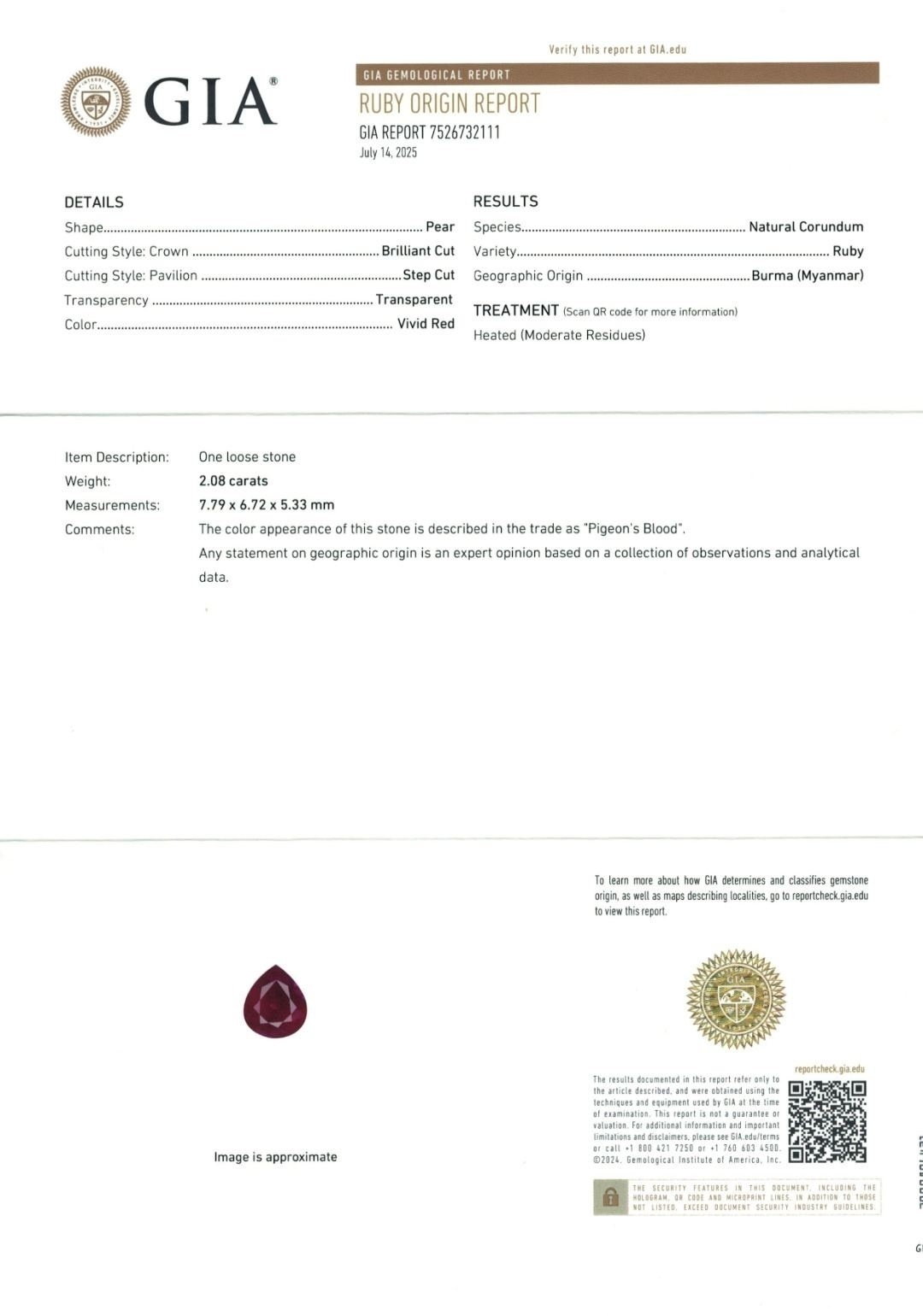
Enhancements: help | Heated with Residue |
Origin: help | Burma (Myanmar) |
Per carat price: help | $1,779 |
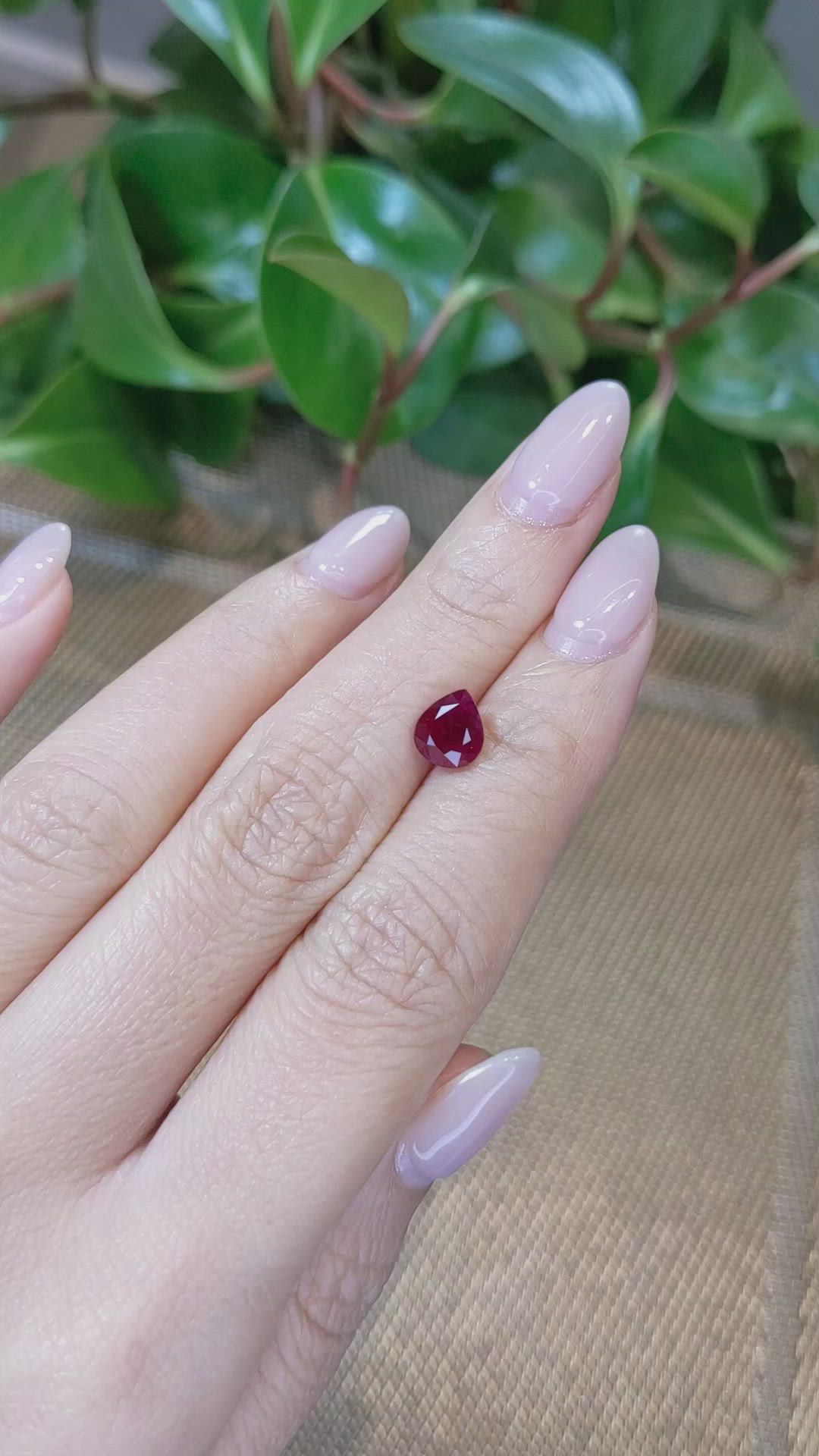
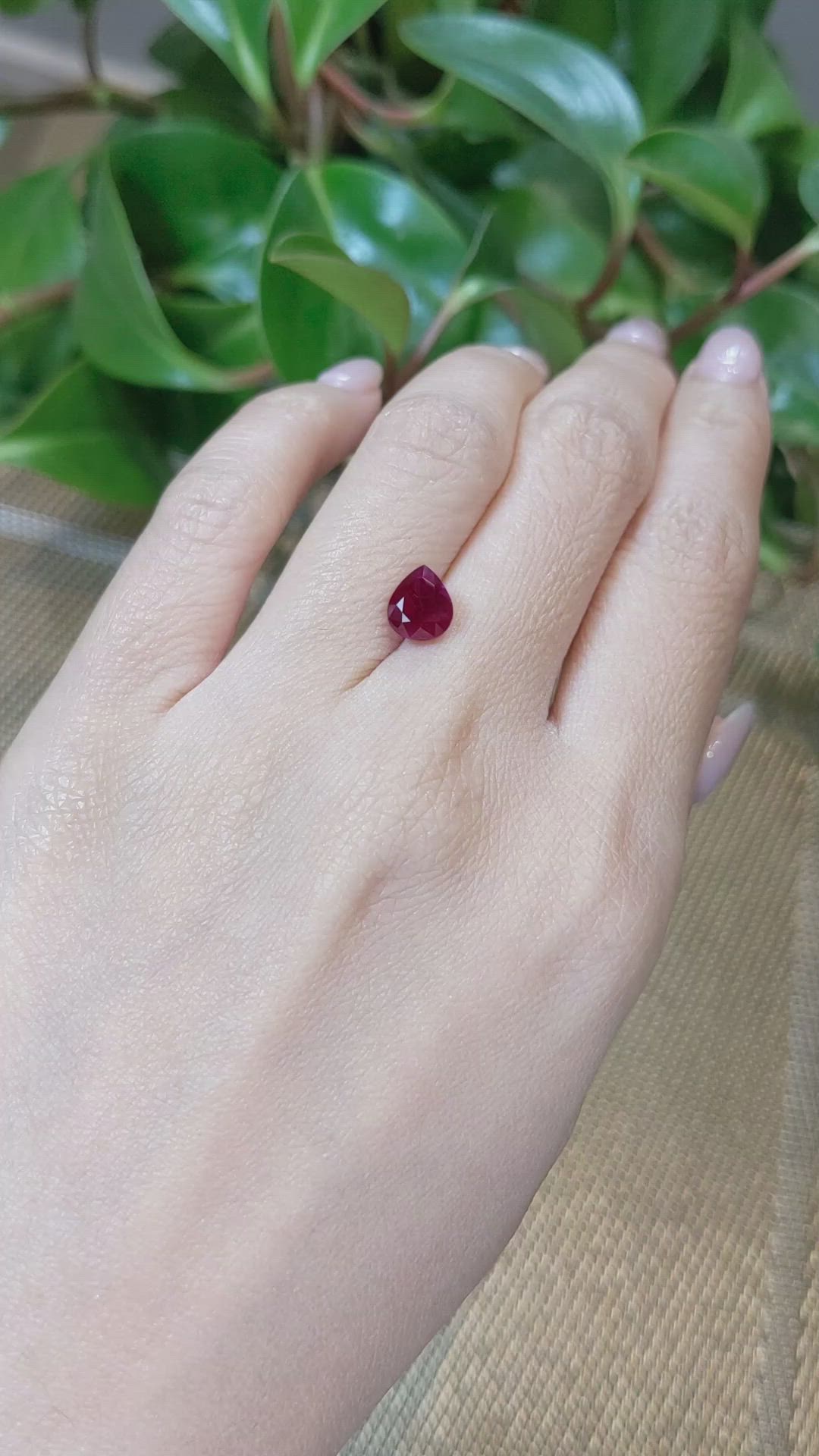
From the earth of Burma to the careful appraisal room of GIA, this ruby has a story that begins in ancient rock and ends as a jewel that speaks to centuries of human admiration and craft. This is a GIA certified Vivid Red Pigeons Blood, a transparent natural ruby weighing 2.08 carat, cut into a graceful pear shape with dimensions of 7.77 x 6.70 x 5.32 mm. The cutting style is faceted, rendered as a mixed brilliant cut that balances fiery scintillation with deep color saturation, and the clarity is graded very slightly included when evaluated at eye level. Color intensity is intense, polish is excellent, and the stone has been enhanced by heating with residue, a traditional and widely accepted treatment that refines the stone without obscuring its natural character. The gemstone was mined in Burma Myanmar, a region famed for producing some of the finest rubies in history, and its journey from vein to gem embodies geology, culture, and the skilled human touch. At The Natural Ruby Company we present this piece with full disclosure of its origin and treatment, and with the documentation that confirms its natural and certified status.
After the crystal was liberated from its host rock by miners working in a landscape shaped by time and weather, it entered a sequence of human hands that transformed a raw mineral into a gem. The cutter considered the crystal shape and internal features, choosing a pear outline to emphasize the stone length and to allow a graceful balance between brilliance and color. The mixed brilliant cut was selected to deliver lively fire from the crown facets while preserving broad color windows in the pavilion, a marriage of light and depth that suits Pigeons Blood rubies especially well. Skilled polishers refined each facet until the surface achieved an excellent polish that allows light to enter and return with clarity and sparkle. The reported heating with residue is part of a long practice in ruby enhancement, a measured intervention that brings out the innate chromophores locked inside natural corundum, and it leaves microscopic signatures that laboratories like GIA can detect and report on. Those inclusions and treatment traces are not flaws in the storytelling sense, they are proof of natural origin and the stone life, a geological biography recorded in crystalline form.
The cultural resonance of a Pigeons Blood ruby is woven into the lore of kings and temples in Burma and beyond, where these red gems were believed to confer protection, status, and vitality. Burmese rubies carry a lineage, a provenance that collectors and connoisseurs prize, and when a gem like this arrives at The Natural Ruby Company it brings with it that history. Owning such a stone is to participate in a tradition that celebrated color and rarity above all else. The intense vivid red shade of this gem is not simply a pigment, it is the outcome of trace elements and growth conditions deep within the earth, conditions that cannot be replicated by appetite or laboratory conditions. The natural inclusions, the modest very slightly included clarity grade at eye level, and the heating with residue all contribute to the gem narrative. They are the physical evidence of a stone that grew over millions of years, witnessed shifts in temperature and pressure, and finally surrendered to human care. We respect this heritage by ensuring ethical sourcing whenever possible and by providing customers with clear, accessible documentation of origin and treatment.
Compared to lab grown stones, a natural Burmese Pigeons Blood ruby such as this offers unique advantages that go beyond initial visual appeal. Lab grown rubies can be remarkable in clarity and uniformity, and they can provide a more affordable route to intense color and clean appearance, but they do not carry the same geological story or the same provenance. Natural rubies have an internal fingerprint of inclusions and growth zoning that gives each gem individuality and collectible value, and for many buyers those tiny internal marks are a source of authenticity rather than a defect. Provenance also matters for long term value, because natural stones from historic regions like Burma have been sought after for generations, and that market recognition can influence resale and inheritance value. Certification by GIA on this 2.08 carat stone confirms natural origin and discloses the accepted heating treatment, creating confidence for both immediate enjoyment and future ownership. If you seek a ruby that connects you to the land that made it, to the hands that shaped it, and to centuries of cultural appreciation, this gemstone offers that link in a way a lab created stone cannot fully replicate. At The Natural Ruby Company we are here to guide you through the specifics, to share the gem story in detail, and to help you choose a piece that will become part of your own family narrative.


Other Rubies You May Like
