
- Pair16
- Reports4
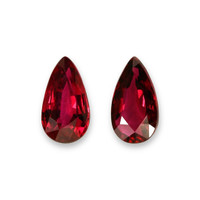


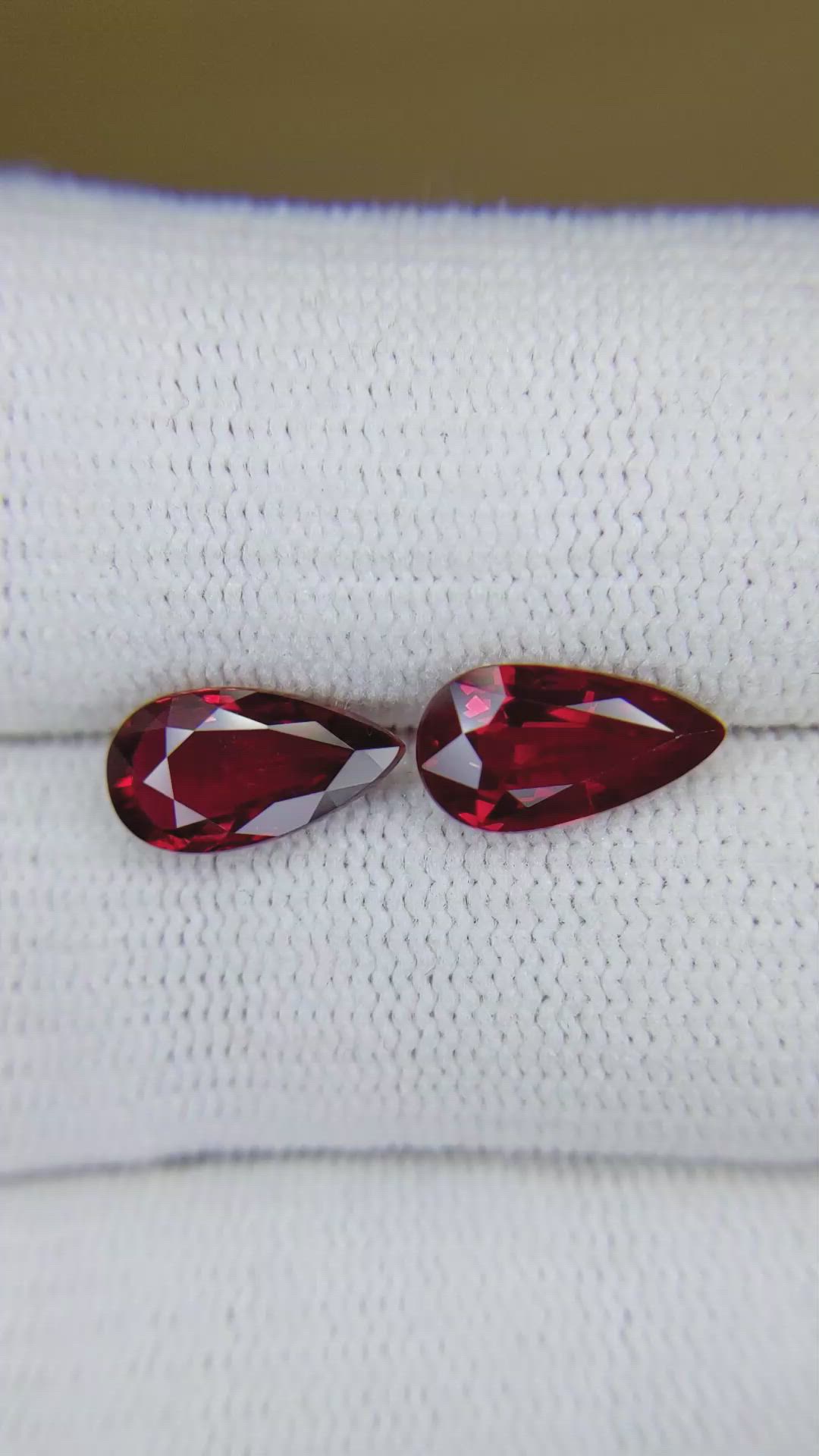
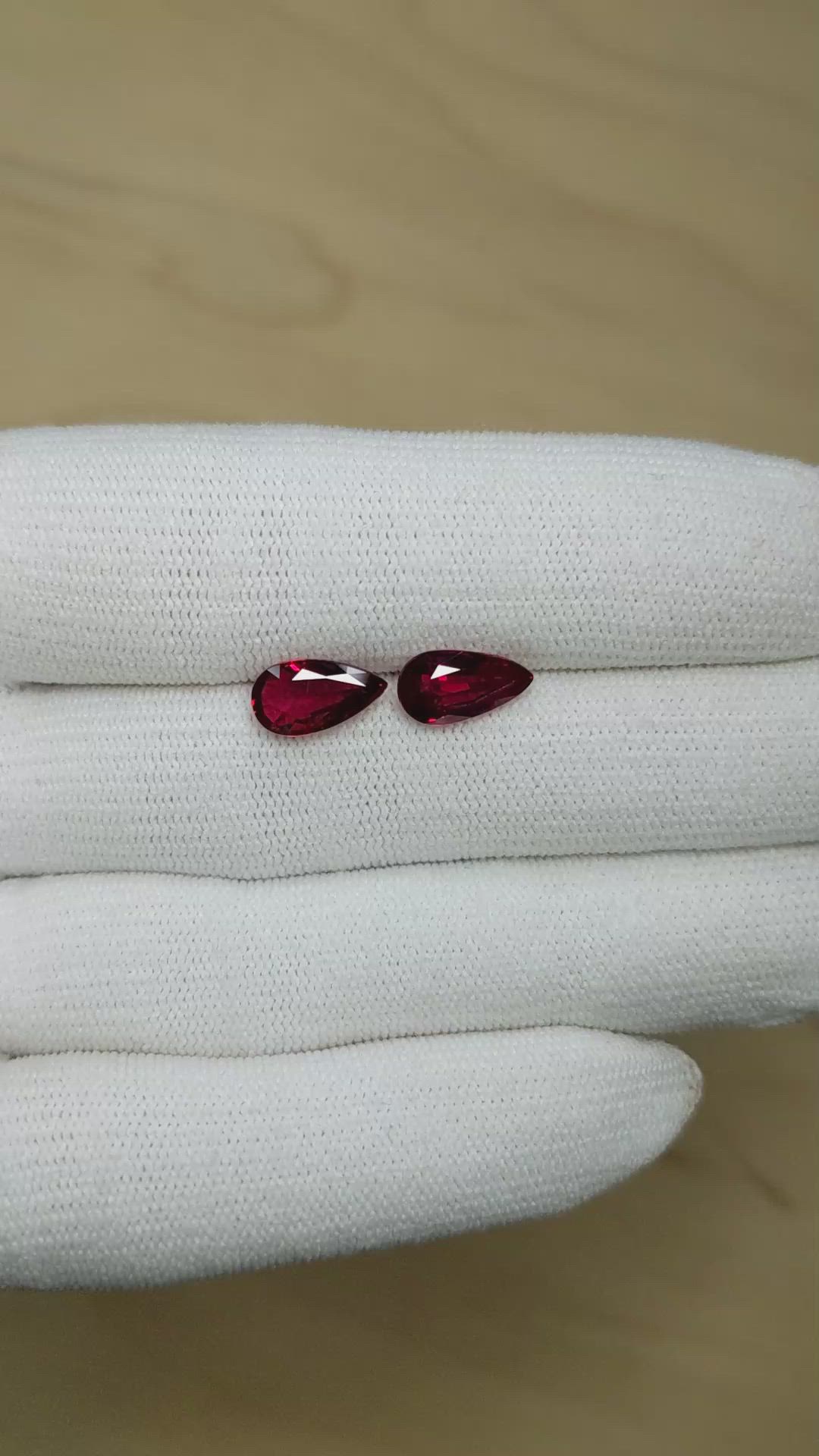
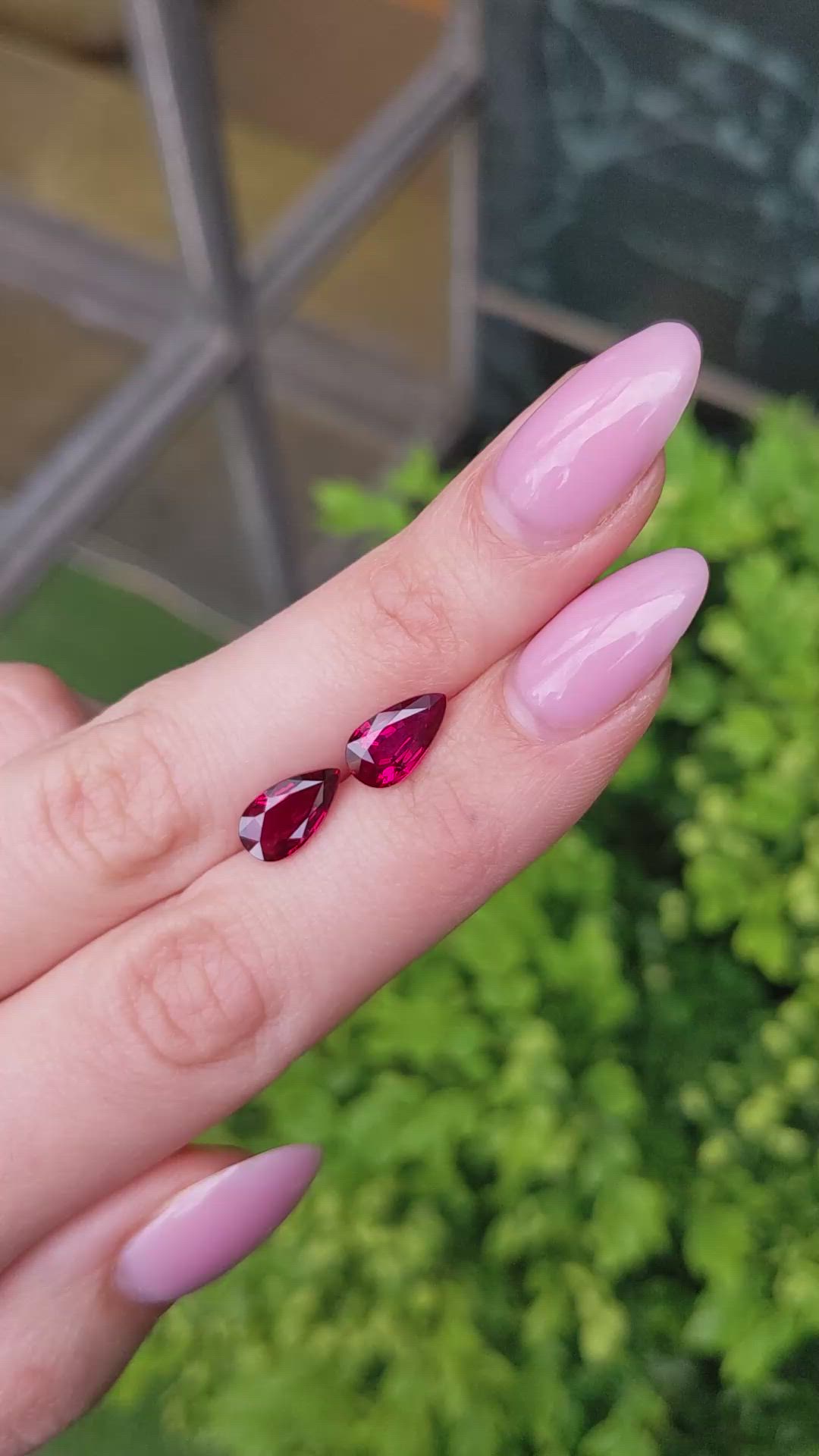
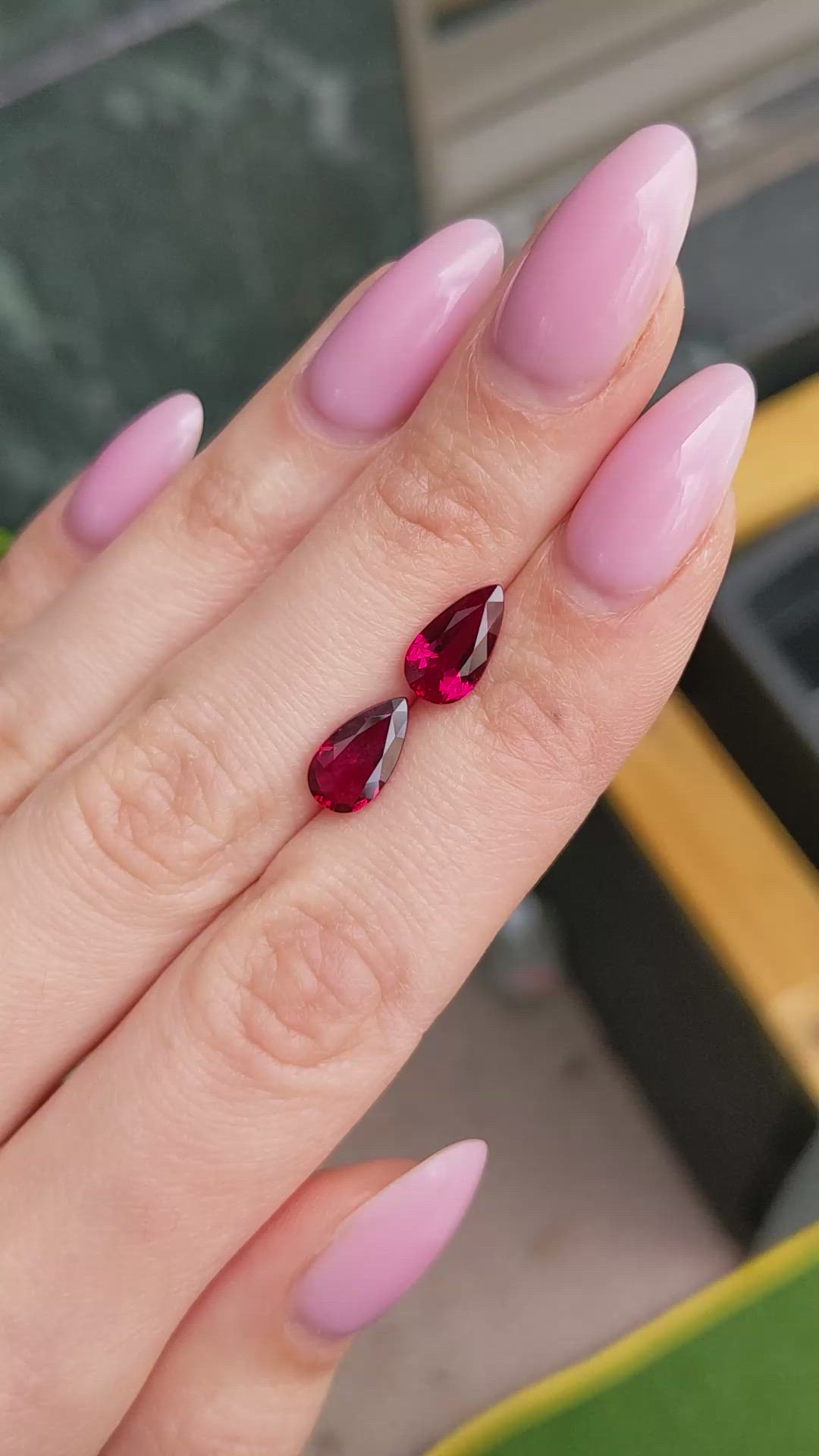


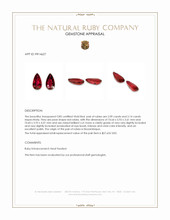


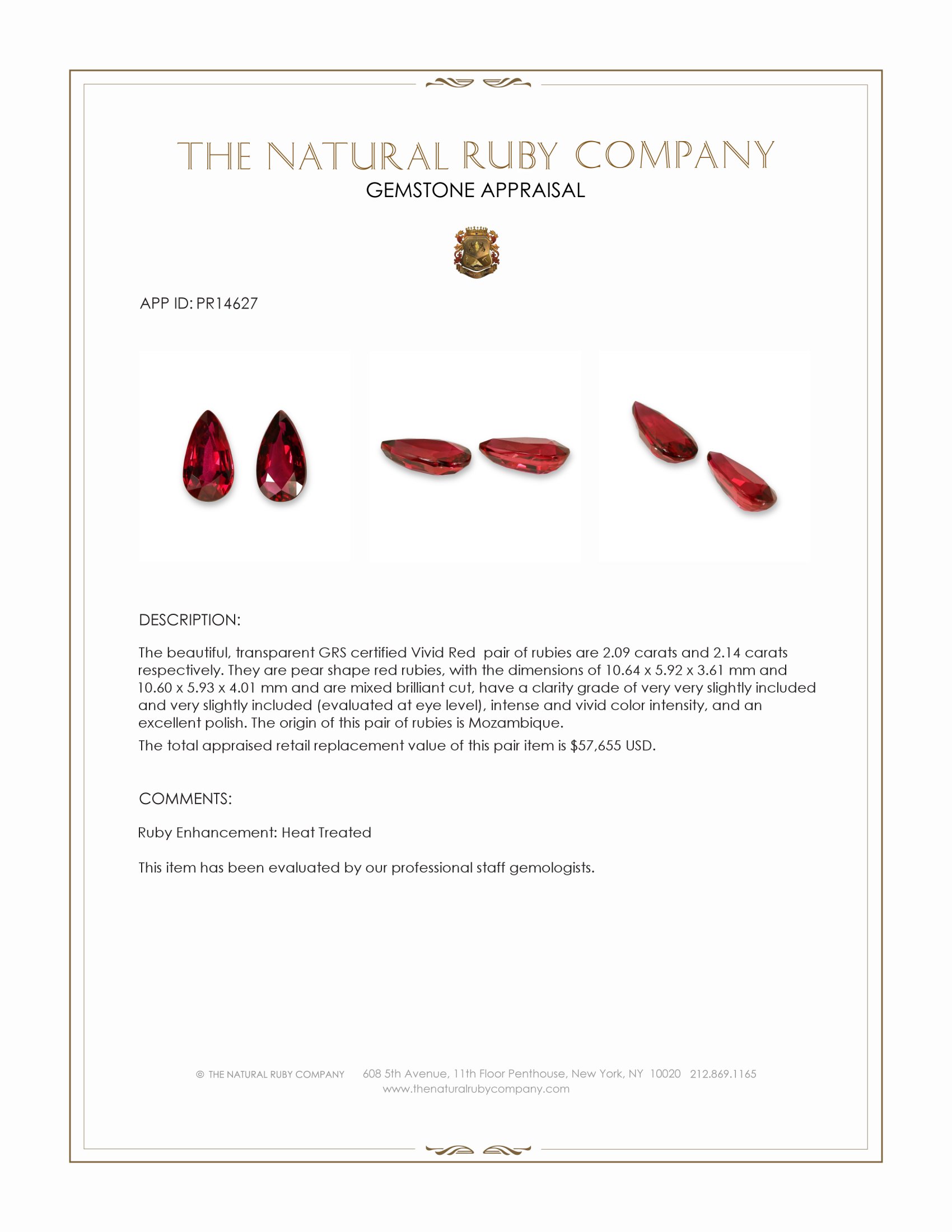
4.23 Ct.Tw.Total Carat Weight Ruby Pair from Mozambique
This pair of stones is available to ship now
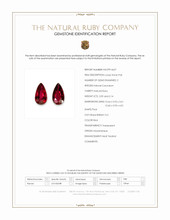
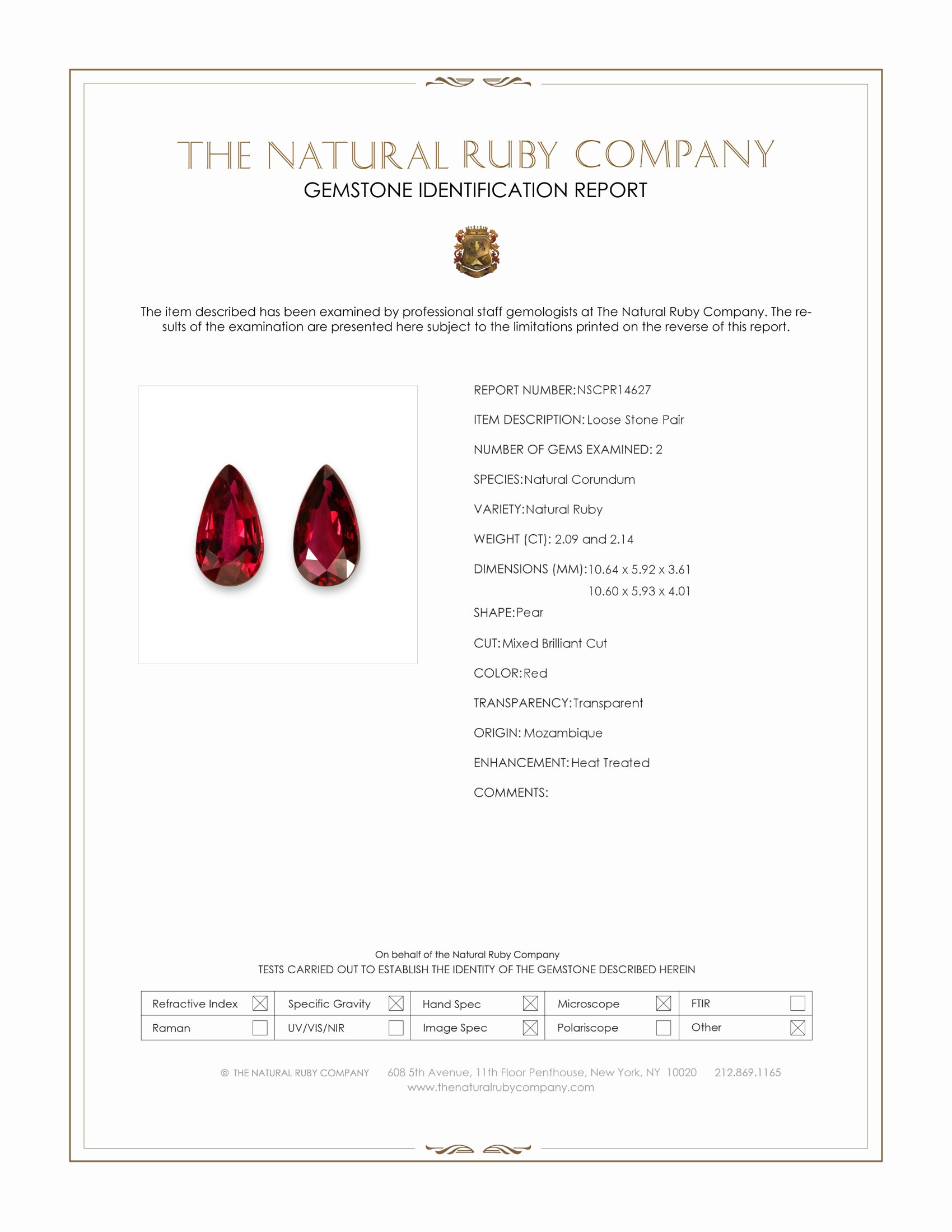
Stone type: | Ruby | Ruby |
|---|---|---|
Item ID: | PR14627 | PR14627 |
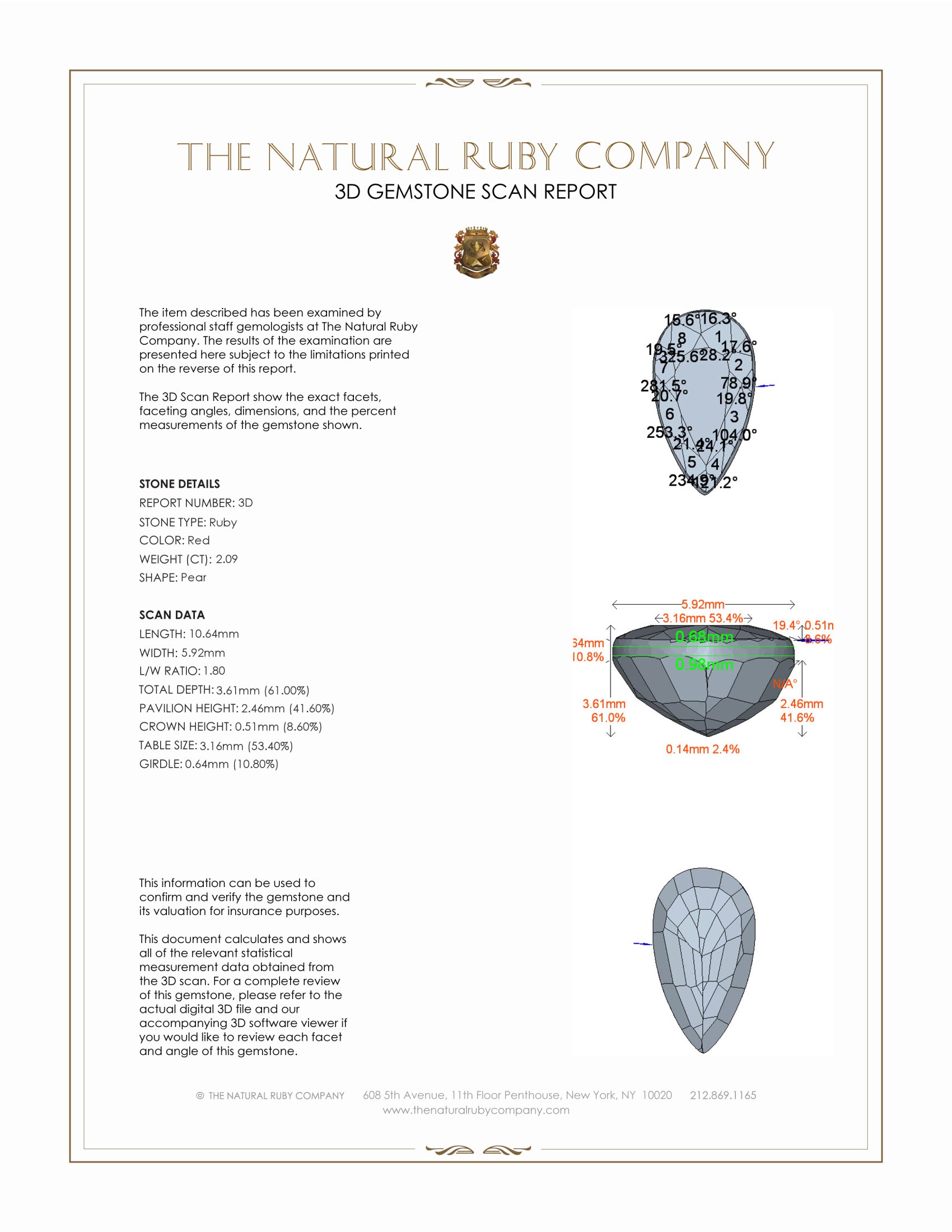
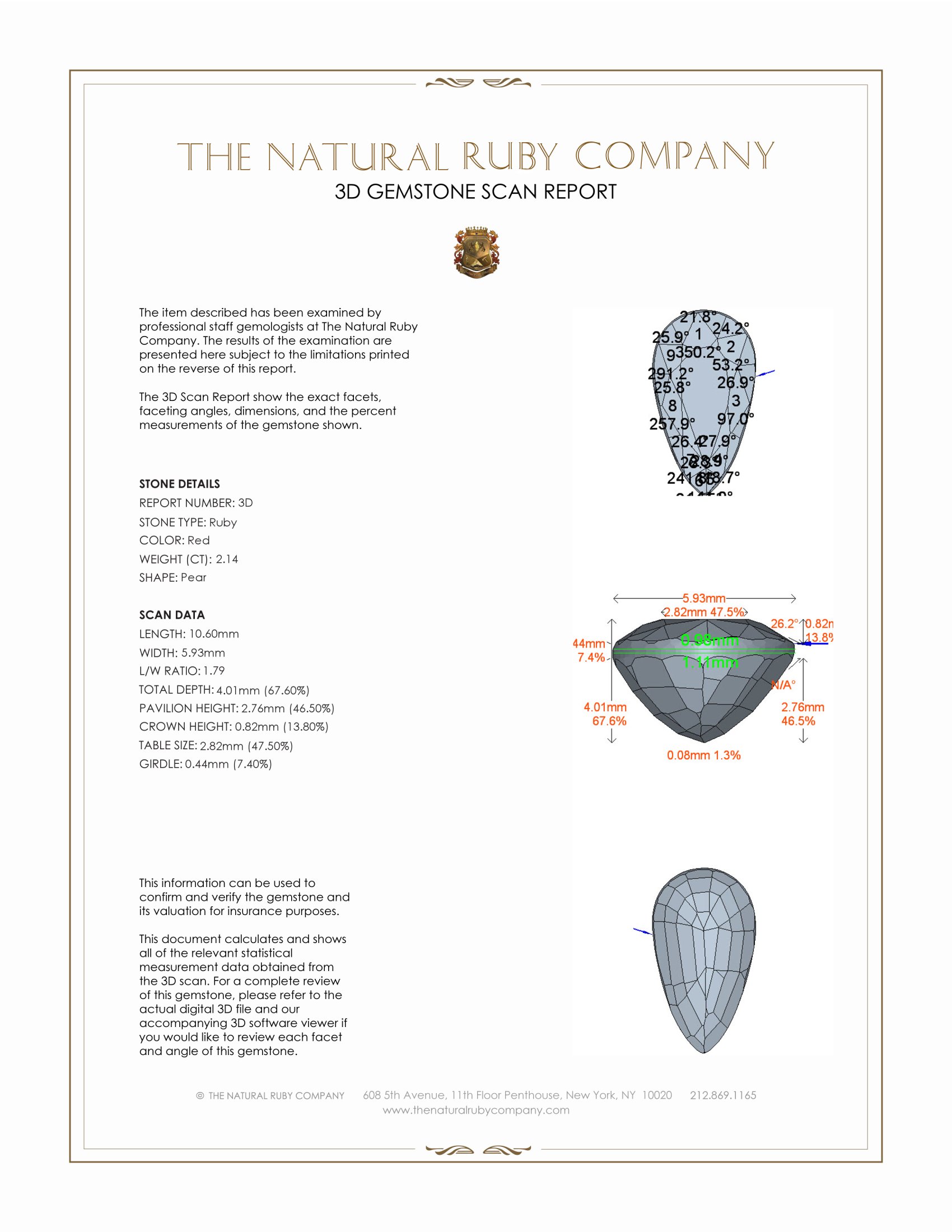
Dimensions (MM): help | Length: 10.64 Width: 5.92 Height: 3.61 | Length: 10.6 Width: 5.93 Height: 4.01 |
Weight: | 2.09 Ct. | 2.14 Ct. |
Color: help | Red | Red |
Color intensity: help | Intense | Vivid |
Clarity: help | Very Very Slightly Included | Very Slightly Included |
Shape: help | Pear | Pear |
Cut: | Mixed Brilliant Cut | Mixed Brilliant Cut |
Cutting style: | Faceted | Faceted |
Enhancements: help | Heat Treated | Heat Treated |
Origin: help | Mozambique | Mozambique |
Per carat price: help | $13,630 | $13,630 |
This matched pair of pear shape red rubies presents a rare combination of precision cutting and consistent material quality, suitable for fine jewelry that demands both optical performance and matched aesthetics. Individually the stones weigh 2.09 carats and 2.14 carats, and they measure 10.64 by 5.92 by 3.61 mm and 10.60 by 5.93 by 4.01 mm respectively, dimensions that demonstrate the cutter's control over length to width ratio and depth distribution. Both stones are fashioned in a mixed brilliant cut, a choice that merges a faceting scheme designed to maximize dispersion and scintillation on the crown with larger, step influenced facets on the pavilion to preserve weight and yield strong light return for a pear outline. The origin is Mozambique, and the pair carries a standard heat treatment disclosure, a stable and widely accepted enhancement that improves color saturation while retaining natural crystal integrity. The polish has been graded excellent, which is immediately evident in the crisp facet junctions and the mirror like facet surfaces that translate into brisk, clean reflections when the stones are rotated under a light source.
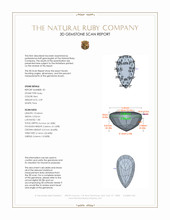
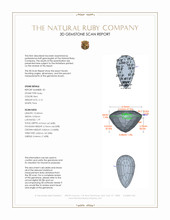
The faceting deserves detailed attention because it is central to the matched performance of the pair. As mixed brilliant cuts, the crowns are organized with a modified star and bezel arrangement that provides a bright, lively face up appearance, while the pavilions employ a combination of pavilion mains and lower girdle facets calibrated to channel light back through the table. In the pear outline the symmetry of the two halves, the placement of the break point near the tip, and the balancing of the broad shoulder against the tapered point are critical, and here the cutter has achieved consistent profile symmetry between the two stones. Table size has been kept moderate relative to overall length to enhance internal reflections without creating a flat or washed out look, and the pavilion depths of 3.61 mm and 4.01 mm indicate slightly different pavilion volumes that were compensated for through facet angle adjustment, a subtlety that preserves matched brightness and face up color. The girdles are consistent and suitable for bezel or prong settings, and the excellent polish ensures minimal light scatter from surface abrasion, preserving spectral contrast and the integrity of facet windows.
Color and clarity characteristics are central to the value proposition of this matched pair, and the technical grading supports their appeal to knowledgeable buyers. Both stones carry an intense color intensity classification, which in technical terms means a strong combination of saturation and tone resulting in vivid red that reads as true ruby red under standard daylight equivalent illumination. The coloration is evenly distributed across the pavilion and crown, with no obvious zoning when examined face up, and the mixed cutting strategy enhances apparent chroma by orienting pavilion facets to favor light paths that reinforce the red wavelengths. Clarity is described as very very slightly included when evaluated at eye level, a designation that indicates inclusions are minimal in their visual impact at normal viewing distances. Under magnification the inclusions are fine and typically take the form of minute crystals and fine needles, along with a few thin healing features that are characteristic of natural ruby growth and common in Mozambique material. These inclusions do not disrupt the overall transparency, and because they are small and well positioned they contribute to the stone s natural signature without compromising brilliance or structural soundness.
The craftsmanship involved in matching these two rubies is where the technical narrative becomes most relevant for a client who values precision. Achieving matched face up color and matching optical behavior in a pair of freeform pears requires careful selection of rough material followed by iterative cutting, where facet angles are adjusted to compensate for slight variations in pavilion depth and crystal orientation. The cutter matched length to width proportions within one tenth of a millimeter, and then harmonized table size and crown height to ensure consistent scintillation and twinkle across the pair. Heat treatment was applied in a controlled manner to optimize hue stability and extract intense saturation without creating tenuous fracture networks, and the subsequent fine polishing removed a controlled amount of surface material to produce the excellent polish rating while maintaining the matched dimensions. For mounting recommendations these stones are ideal as a matched earring pair or as the focal points of a pendant set where the paired symmetry can be showcased. The Natural Ruby Company stands behind the documented origin and treatment information, and we can provide guidance on setting styles that protect the pointed tips of the pears while allowing maximum light entry through the crowns. If you would like additional angles, facet maps, or advice on complementary accent stones and mounting options, we can provide that information and assist with custom design to highlight the technical and aesthetic strengths of this matched pair.


