
How Rare Is a Natural Ruby?
Rubies are among the most admired gemstones in the world, recognized for their intense red color, durability, and centuries of association with royalty and wealth. If you have ever wondered how rare is a natural ruby, the answer is part of what makes these gemstones so desirable: fine natural rubies are genuinely rare.
While rubies of different qualities can be found on the gemstone market, exceptional natural rubies with vivid color, good transparency, significant size, and little or no treatment are remarkably difficult to find.
So, how rare is a natural ruby, and what makes the finest examples so exceptional?
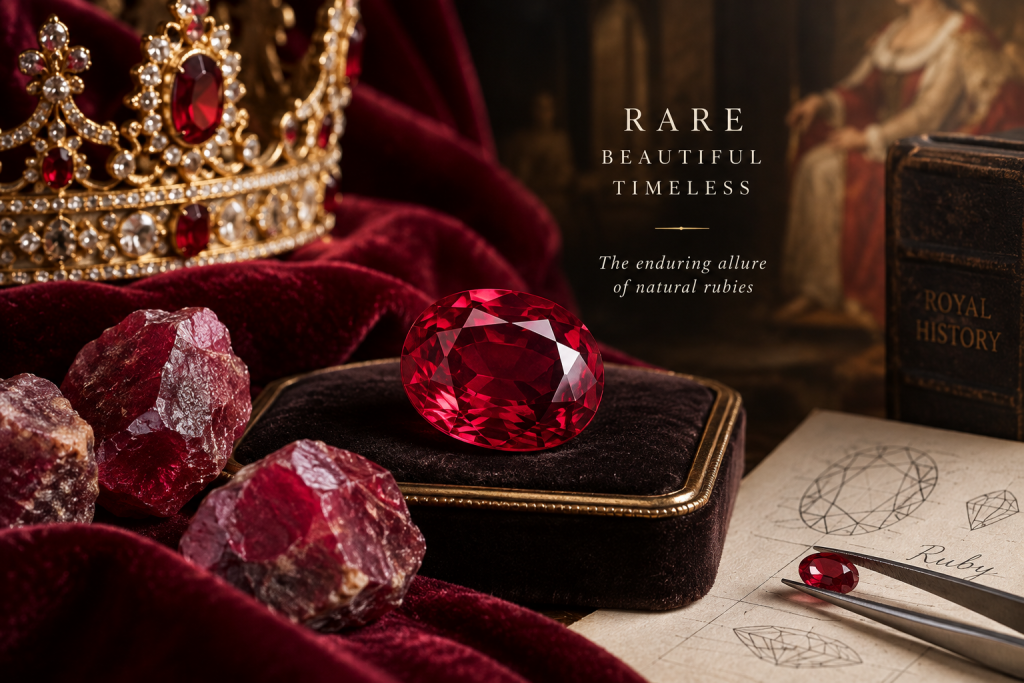
What Makes a Natural Ruby Rare?
Ruby is the red variety of the mineral corundum, the same mineral family that produces sapphire. Its red color is primarily caused by traces of chromium within its crystal structure.
For a natural ruby to form, specific geological conditions must come together over millions of years. The necessary elements must be present in the right environment while certain other elements, particularly iron, remain limited enough for desirable ruby formation.
This unusual combination of geological conditions is one reason important ruby deposits occur in relatively few places around the world.
Fine-Quality Rubies Are Much Rarer
Not every natural ruby has the intense red appearance associated with the finest stones.
Many natural rubies contain visible inclusions, fractures, uneven coloration, or darker and lighter areas. These characteristics are part of their natural formation.
Finding a ruby that combines strong red color, good transparency, attractive clarity, and excellent brilliance is considerably more difficult.
This is why two natural rubies of the same carat weight can differ greatly in value.
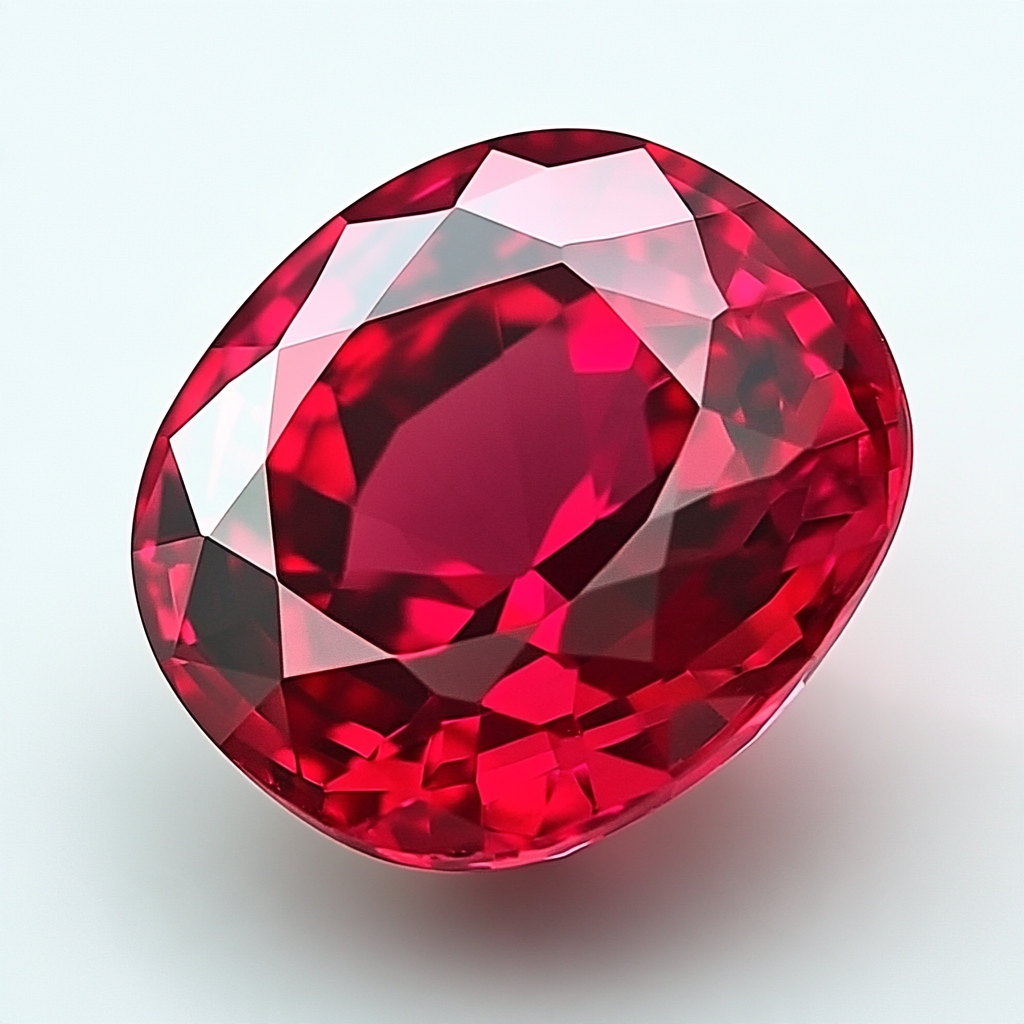
Large Natural Rubies Are Particularly Rare
Ruby rarity becomes even more noticeable as carat weight increases.
Small ruby crystals are more commonly encountered, but finding a large crystal with enough quality to produce a beautiful faceted gemstone is much more difficult. Natural crystals may contain fractures or inclusions that limit the size of the finished stone.
As a result, fine rubies weighing several carats can command significant attention from collectors.
Exceptional large rubies are rarer still.
Why Untreated Rubies Are So Desirable
Heat treatment is commonly used to improve the color and clarity of natural rubies and is widely accepted within the gemstone industry when properly disclosed.
An untreated ruby, however, has achieved its color and appearance naturally without heat enhancement.
Fine untreated rubies are especially rare because nature must produce desirable color, transparency, and overall beauty without human intervention. When an untreated ruby also has exceptional color and significant size, it can become particularly desirable among collectors.
Does Origin Make a Ruby Rarer?
Natural rubies are found in several countries, including Myanmar, Mozambique, Sri Lanka, Vietnam, Tanzania, and Madagascar.
Myanmar’s Mogok region has historically produced some of the world’s most celebrated rubies, while Mozambique has become one of the most important modern sources.
Origin can influence rarity and collector interest, particularly for exceptional stones accompanied by respected laboratory documentation. However, origin alone does not make a ruby valuable. An individual stone’s color, clarity, size, treatment status, and overall beauty remain extremely important.
What About Pigeon’s Blood Rubies?
The term Pigeon’s Blood is associated with exceptionally desirable red coloration in certain rubies.
Not every vivid red ruby qualifies for this description. Gemological laboratories may apply specific criteria when determining whether a stone meets their Pigeon’s Blood color classification.
A natural ruby combining this sought-after color with strong transparency, significant size, and little or no treatment represents a particularly uncommon combination of characteristics.
Natural Ruby vs. Lab-Grown Ruby
A laboratory-grown ruby has essentially the same mineral composition as a natural ruby, but its origin is completely different.
Natural rubies form through geological processes within the Earth over immense periods of time. Laboratory-grown rubies are created under controlled conditions designed to reproduce aspects of natural crystal formation.
The limited geological conditions required to produce fine natural rubies contribute significantly to their rarity and desirability.
Why Laboratory Reports Matter
When purchasing an important natural ruby, an independent gemological laboratory report can provide valuable information.
Depending on the laboratory and report, testing may confirm that the ruby is natural, identify evidence of treatments, and sometimes provide an opinion regarding geographic origin.
This becomes particularly important for rare, untreated, or high-value rubies where these characteristics can significantly influence desirability.
Want to learn how natural rubies differ from look-alikes? Visit our Ruby Simulants & Synthetics guide to understand the key differences between natural rubies, synthetic rubies, and ruby simulants.
Final Thoughts
Natural rubies are rare, but fine natural rubies are considerably rarer.
The challenge is not simply finding a red corundum crystal. It is finding one in which nature has created the right combination of vivid color, transparency, clarity, size, and beauty.
Add significant carat weight, no heat treatment, or an important geographic origin, and the number of available stones becomes even smaller.
That natural scarcity is one of the reasons rubies have fascinated kings, collectors, jewelers, and gemstone lovers for centuries. Every exceptional natural ruby represents a geological combination that may have taken millions of years to create, making each fine stone a truly remarkable product of nature.
Explore our collection of natural rubies and discover a range of beautiful stones in different colors, sizes, shapes, and qualities.