- Stone9
- Reports4




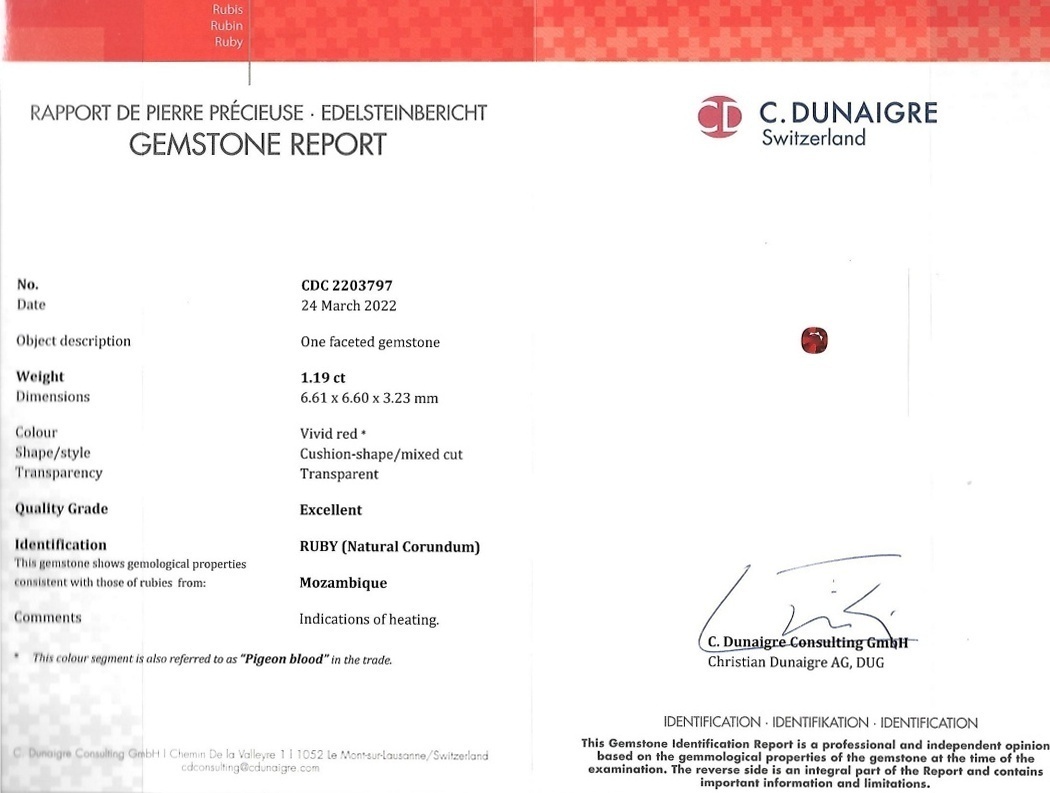
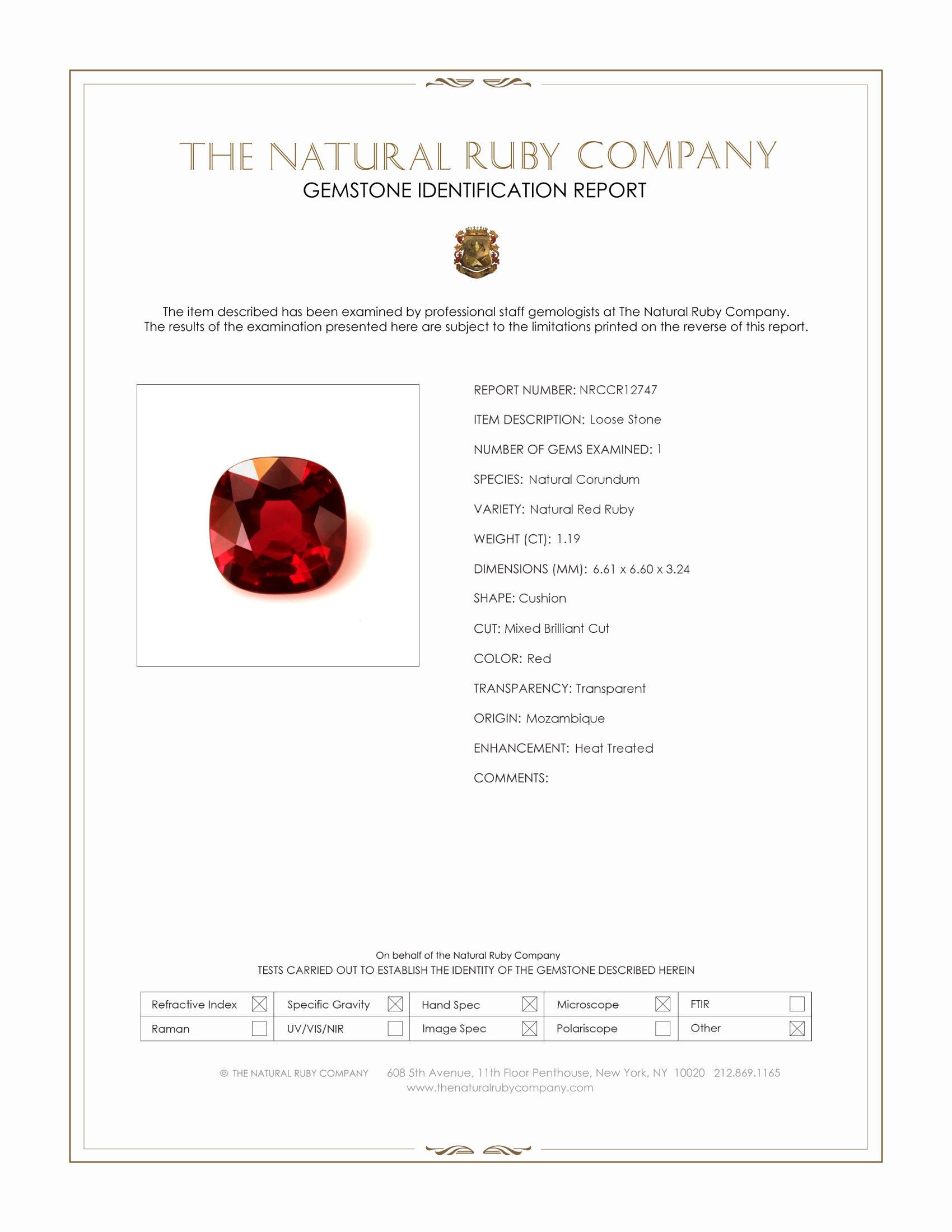
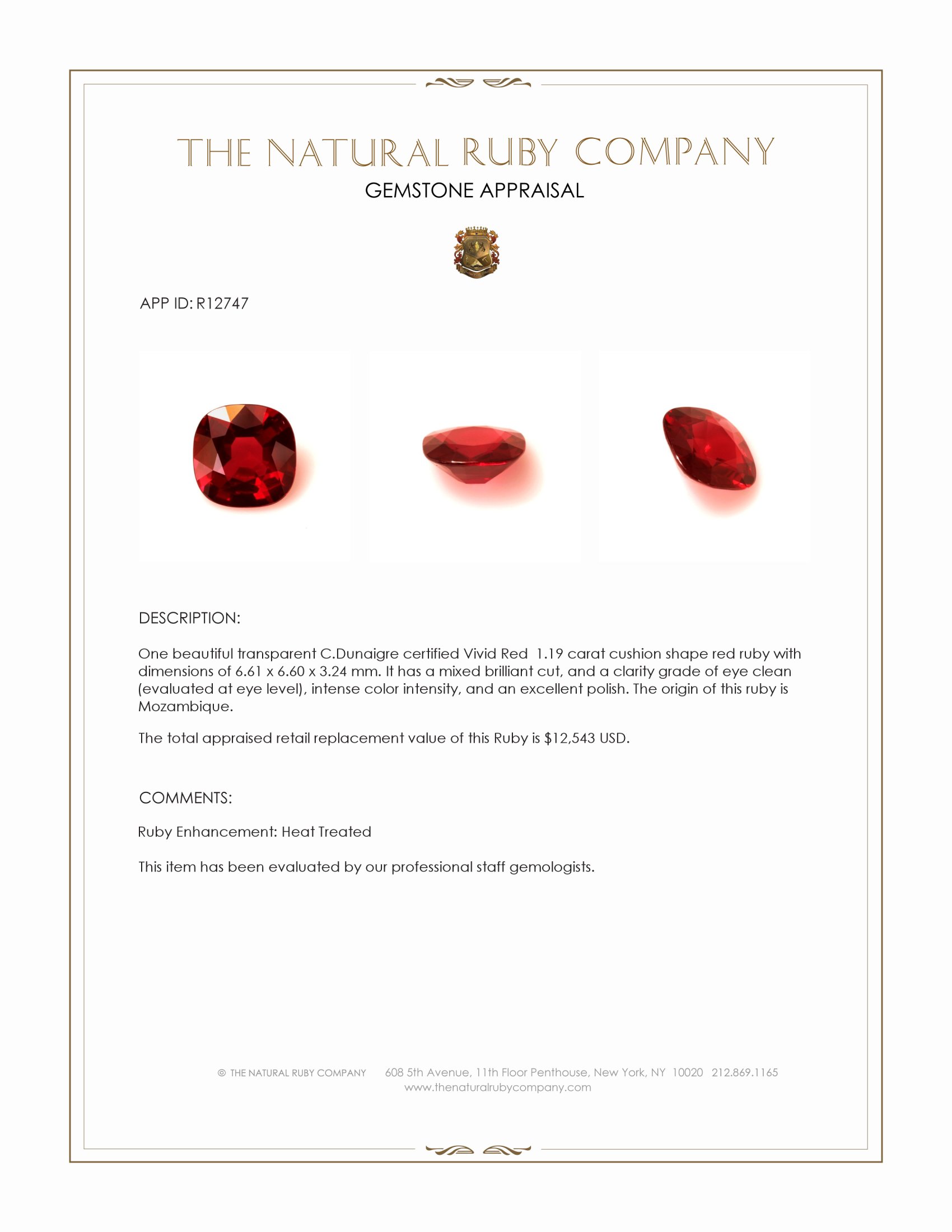
1.19 Ct. Ruby from Mozambique
This loose stone is available to ship now
Item ID: | R12747 |
|---|---|
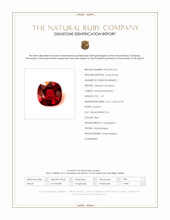
Dimensions (MM): help | Length: 6.61 Width: 6.6 Height: 3.24 |
Weight: | 1.19 Ct. |
Color: help | Red |
Color intensity: help | Intense |
Clarity: help | Eye Clean |
Shape: help | Cushion |
Cut: | Mixed Brilliant Cut |
Cutting style: | Faceted |
Enhancements: help | Heat Treated |
Origin: help | Mozambique |
Per carat price: help | $10,540 |
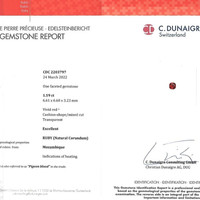
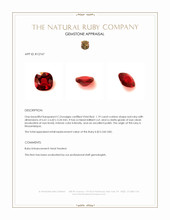
This 1.19 carat cushion shaped ruby is a textbook example of expert lapidary work meeting exceptional rough material, certified by C. Dunaigre and offered by The Natural Ruby Company. The stone measures 6.61 by 6.60 by 3.24 millimeters, a near perfect symmetry that speaks to disciplined preforming and precise faceting. The cutting style is faceted with a mixed brilliant scheme, combining a modified crown pavilion architecture with step influenced girdle and pavilion facets to balance brilliance and color retention. The table and crown angles were calibrated to favor color saturation over maximum scintillation, a deliberate choice for a vivid red material from Mozambique where optimal light return generates an intense red face up without creating distracting windows. The polish is graded excellent, allowing uninterrupted light transmission and crisp facet junctions, and the clarity grade is eye clean at standard viewing distances, meaning inclusions do not detract from unaided visual appreciation but are appreciable under magnification, as is customary for natural corundum.
Under 10 times magnification this ruby reveals a characteristic inclusion suite that functions as its natural fingerprint, and these features are responsible for the unmistakable identity of the stone. Fine rutile needles, commonly called silk, are present as oriented, hairlike inclusions that follow crystallographic growth directions. The silk has a fine texture and density that, instead of creating cloudiness, subtly diffuses light and enhances perceived color saturation through micro scattering. Interspersed among the silk are discrete mineral crystals, typically zircon and occasional spinel inclusions, which appear as angular or rounded reflective points. Some of these crystals are partially embedded in growth planes and present as negative crystals, displaying hollow cavities that sometimes trap a two phase combination of liquid and gas bubbles. Healed fissures and recrystallized growth planes are visible as reflective, lacelike patterns, giving rise to fingerprint like structures that are diagnostic of natural growth and subsequent thermal annealing. The combination of oriented rutile, random mineral crystals, and healed internal features creates a layered internal topology, a signature pattern that aligns well with Mozambique provenance when compared to established inclusion libraries.
The lapidary decisions made in cutting this cushion influenced how these inclusions interact with the observer and with light. The mixed brilliant cutting layout combines small, narrowly faceted crown facets with broader pavillion facets, a design that modulates the way light engages the internal silk and mineral inclusions. The relatively shallow pavilion depth of 3.24 millimeters, corresponding to an overall depth ratio of approximately 49 percent when referenced to the width, optimizes face up color by returning more saturated red rays to the viewer while minimizing the appearance of dark windows. The near square outline, evidenced by the dimensions 6.61 by 6.60 millimeters, yields even facet distribution around the girdle, reinforcing balance and symmetry so that inclusion patterns do not concentrate in a single visual quadrant. Because the silk is fine and aligned, the mixed brilliant scheme accentuates a velvety red luster rather than a sparkly, refraction dominated look, and the excellent polish ensures that facet junctions remain sharp, enabling crisp reflection of the characteristic pinpoint flashes from mineral crystals without smearing the color. These technical choices in facet geometry and finish are why a piece with eye clean clarity and intense color intensity can read so powerfully jubilant and pure when set.
Thermal enhancement has been applied to stabilize and intensify color and to reduce the prominence of certain internal anomalies, a common and accepted practice that is fully disclosed. Heating in controlled environments alters the morphology of rutile and can recrystallize microscopic breakdown features, often increasing overall transparency while preserving the inherent inclusion signature that typifies natural Mozambican rubies. The C. Dunaigre certificate documents the gem sieve of characteristics, including origin, enhancement, and measured parameters, providing a reliable provenance anchor for connoisseur buyers. For the technical buyer who values inclusionology as a part of gem identification, this ruby offers a study in contrasts, where controlled silk density, isolated mineral crystals, and healed growth features coexist with superior cutting decisions to produce a vivid red, eye clean face up result. The Natural Ruby Company presents this stone not only as a calibrated gem for fine jewelry, but as a specimen where lapidary technique and natural growth history are both legible and esteemed, a ruby that will retain its identity and market desirability because of its unique internal fingerprint, robust color, and precise craftsmanship.


Other Rubies You May Like

