- Stone13
- Reports4


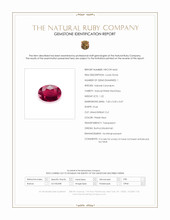


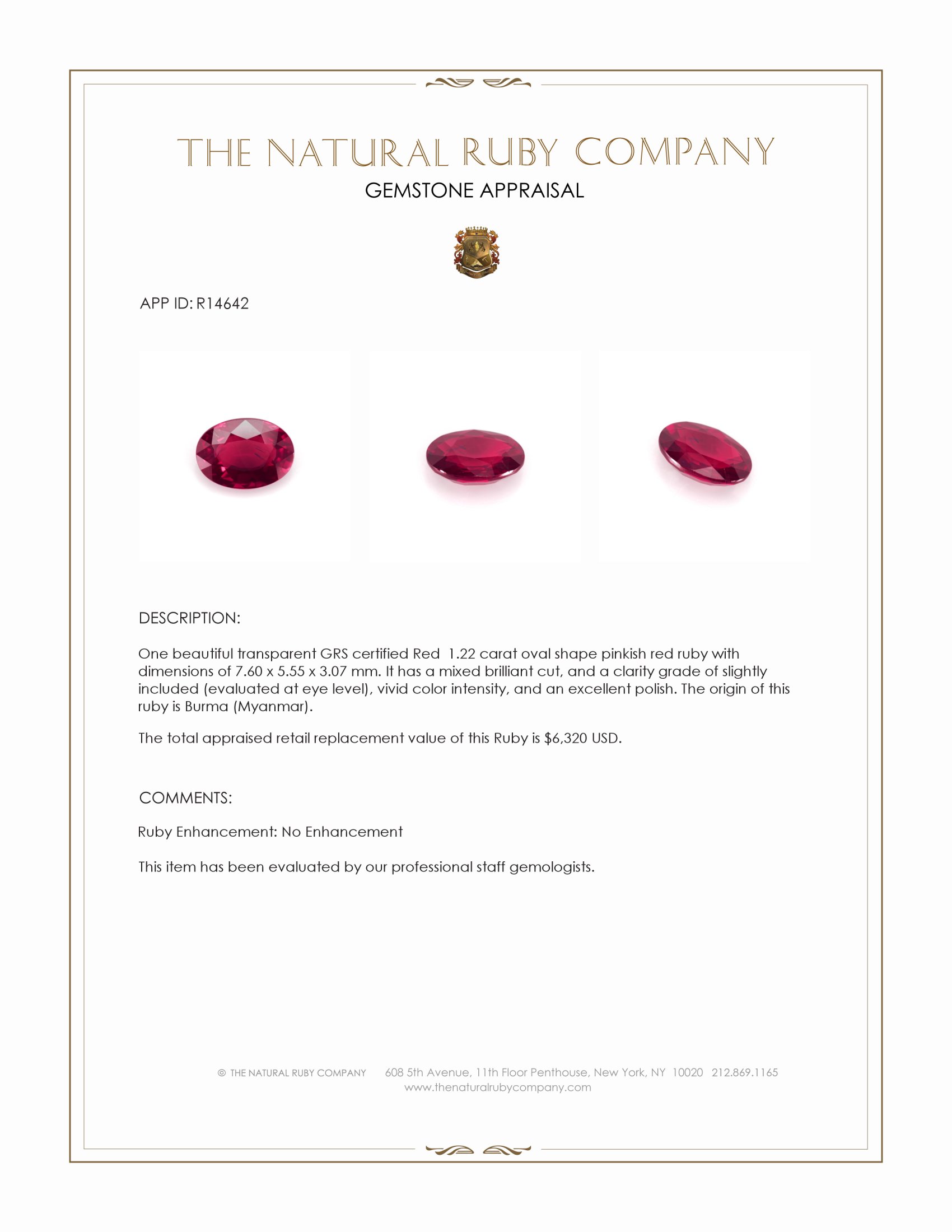
1.22 Ct. Pinkish Red Ruby from Burma (Myanmar)
This loose stone is available to ship now
Item ID: | R14642 |
|---|---|
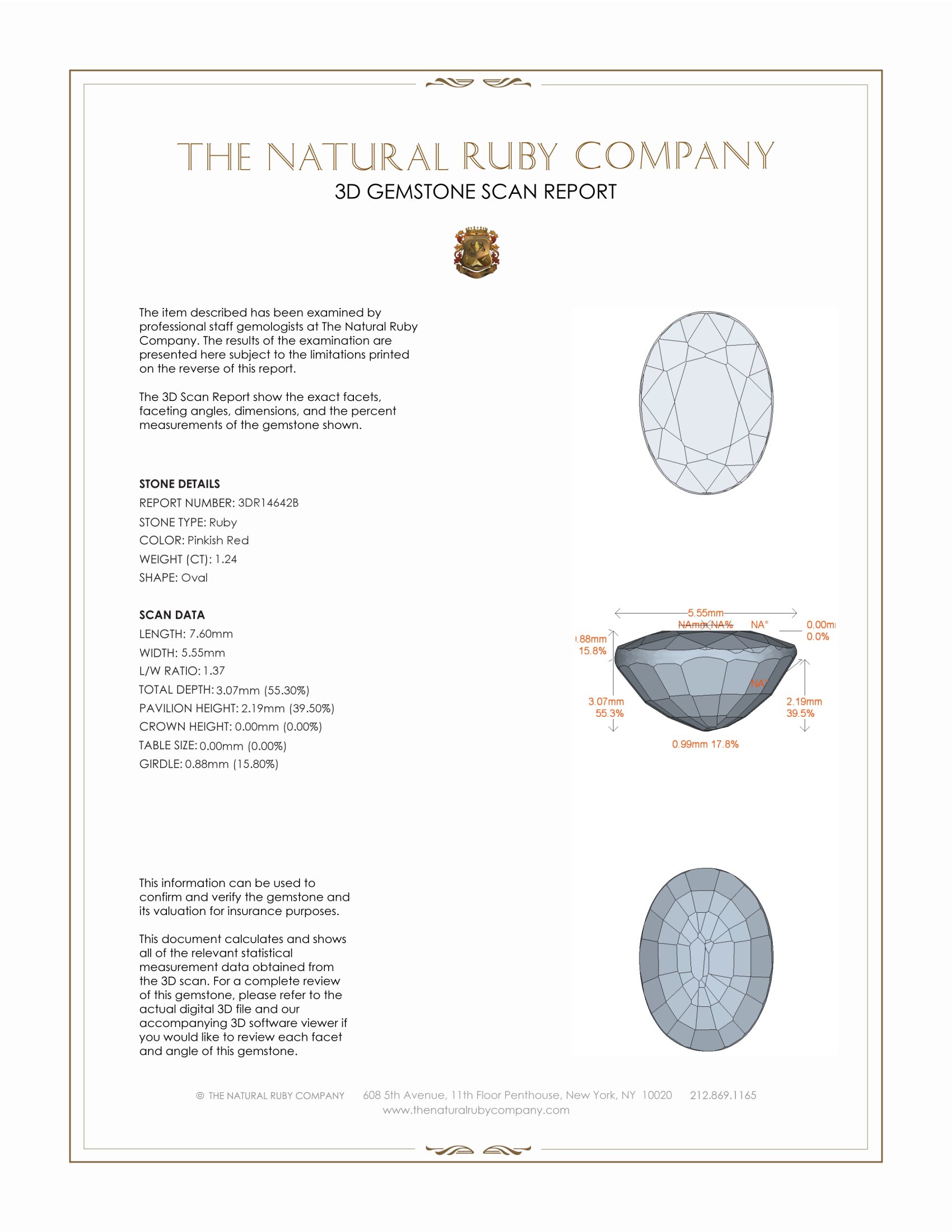
Dimensions (MM): help | Length: 7.6 Width: 5.55 Height: 3.07 |
Weight: | 1.22 Ct. |
Color: help | Pinkish Red |
Color intensity: help | Vivid |
Clarity: help | Slightly Included |
Shape: help | Oval |
Cut: | Mixed Brilliant Cut |
Cutting style: | Faceted |
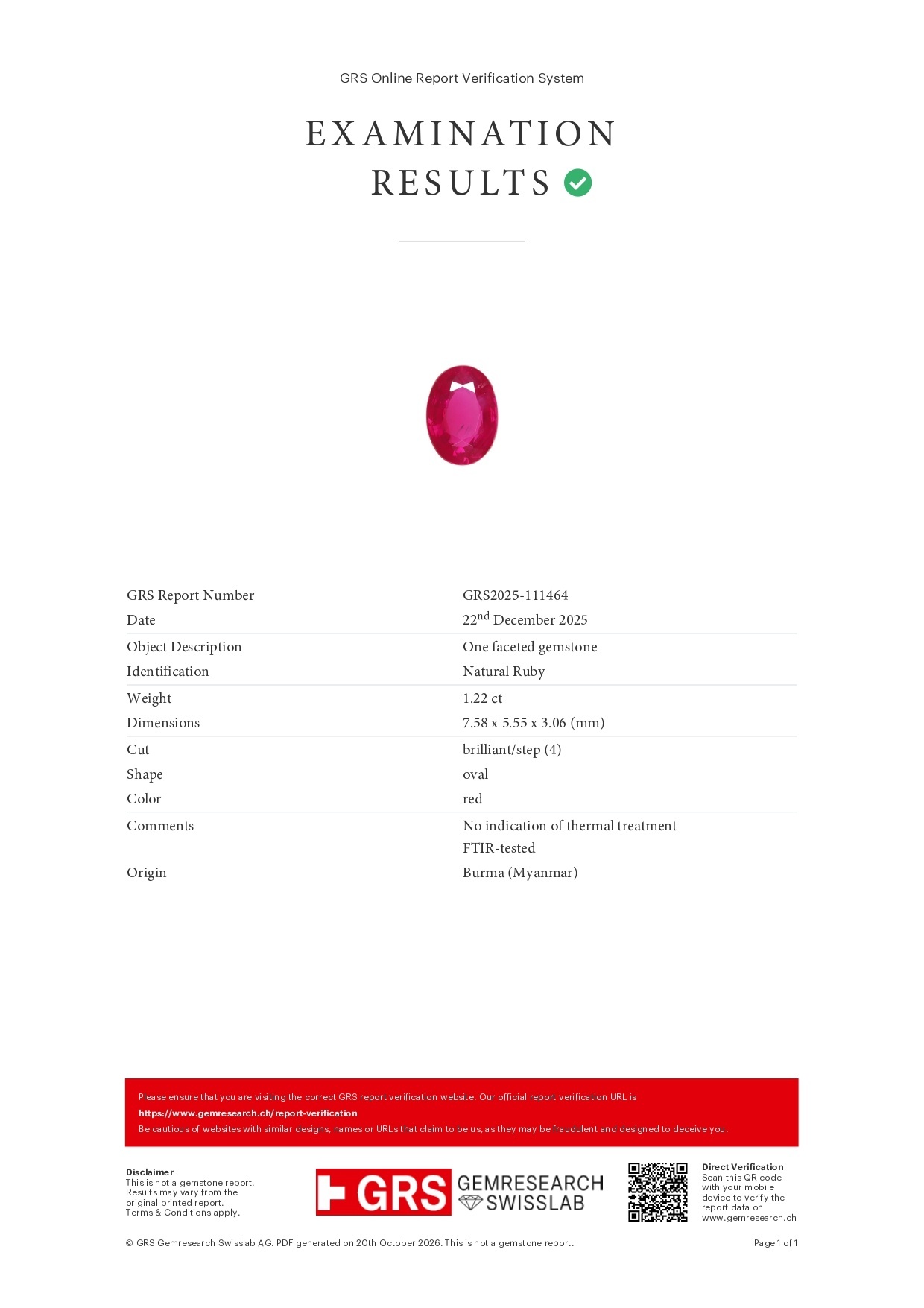
Enhancements: help | No Enhancement |
Origin: help | Burma (Myanmar) |
Per carat price: help | $5,180 |
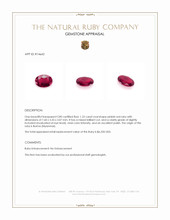
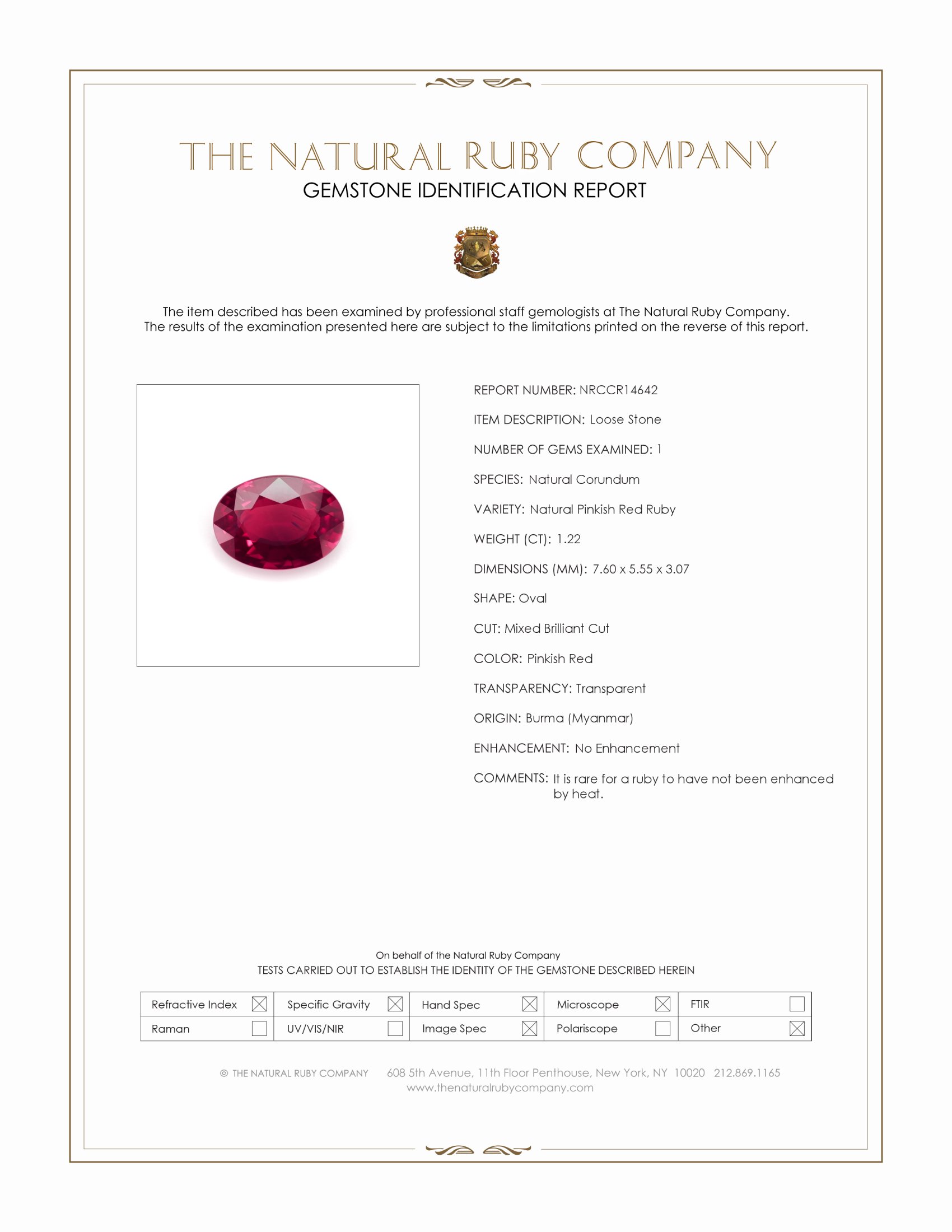
This lot is a transparent, GRS certified Red ruby from Burma Myanmar, weighing 1.22 carat, presented in an oval shape with dimensions of 7.60 x 5.55 x 3.07 mm. The stone is faceted in a mixed brilliant cut, combining a step style pavilion outline with a brilliant style crown to balance color saturation and light return. Clarity is graded as slightly included at eye level, indicating natural internal features that are visible under close inspection but do not substantially impede the stone s transparency or brilliance. Color is described as pinkish red with vivid intensity, and polish is evaluated as excellent, producing crisp facet junctions and strong surface luster. Enhancement testing and the GRS report confirm that this ruby has not been subjected to heat or glass filling, a notable attribute given the prevalence of treatments in the market. The combination of Burmese origin, natural clarity characteristics, and no enhancement establishes a clear profile for collectors and for controlled design use.
In comparing hue and tone to rubies from other well known localities, this Burma ruby sits within the classic spectrum associated with high quality Mogok area material, where the dominant hue often carries a subtle blue to purple component that shifts perception toward a purer, more saturated red. In this example the hue leans slightly toward pinkish red, producing a lighter and more lively appearance than the deepest pigeon blood examples, while retaining the depth and vividness that are prized in Burmese stones. By contrast, rubies from Mozambique frequently show a warmer, more orangey red hue and can present a slightly darker tone with brownish overtones, especially in material with higher iron content, which changes the apparent warmth of the red. Thai and Chanthaburi era stones typically read as darker and browner in tone, with stronger trimming of saturation, so they can appear heavier and less lively than this specimen. Sri Lankan or Ceylon rubies often exhibit a lighter tone and a clearer pink to purplish hue, making them appear more delicate and pastel compared with the vivid solidity of this Burmese example. Madagascar rubies are variable, but many tend toward intermediate hues between Ceylon and Mozambique, sometimes matching this piece in saturation but more commonly showing less of the classic Burmese blue influenced undertone. In practical terms, the pinkish red hue and vivid intensity of this stone place it closer to the lively, highly saturated Burmese tradition, while remaining distinct from the orangey or brown biased tones associated with some African and Southeast Asian localities.
Further comparison to other red gem varieties emphasizes the specific character of this ruby s color and tone. Natural red spinel specimens, historically confused with ruby, frequently exhibit a cleaner, more pure red hue without the bluish or pinkish modifiers found in ruby, and they are often higher in apparent clarity, which produces a different visual signature under light. Red garnets, including pyrope and almandine types, tend to read darker and more brownish red, with lower brilliance and a heavier tone than the vivid, transparent Burmese ruby offered here. The slight inclusions in this ruby, typical of natural Burmese material, can function as a fingerprint of natural formation and origin, in contrast to fully eye clean stones which more commonly occur in other sources or in treated material. From a setting and design perspective, the oval proportions and mixed brilliant cut are engineered to maximize the interplay between depth of color and scintillation, making the piece adaptable to a range of mounting choices. Yellow gold settings will warm and deepen the pinkish red hue, while white metals will emphasize contrast and cooler nuances. The absence of enhancement also influences conservation and wearing recommendations, as untreated rubies do not require the same sensitivity to cleaning that treated, filled stones might.
The Natural Ruby Company confirms provenance and GRS certification for this 1.22 carat Burmese ruby, and provides the documented evaluation that accompanies the item. For professionals assessing hue and tone across origins, this stone represents a clear example of the Burmese color category, with a pinkish red hue, vivid color intensity, slight natural inclusions at eye level, and excellent polish, factors that together define both its aesthetic character and its market profile.


Other Rubies You May Like
