
- Stone12
- Reports3
-emeraldcut-ruby-2.0800-cts-r16563-1.jpg?d=200x200&v=20260724132724)
-emeraldcut-ruby-2.0800-cts-r16563-lifestyleimage-1.jpg?d=200x200&v=20260728015333)
-emeraldcut-ruby-2.0800-cts-r16563-lifestyleimage-2.jpg?d=200x200&v=20260728015333)


-emeraldcut-ruby-2.0800-cts-r16563-1.jpg?d=750x750&s=nrc&v=20260724132724)
-emeraldcut-ruby-2.0800-cts-r16563-lifestyleimage-1.jpg?d=750x750&s=nrc&v=20260728015333)
-emeraldcut-ruby-2.0800-cts-r16563-lifestyleimage-2.jpg?d=750x750&s=nrc&v=20260728015333)


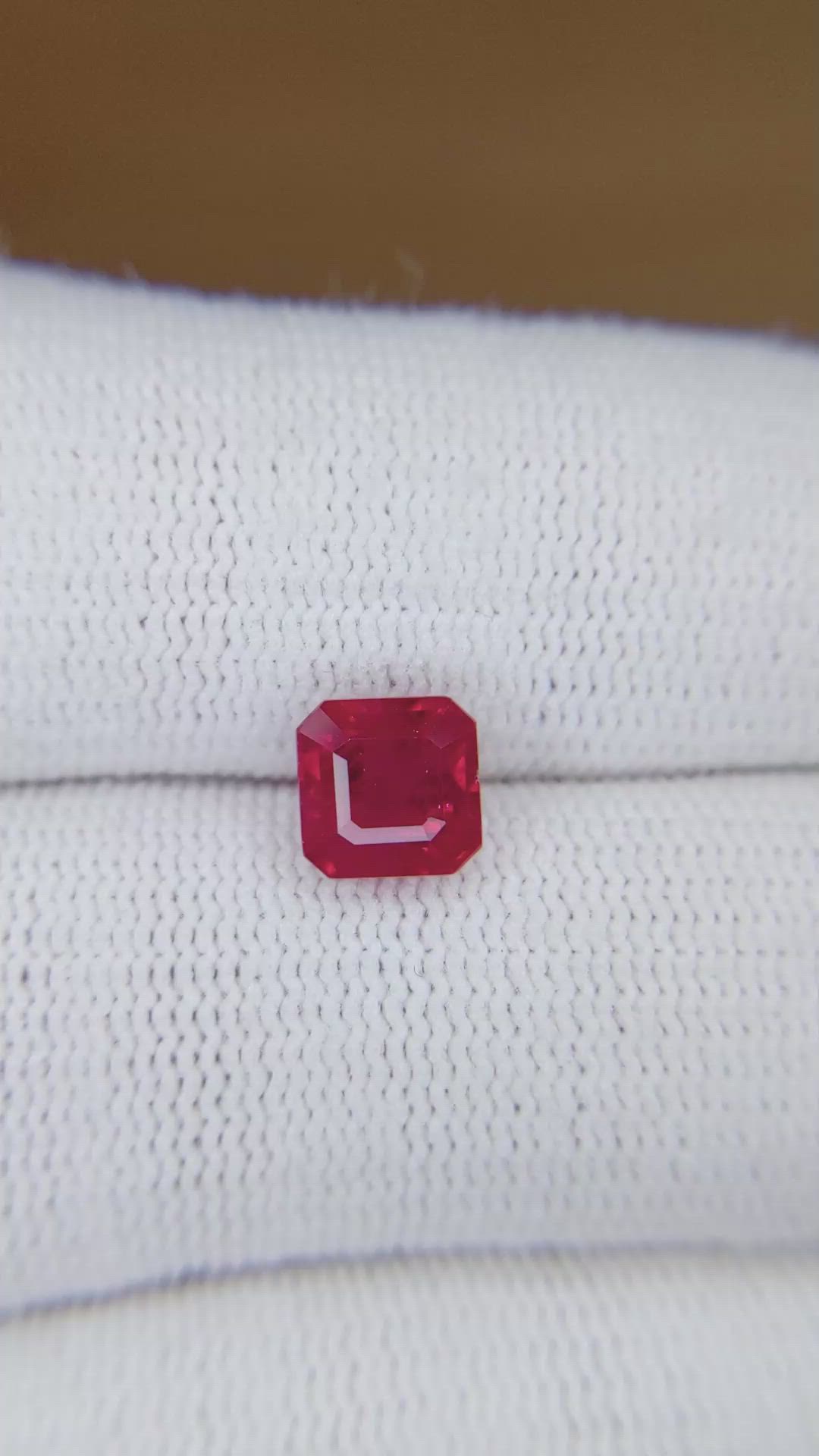
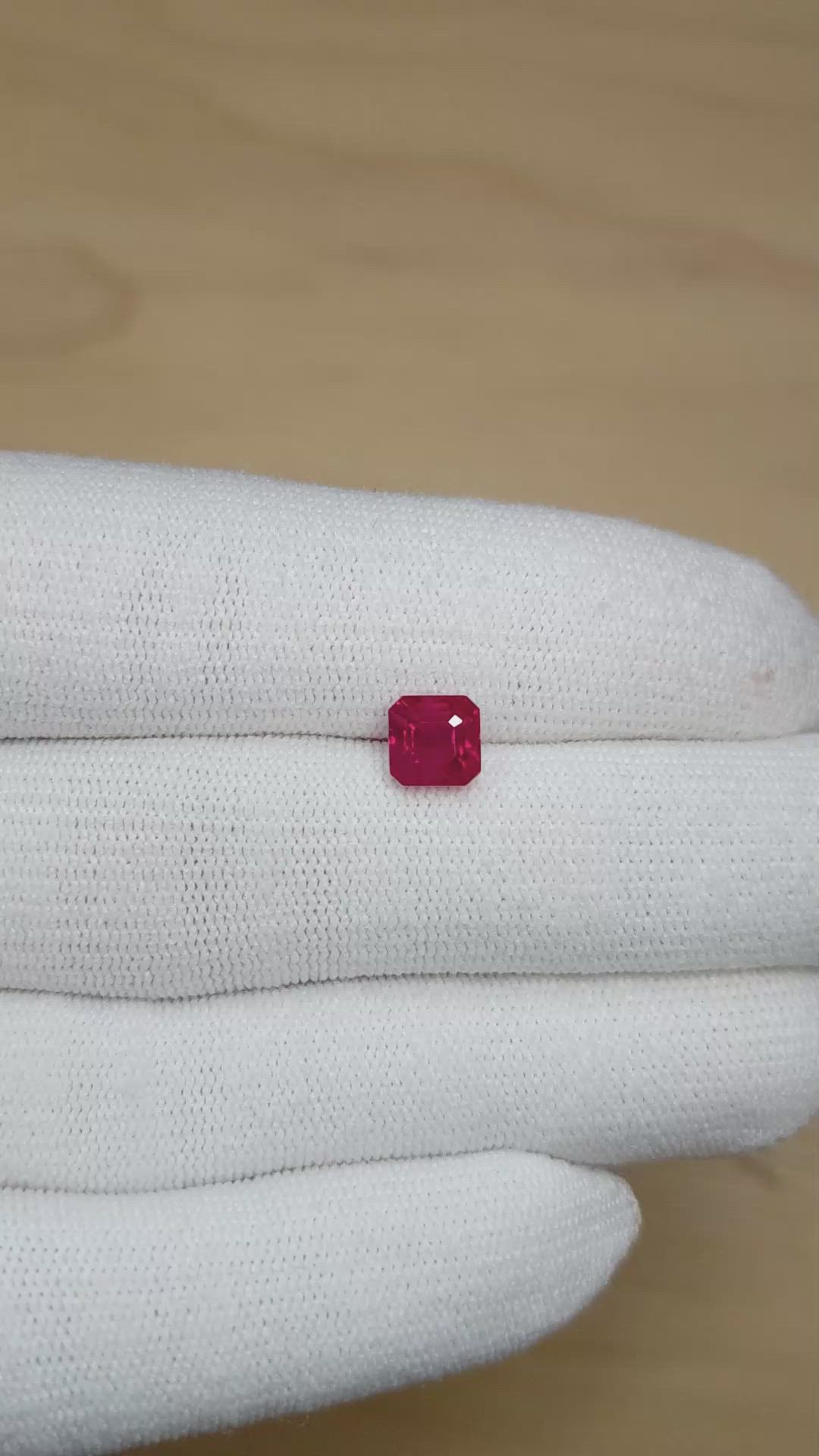
2.08 Ct. Pinkish Red Ruby from Burma (Myanmar)
This loose stone is available to ship now
Item ID: | R16563 |
|---|---|
Dimensions (MM): help | Length: 6.24 Width: 6.16 Height: 5.06 |
Weight: | 2.08 Ct. |
Color: help | Pinkish Red |
Color intensity: help | Vivid |
Clarity: help | Slightly Included |
Shape: help | Asscher - Octagon |
Cut: | Asscher Cut |
Cutting style: | Faceted |
Enhancements: help | Heat Treated |
Origin: help | Burma (Myanmar) |
Per carat price: help | $7,650 |
This natural ruby is a transparent, asscher octagon shape weighing 2.08 carats, with dimensions of 6.24 by 6.16 by 5.06 millimeters, presenting a deliberate balance between face-up presence and depth. The stone exhibits a pinkish red hue with vivid color intensity, an excellent polish, and a clarity grading of slightly included when evaluated at eye level, consistent with many fine rubies that retain strong visual appeal despite minor internal features. Originating from Burma, Myanmar, and subjected to standard heat treatment to enhance color and stability, the gem retains natural character and notable saturation, with facets cut to emphasize both color and internal light return. The asscher cut, an octagonal step-cut variant, offers a scaled symmetry and a series of concentric facets that create a controlled, hall-of-mirrors effect rather than the brilliant sparkle typical of brilliant cuts, making this ruby particularly well suited for settings that showcase color and structured facet patterns.
The geometry of the asscher cut affects how the pinkish red face-up color is perceived, because step facets display large planar surfaces that present color uniformly across the table, rather than scattering light into many flashes. With vivid intensity, this ruby will show saturated color even under moderated lighting, while the slightly included clarity means inclusions are present but do not significantly disrupt transmission or overall transparency at typical viewing distances. The excellent polish enhances facet definition and edge crispness, ensuring the asscher facets read cleanly and the octagonal silhouette appears precise in mounted jewelry. At the stated dimensions, the gem provides a substantial visual footprint for rings, pendants, or earrings, and an open-backed setting will maximize light entry and emphasize depth, while a closed or bezel setting will slightly mute the face-up saturation.
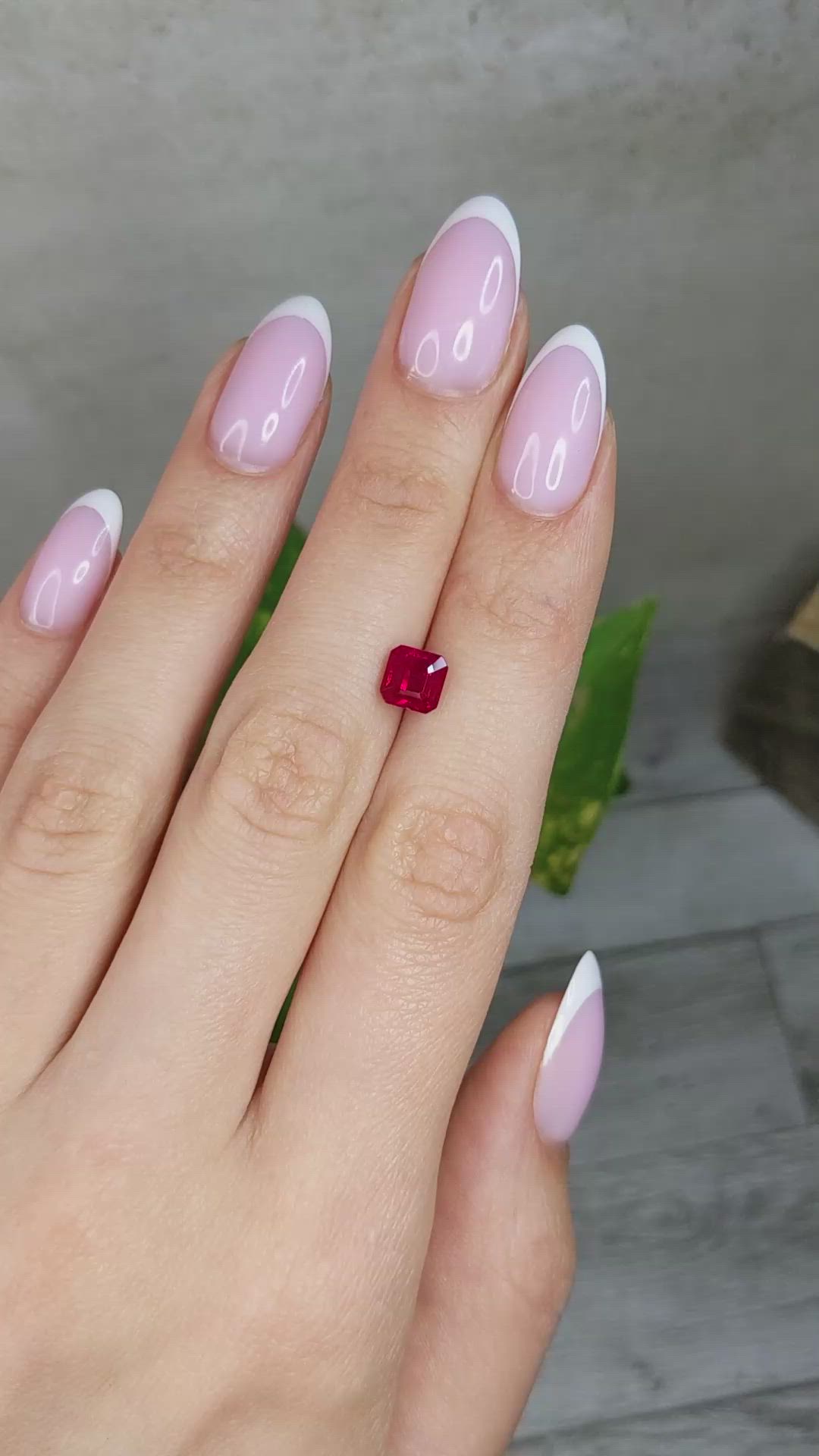
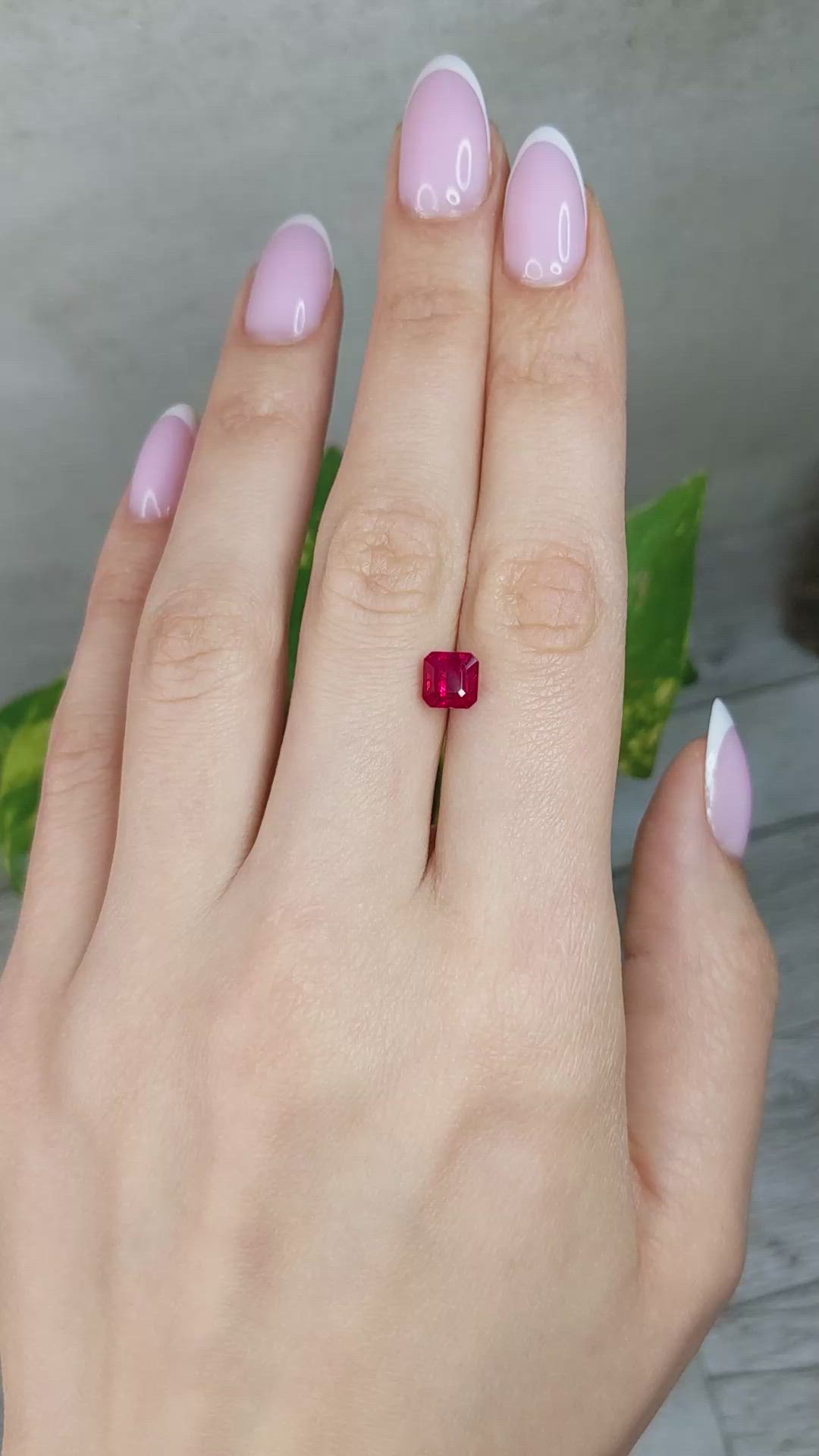
When considering how this pinkish red ruby complements different skin tones, it is useful to think in terms of undertone and the interaction of metal color with the gem. On fair or cool complexions, the pink undertone of this ruby harmonizes with cooler skin tones and the vivid saturation will remain vibrant without appearing overpowering, particularly when set in white metals such as platinum or white gold, which create a clean, modern contrast and can slightly cool the perceived red toward a pure, vivid tone. For neutral to warm fair skin, rose gold can pick up the pinkish nuances in the stone and produce a soft, integrated look that reads as cohesive and feminine. On medium skin tones with olive undertones, the ruby’s pink-red balance works well with yellow or rose gold, where the warmer metal echoes the stone’s warmth and creates a rich, harmonious palette that enhances both the gem and the wearer’s natural complexion. For deeper or richer skin tones, the ruby provides striking contrast and visual depth, appearing particularly luminous when set in yellow gold, which intensifies warmth, or when mounted with small white diamond accents that delineate the gem’s edges, increasing perceived brilliance and presence. In all cases, the asscher cut’s large table displays color consistently, so the choice of metal and surrounding accents is the primary tool for tailoring the ruby’s visual relationship to the wearer’s skin.
Practical considerations for jewelry design and care influence how the ruby will perform in use, and these choices also affect its interaction with skin tones and overall presentation. A four or six prong head, ideally with minimal gallery metal, will expose more pavilion and allow greater light return, preserving the vivid face-up color, while a bezel or partial bezel will protect the stone and offer a more contemporary silhouette at the expense of slightly reducing perceived saturation. A halo of small, high-quality diamonds will add contrast, making the ruby appear more intense and defined, whereas cuff or solitaire styles emphasize color purity and the asscher geometry. Given the slightly included clarity, routine inspection of settings is advisable to ensure inclusions remain protected and to avoid accidental contact with hard surfaces that could propagate internal features. Cleaning with warm water, a mild detergent, and a soft brush, along with periodic professional cleaning and setting checks, will maintain luster and polish. The Natural Ruby Company maintains provenance information for this Burmese ruby and can provide additional details about treatment, recommended settings, and certification upon request, facilitating informed decisions for designers and clients who prioritize both aesthetic outcome and long-term care.


Other Rubies You May Like
