- Stone14
- Reports4
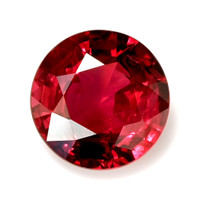
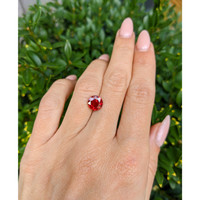
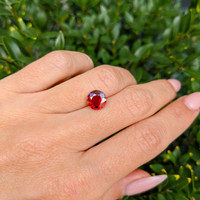
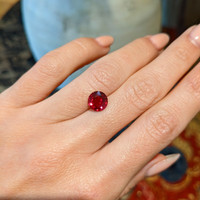
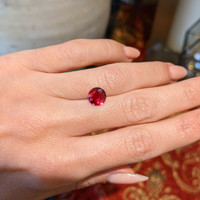
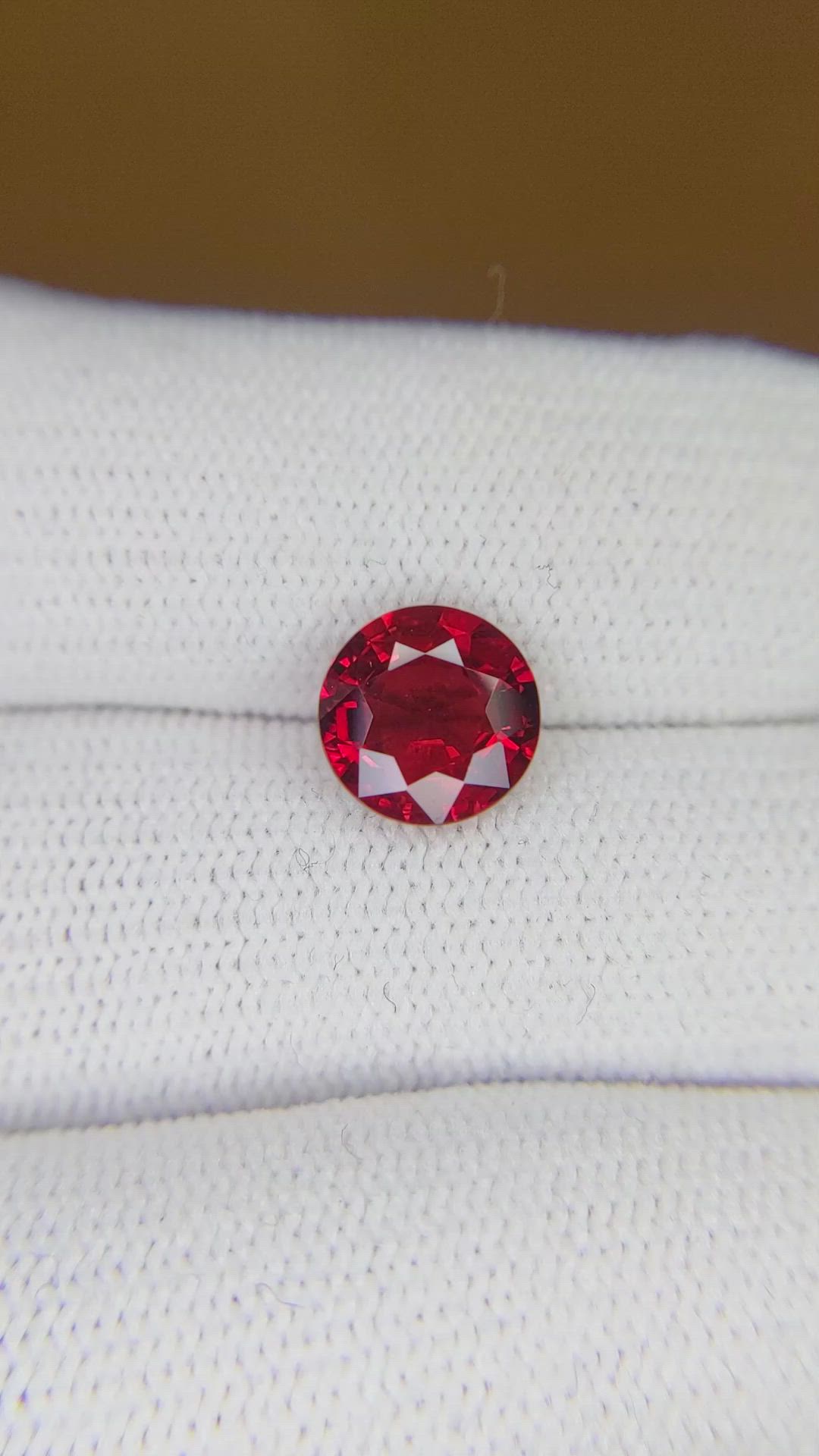
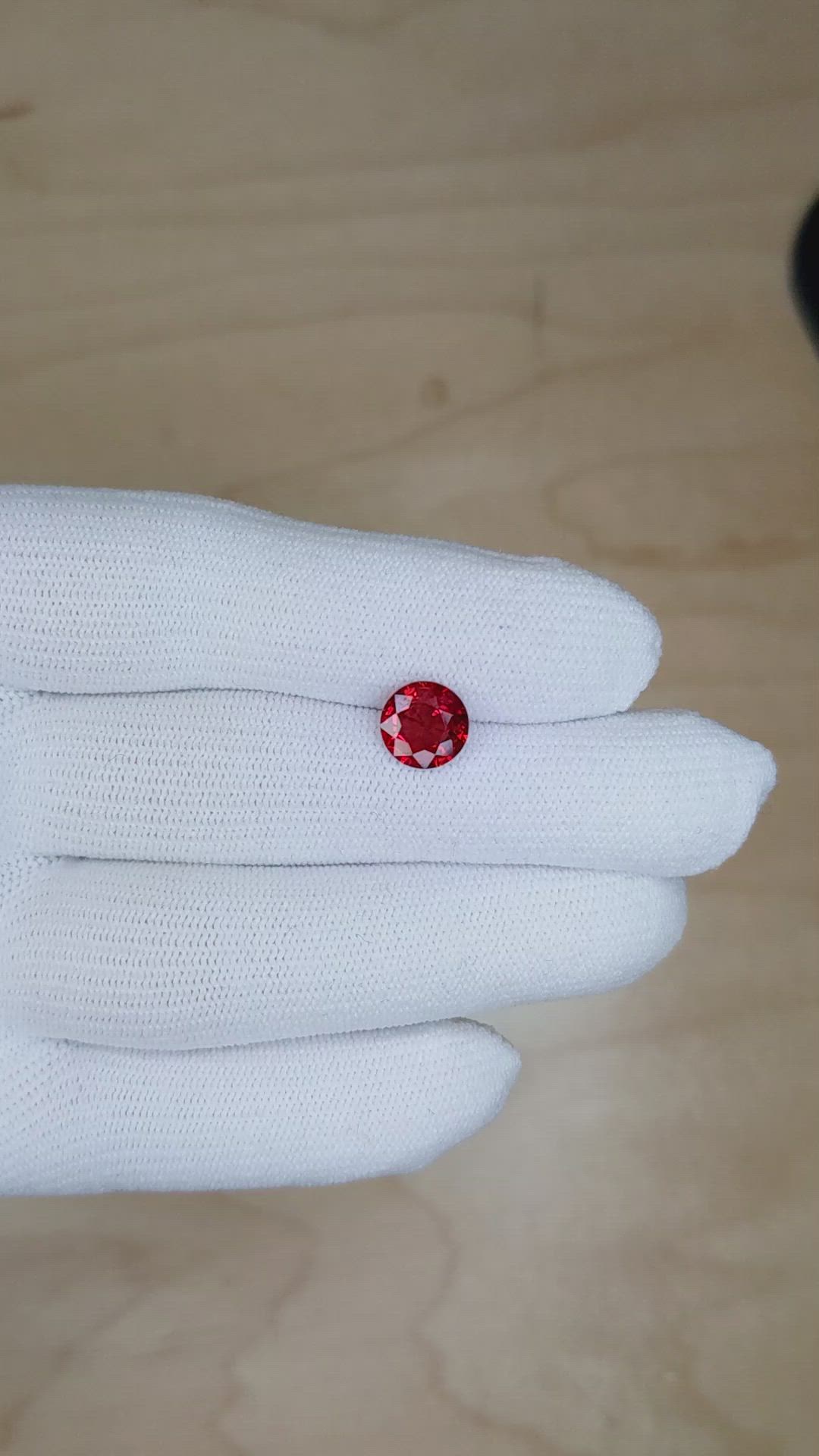
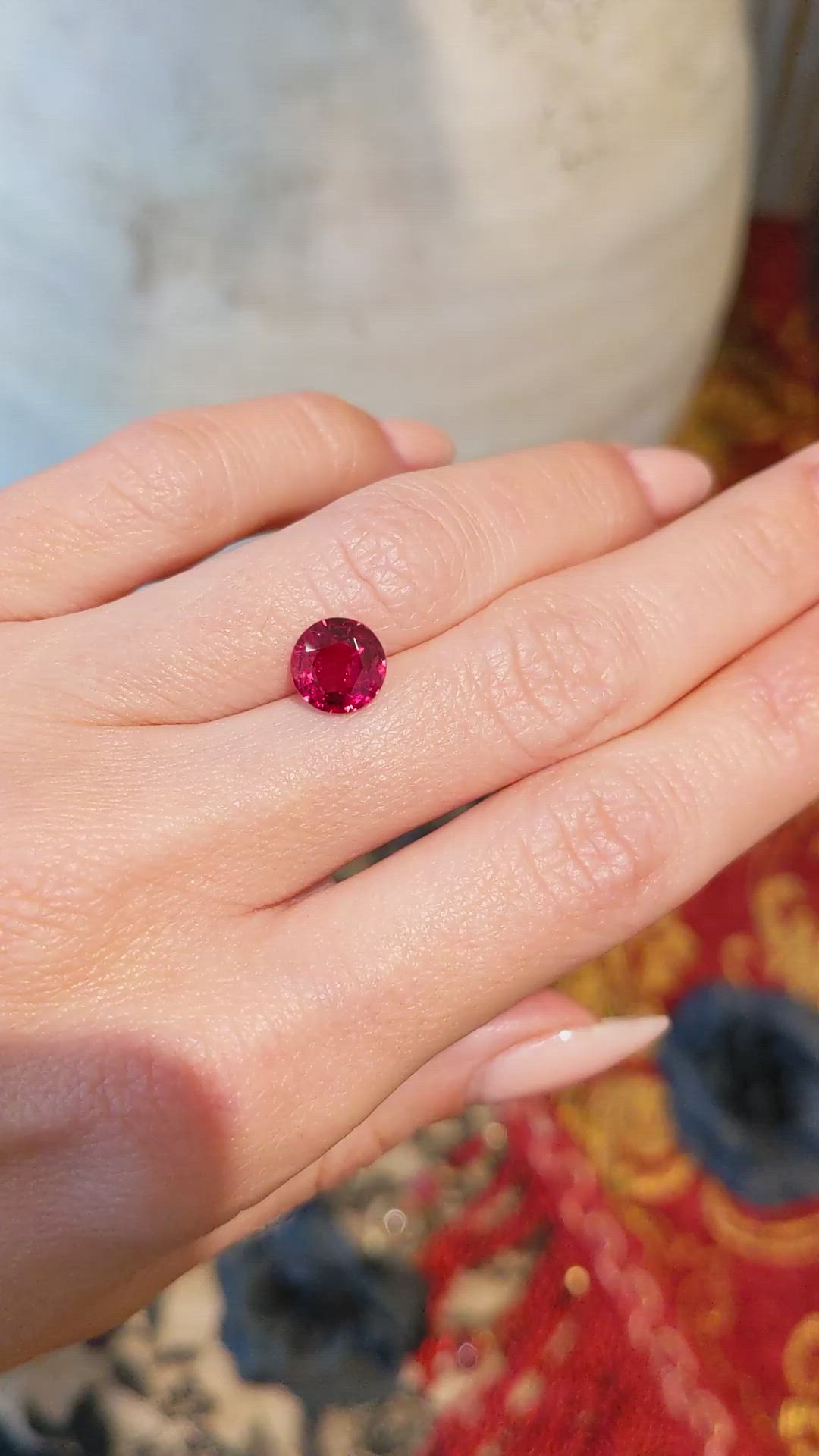

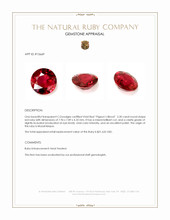

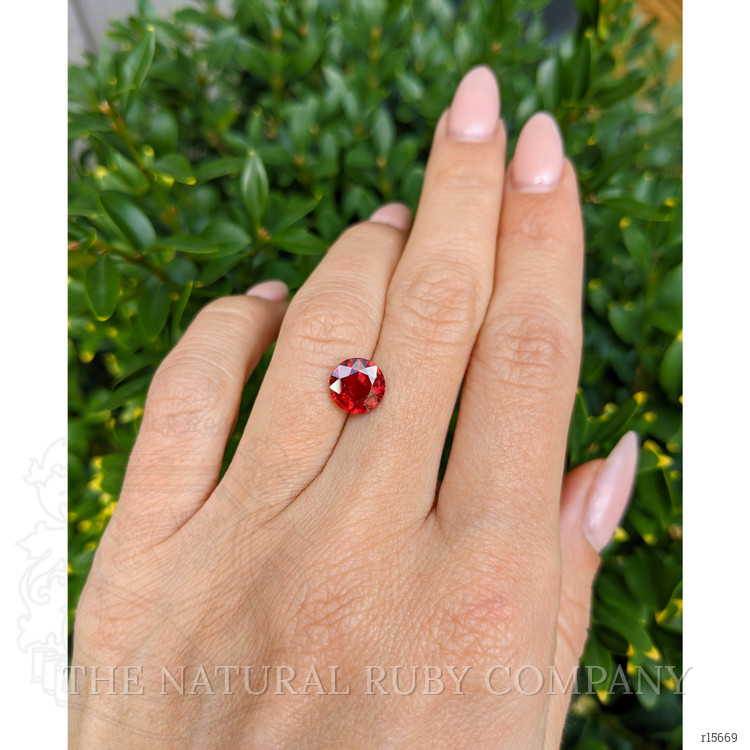
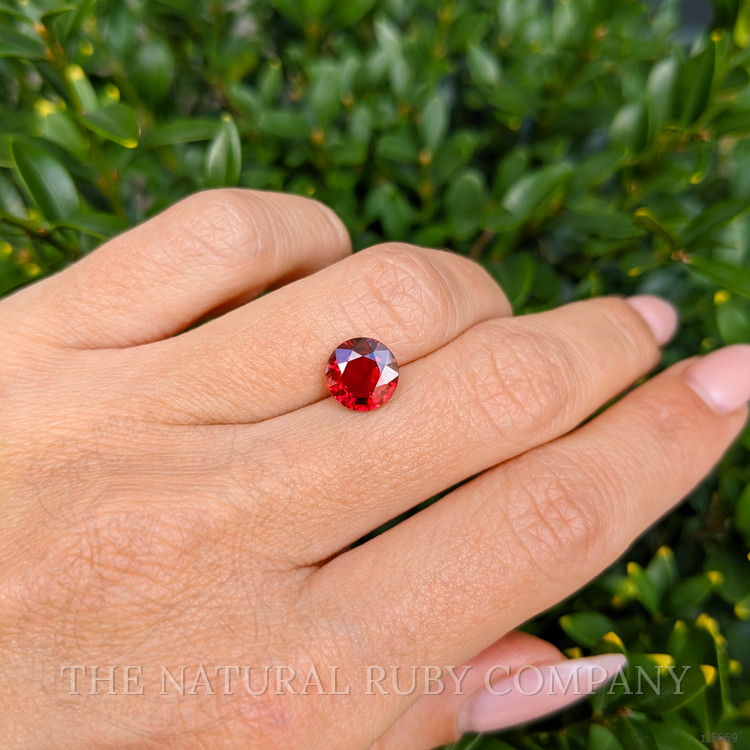
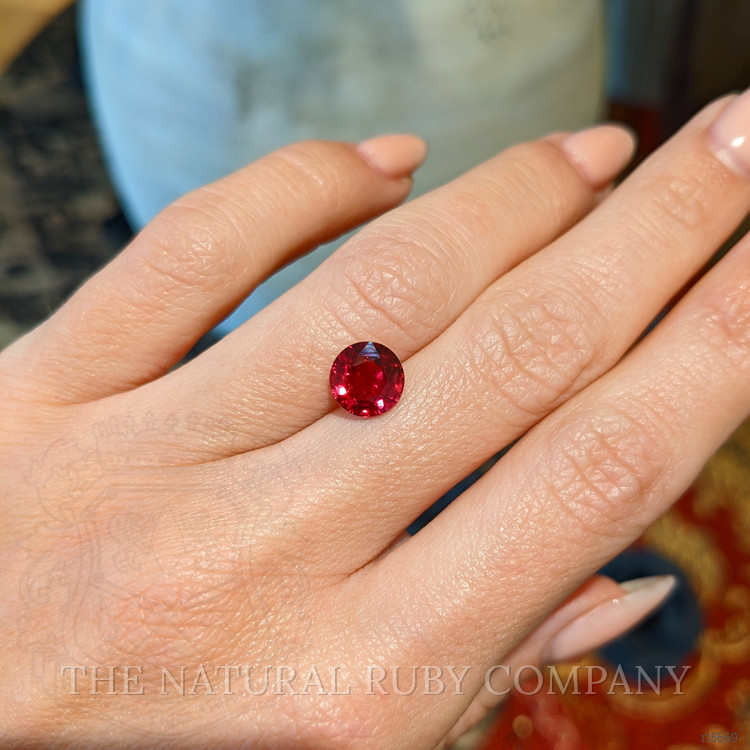
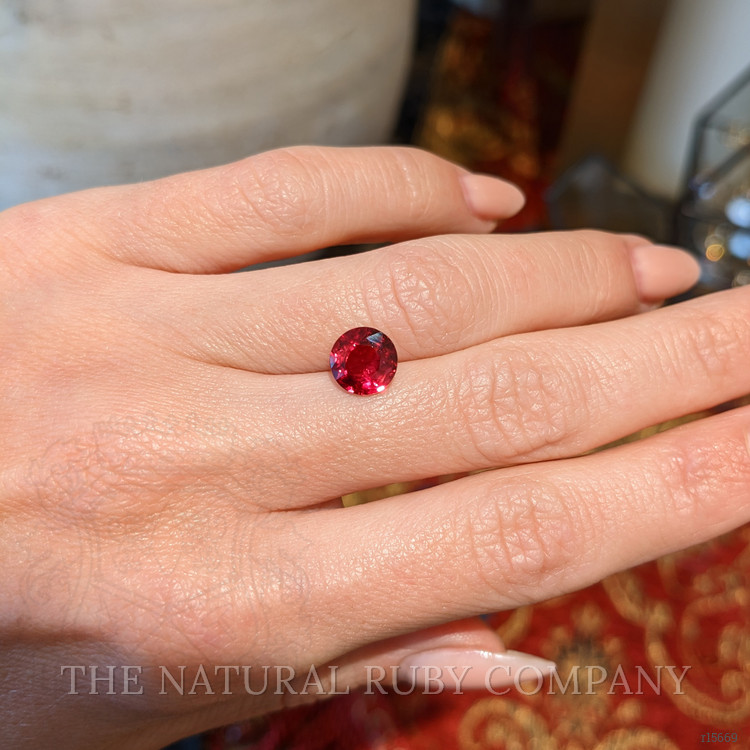

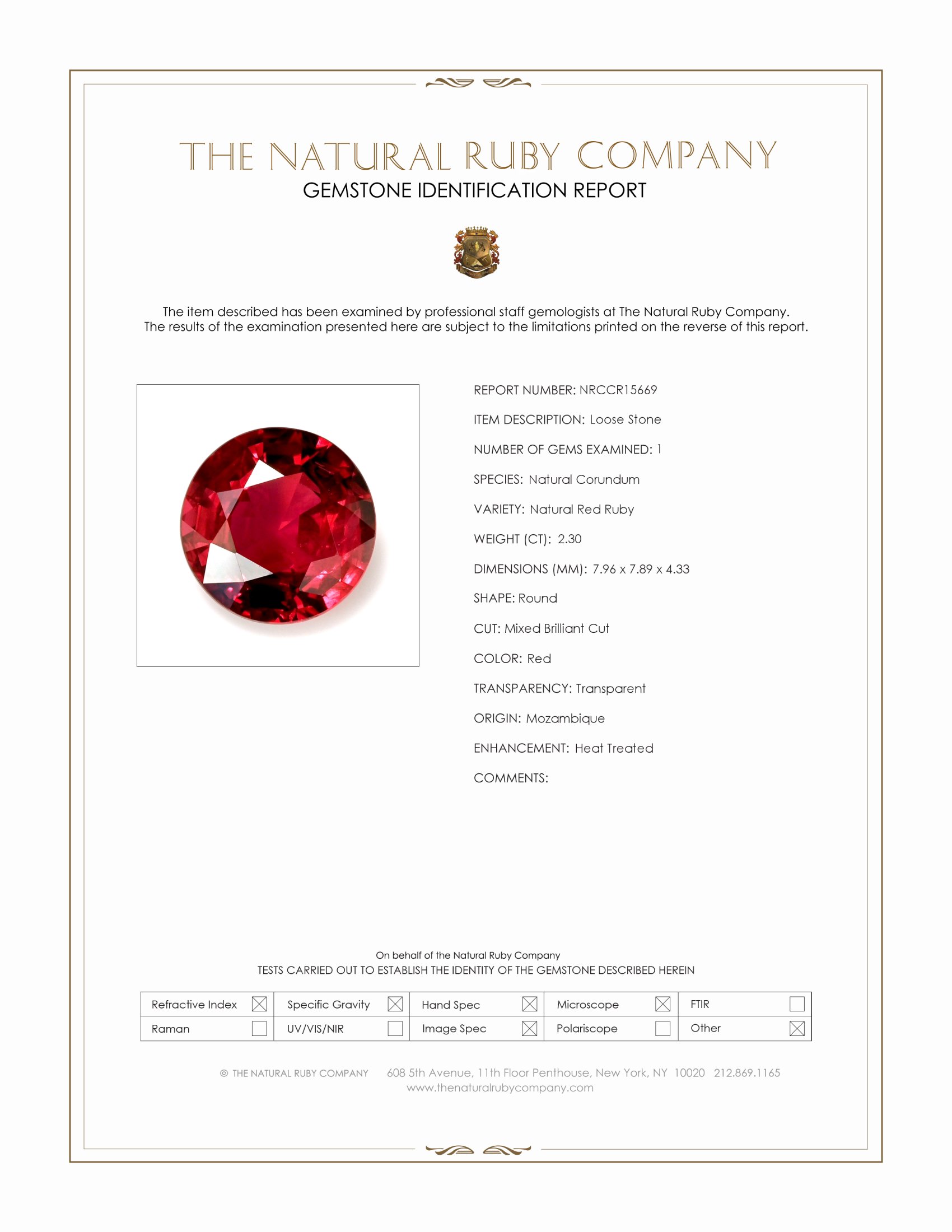
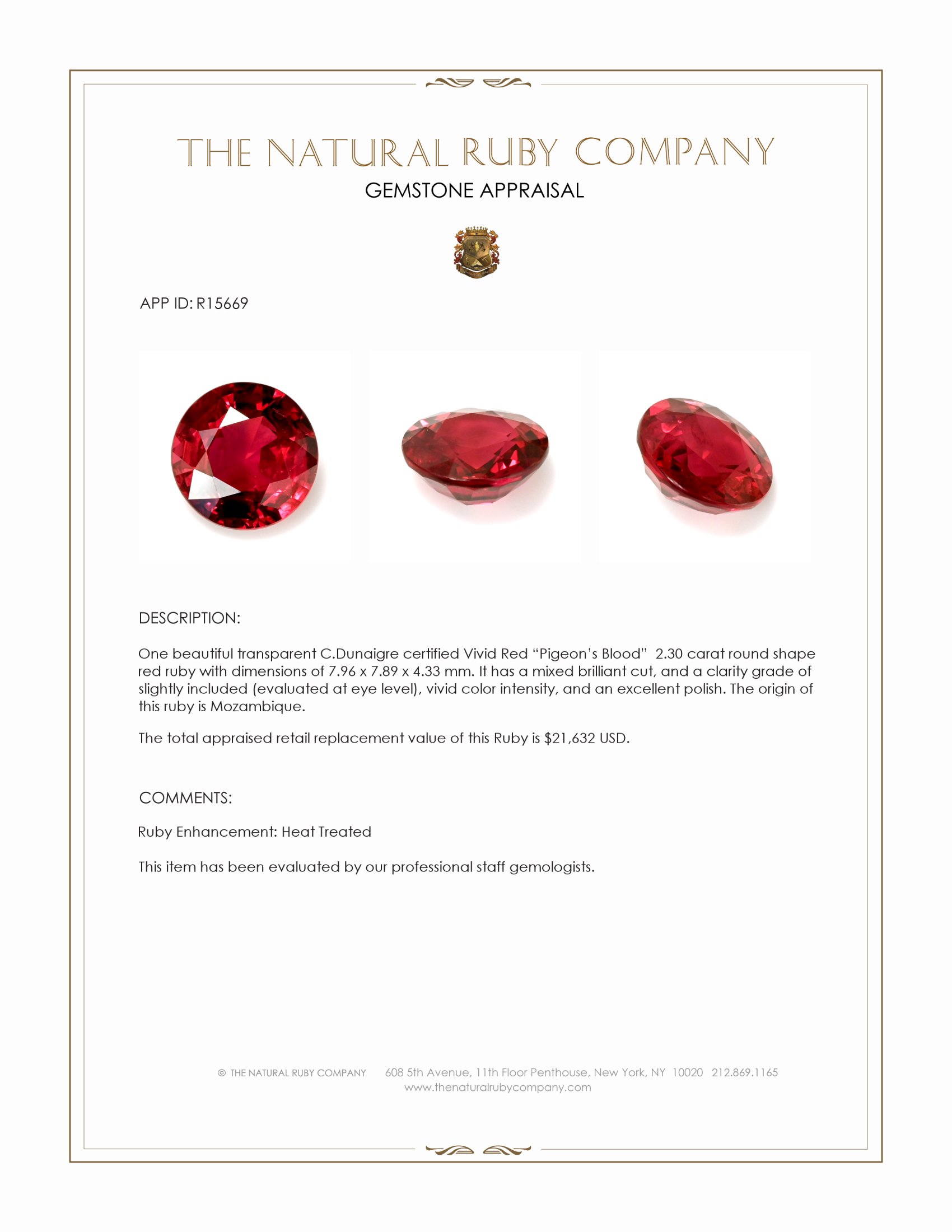
2.30 Ct. Ruby from Mozambique
This loose stone is available to ship now
Item ID: | R15669 |
|---|---|
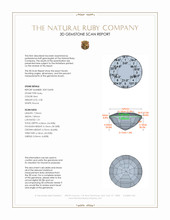
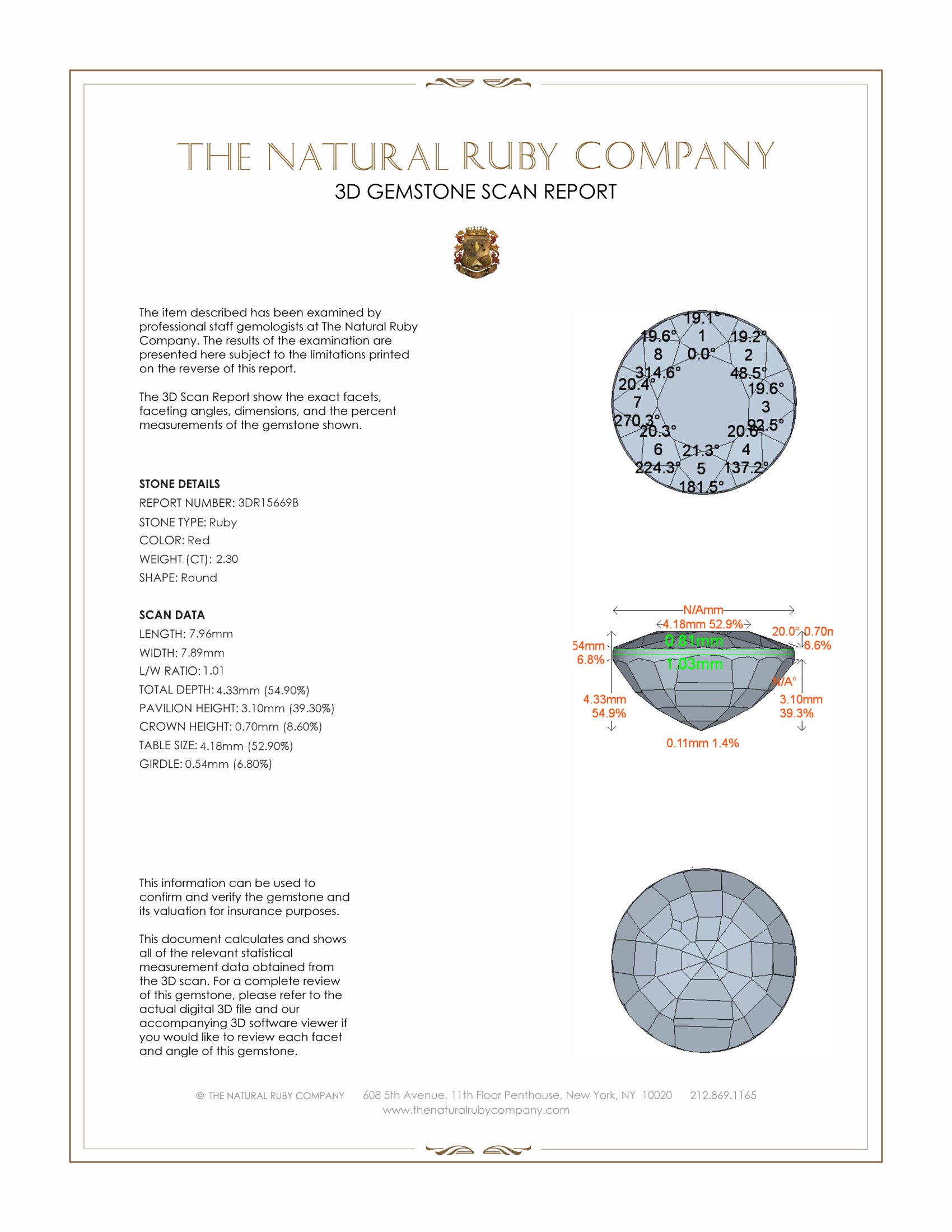
Dimensions (MM): help | Length: 7.96 Width: 7.89 Height: 4.33 |
Weight: | 2.30 Ct. |
Color: help | Red |
Color intensity: help | Vivid |
Clarity: help | Slightly Included |
Shape: help | Round |
Cut: | Mixed Brilliant Cut |
Cutting style: | Faceted |
Enhancements: help | Heat Treated |
Origin: help | Mozambique |
Per carat price: help | $9,405 |
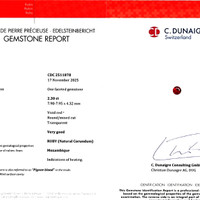
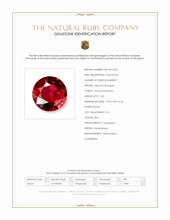
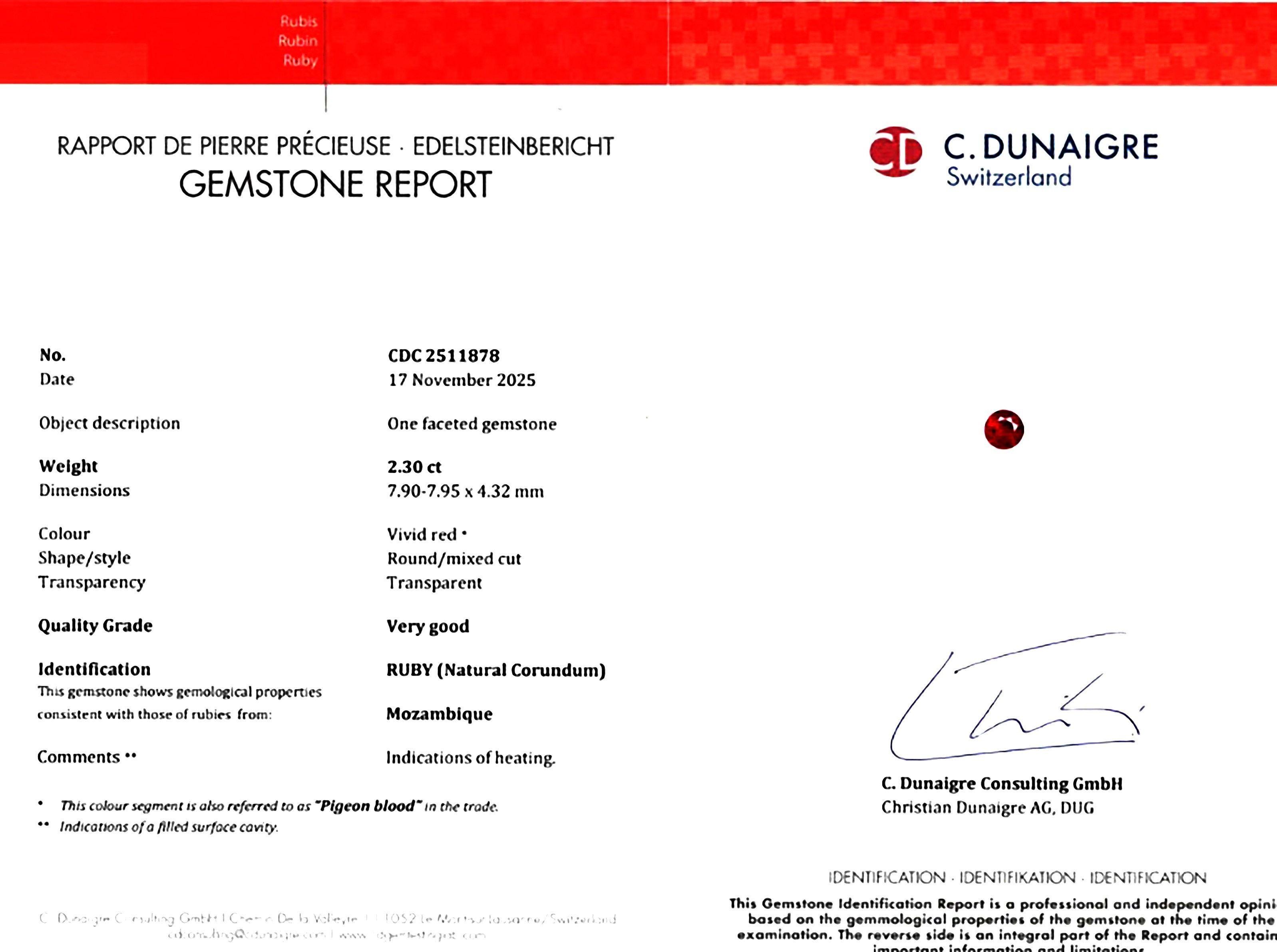
This offering from The Natural Ruby Company is a transparent, C.Dunaigre certified Vivid Red pigeon s blood ruby, weighing 2.30 carats, in a round shape with clean dimensions of 7.96 by 7.89 by 4.33 millimeters. The cutting style is faceted, executed as a mixed brilliant cut that intentionally balances brilliant crown facet geometry with a complementary pavilion faceting scheme to maximize face up color. The clarity is graded as slightly included at eye level, which in practice means small inclusions are present but do not materially interrupt the gem s red field when set. The stone is heat treated, a stable and widely accepted enhancement that has been applied to refine color and clarity without compromising structural integrity. The polish is excellent, producing crisp facet junctions and smooth facet planes that contribute to lively light return and a clean, saturated presentation of the vivid red tone. Origin is Mozambique, and the C.Dunaigre certification documents the combination of origin, treatment and the vivid pigeon s blood color grade.
From a gemological and cutting perspective, the mixed brilliant design on this round ruby is engineered to favor saturated face up color while retaining lively scintillation. Using the provided diameters the average table diameter is approximately 7.925 millimeters, and the depth of 4.33 millimeters yields a relative depth of about 54.7 percent. This proportion is intentionally on the shallower side for round mixed cuts, which serves to broaden the table and deepen apparent saturation in the crown area under normal viewing conditions. The crown facet arrangement follows a brilliant schema designed to break up and return white light, while the pavilion incorporates a modified facet set that refracts and recirculates red wavelengths back to the table, enhancing the pigeon s blood effect. Excellent polish and tight facet junctions mean that facet faces remain stable and deterministic under loupe magnification, allowing cutters to fine tune facet angles to exploit the ruby s internal crystal orientation and inclusion pattern without introducing windowing or dead zones.
For precision setting and bespoke mounting, this 2.30 carat ruby benefits from setting strategies that respect its slightly included clarity and the moderate depth proportion. A four prong head with well formed, rounded prongs keeps the crown open to light, maximizing color saturation and brilliance, while minimizing metal intrusion on the table. A partial or low bezel can be used to increase protection for everyday wear, particularly for ring designs, but should be executed with a thin, high quality finish to avoid muting the stone s face up tone. Micro setting techniques for accompanying accent stones require careful planning of pavilion clearances, because the slightly included clarity can be masked by tight halo placements but must not be crowded in a way that traps dirt. For shoulder stones, tapered baguette or trapeze cuts work well with a mixed brilliant center because their linear facets provide contrasting reflections that frame and intensify the central red. Platinum settings maximize perceived contrast, sending cooler reflections into the surrounding diamonds and creating a striking counterpoint to the ruby s vivid warmth, whereas 18 karat yellow or 18 karat rose gold will sympathetically warm the ruby and enhance red saturation for a more classic or vintage aesthetic.
When considering complementary gemstones in a custom piece, several directions are technically and aesthetically compelling. A halo of high quality white diamonds, micro pavé or single cut, will increase apparent size and introduce high contrast scintillation, particularly if the diamonds are set in a low profile micro prong or gypsy style halo that keeps the crown visible. For side stones, matched tapered baguettes in D to G color range and high clarity will create strong linear accents that draw the eye to the center, sizes in the range of two times 0.25 carat each balance the 2.30 carat center without overpowering it. For a colored palette, saturated Ceylon blue sapphires or classic Kashmir tone inspired sapphires provide a cool contrast that intensifies the ruby s red by complementary color interaction, while padparadscha or orange sapphires produce a warm graded effect that emphasizes orange red undertones when present. Emeralds can be used for bold triad contrast but require careful setting and cutoff posts to protect them from accidental impact, given their different cleavage properties. In any pairing strategy, facet orientation and table alignment of side stones should be coordinated to avoid parasitic reflections and to ensure the ruby s pigeon s blood hue remains dominant when viewed straight on. The Natural Ruby Company recommends bespoke CAD consultation for final proportions, to ensure that metal, prong geometry, and accent faceting are optimized to present the ruby with maximum color fidelity and secure mechanical support.


Other Rubies You May Like

