
- Ring17
- Reports3



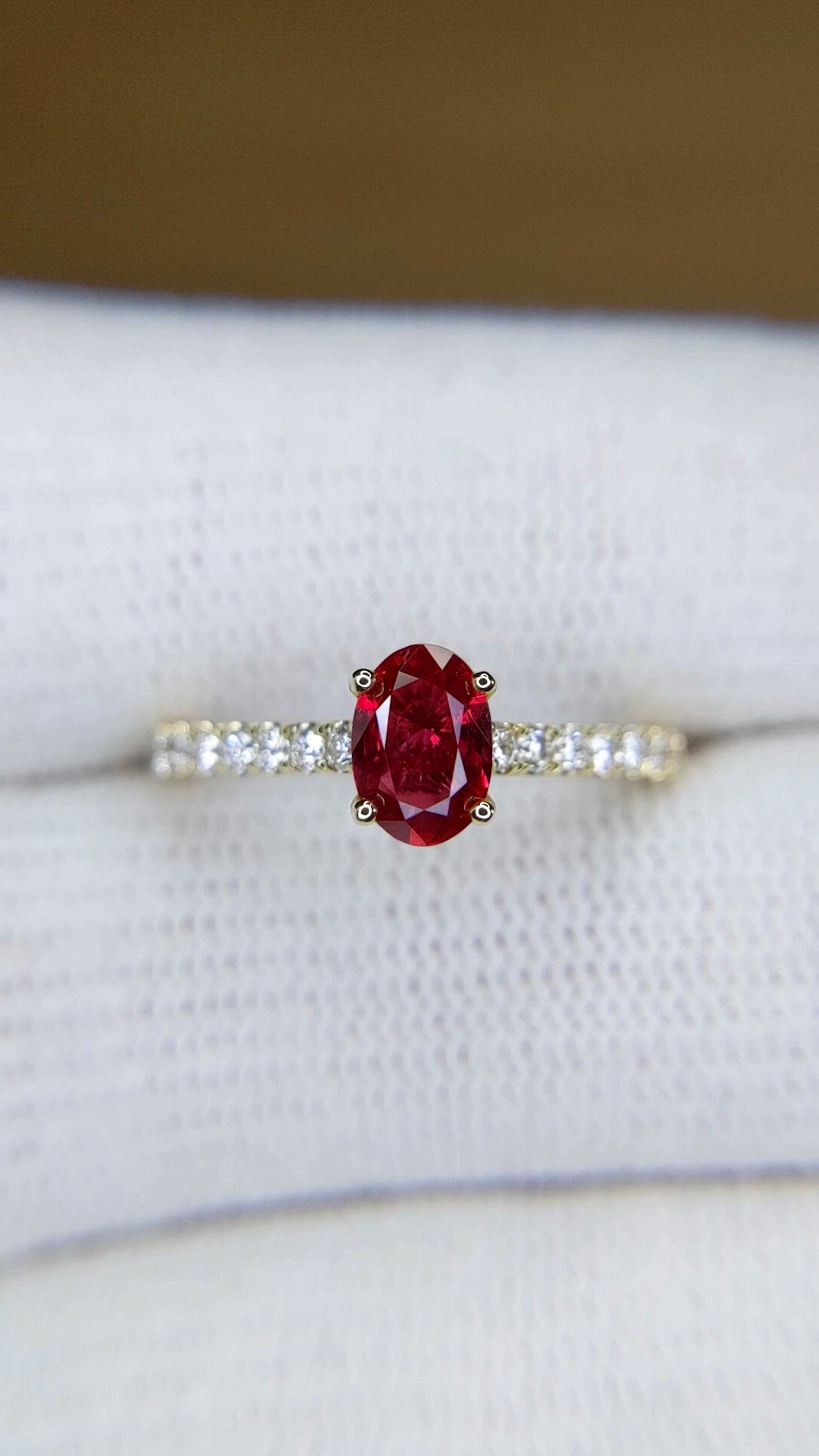
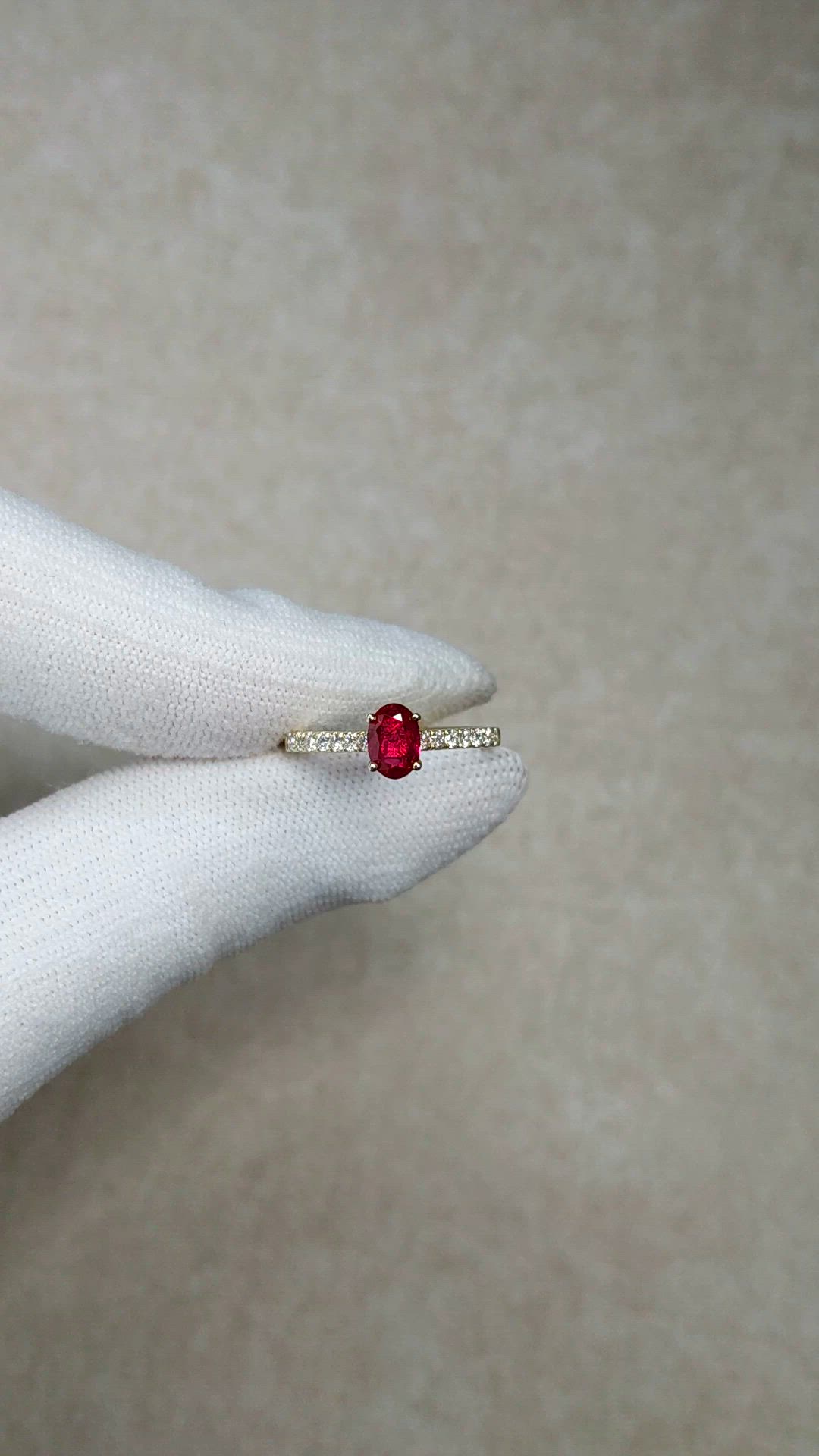
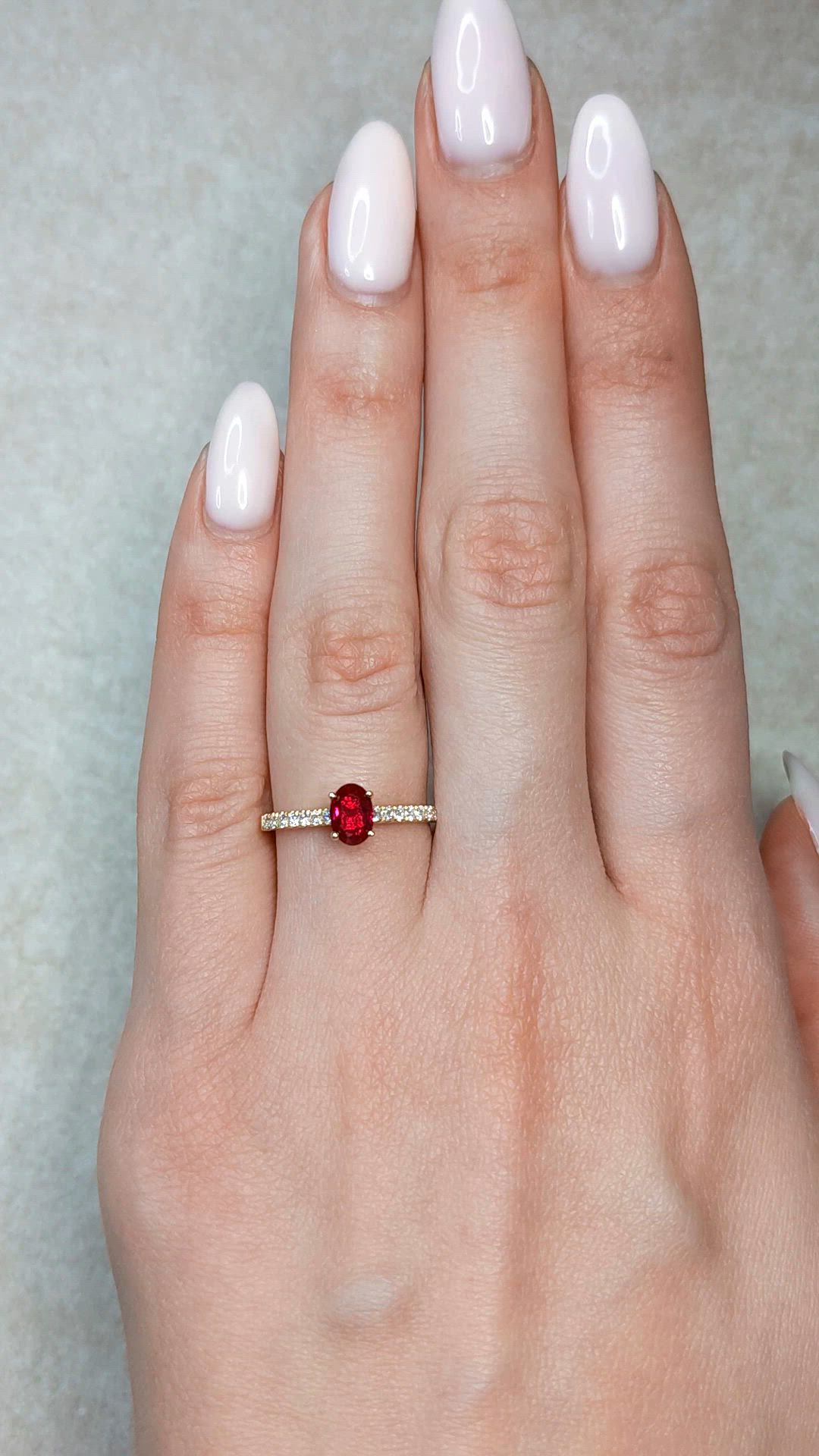
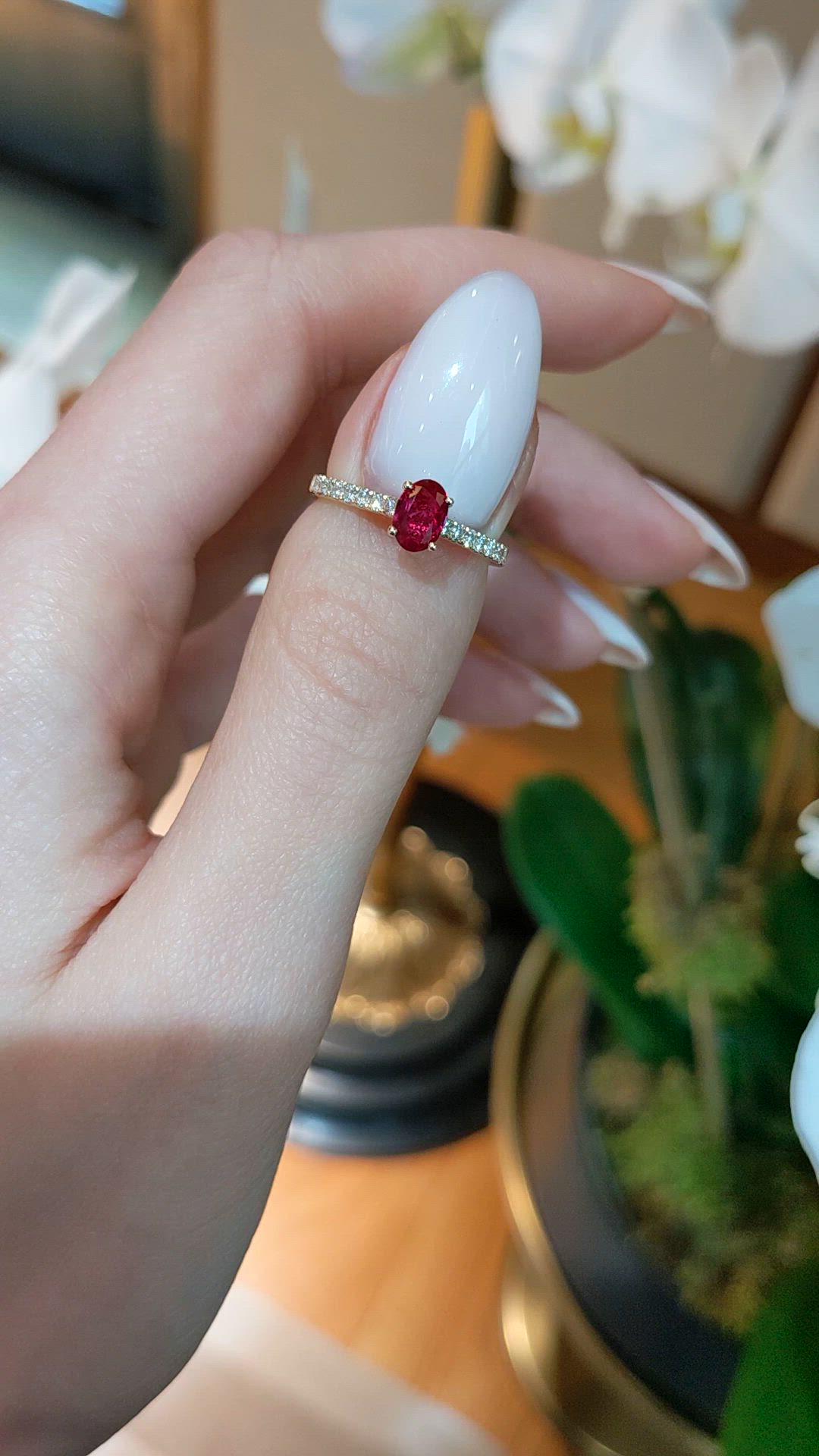


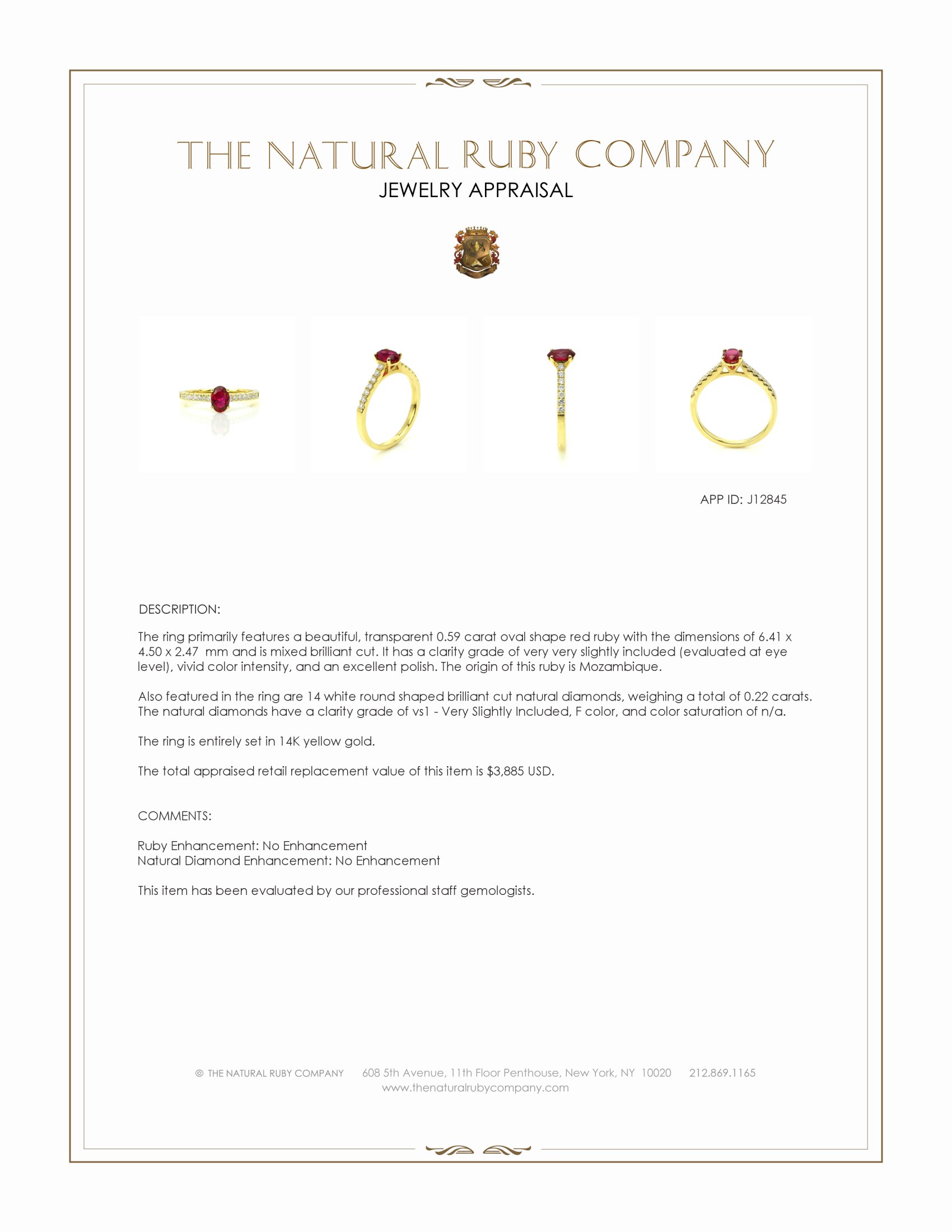
0.59 Ct. Ruby and Natural Diamond Pave Ring, 14K Yellow Gold
This ring is available to ship now
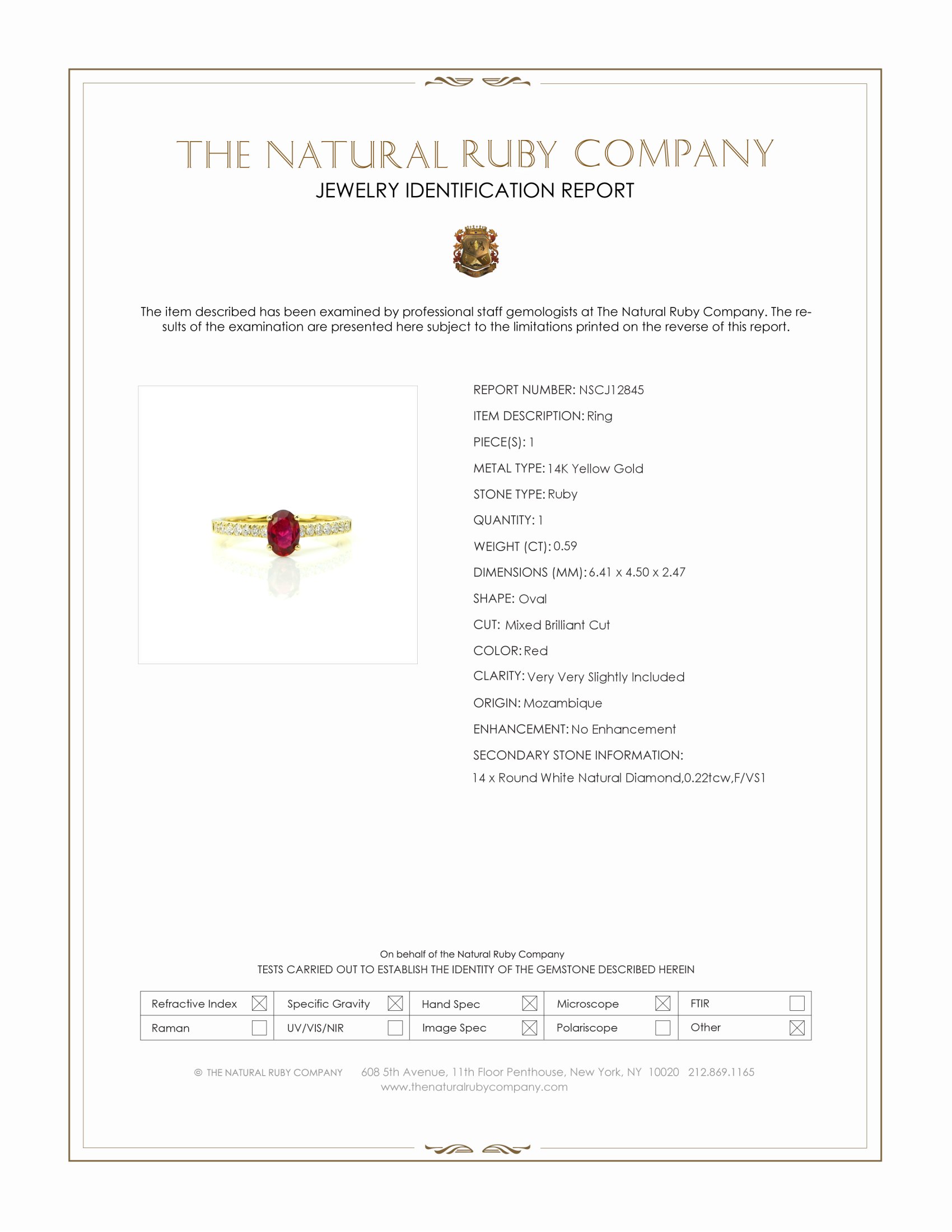
Stone type: | Ruby | Natural Diamond |
|---|---|---|
Quantity: | 1 | 14 |
Dimensions (MM): help | Length: 6.41 Width: 4.5 Height: 2.47 | Length: 1.5 Width: 1.5 Height: 0.75 |
Total weight: | 0.59 Ct. | 0.22 Ct. |
Color: | Red | White |
Color intensity: help | Vivid | N/A |
Color grade | N/A | F |
Clarity: | Very Very Slightly Included | VS1 - Very Slightly Included |
Shape: help | Oval | Round |
Cut: | Mixed Brilliant Cut | Brilliant Cut |
Cutting style: | Faceted | Faceted |
Enhancements: help | No Enhancement | No Enhancement |
Origin: help | Mozambique | Unknown |
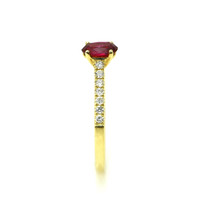
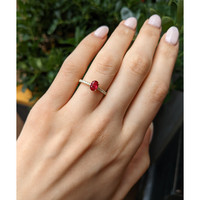
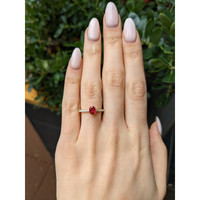
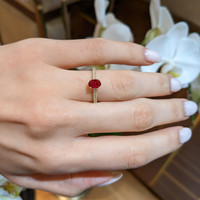
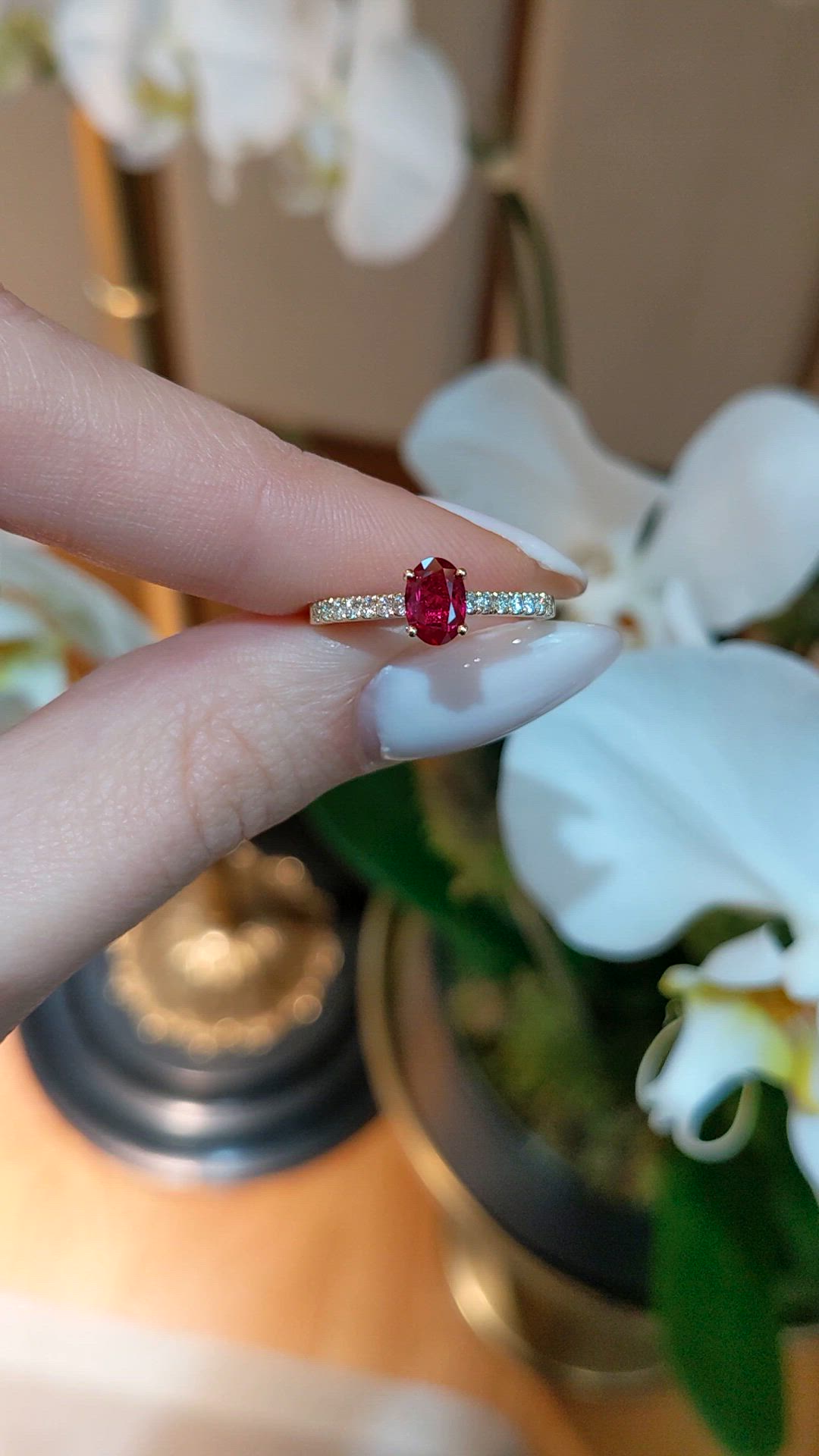
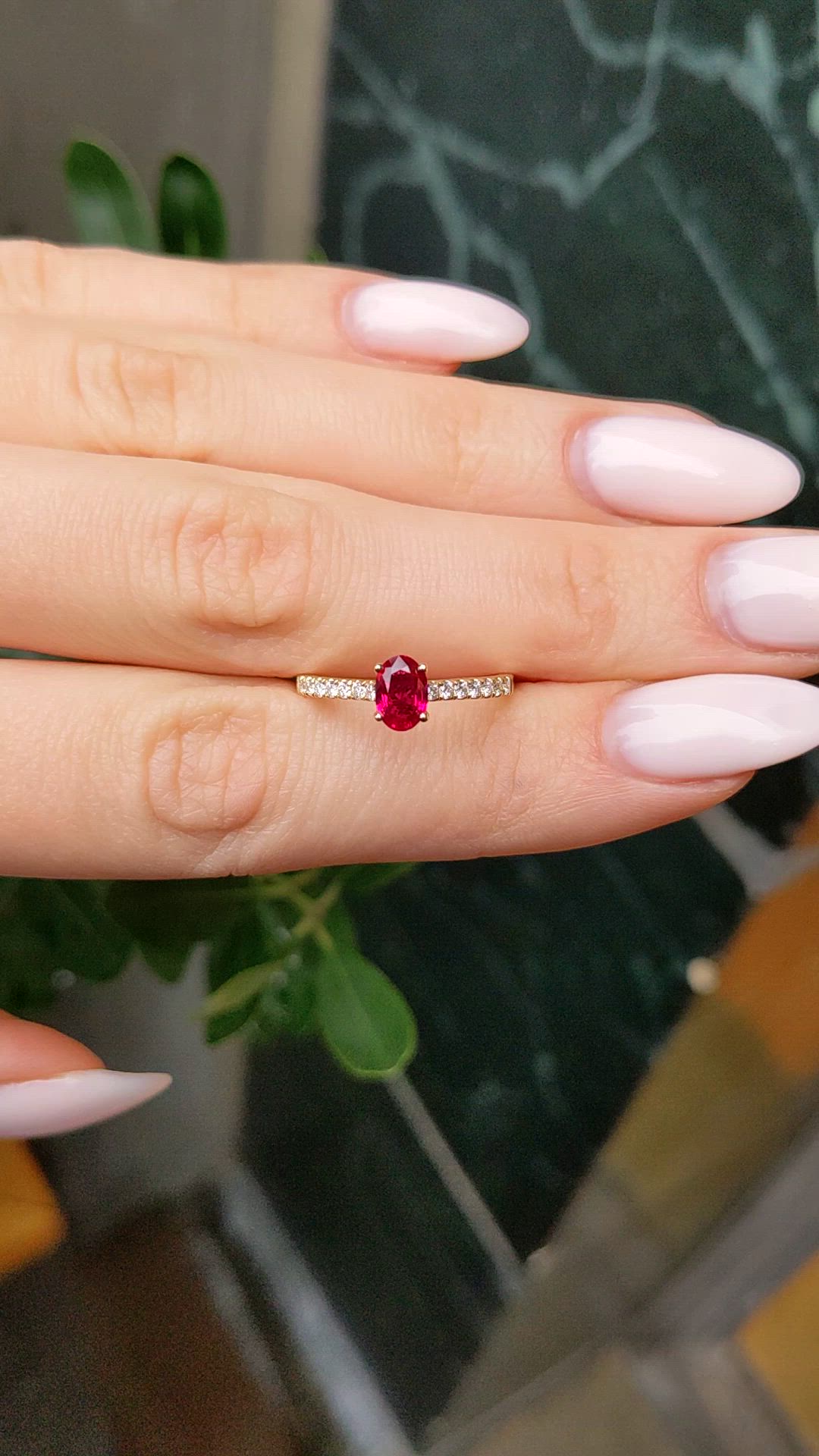
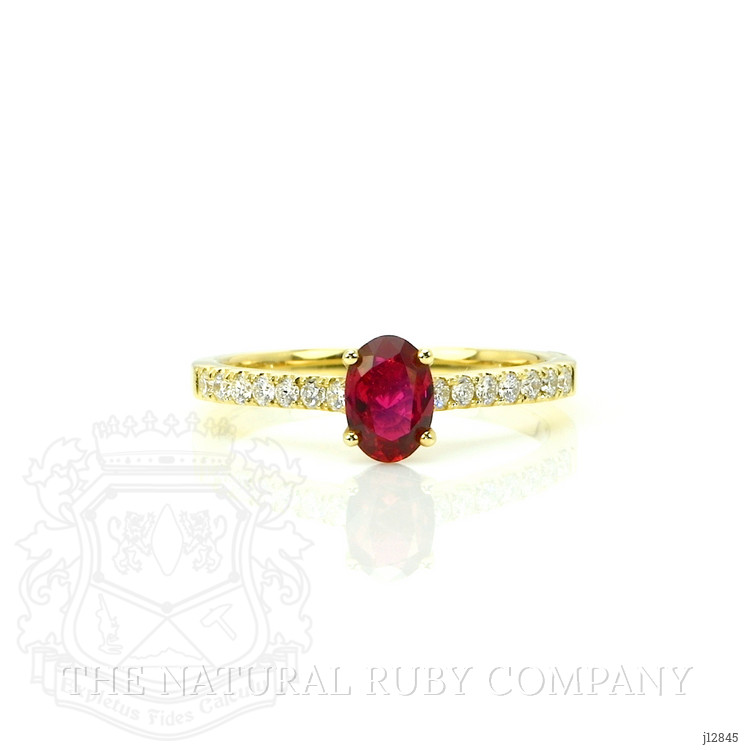
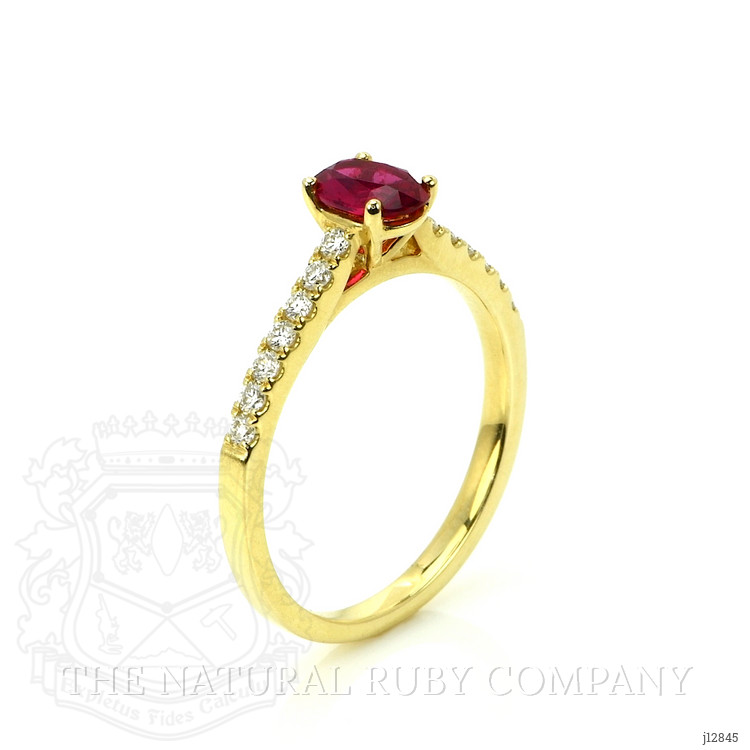
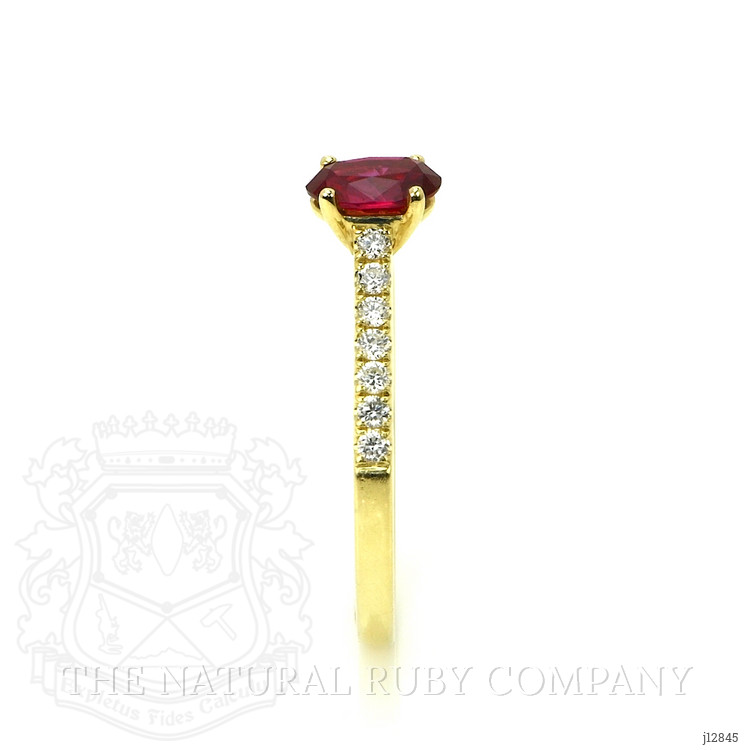
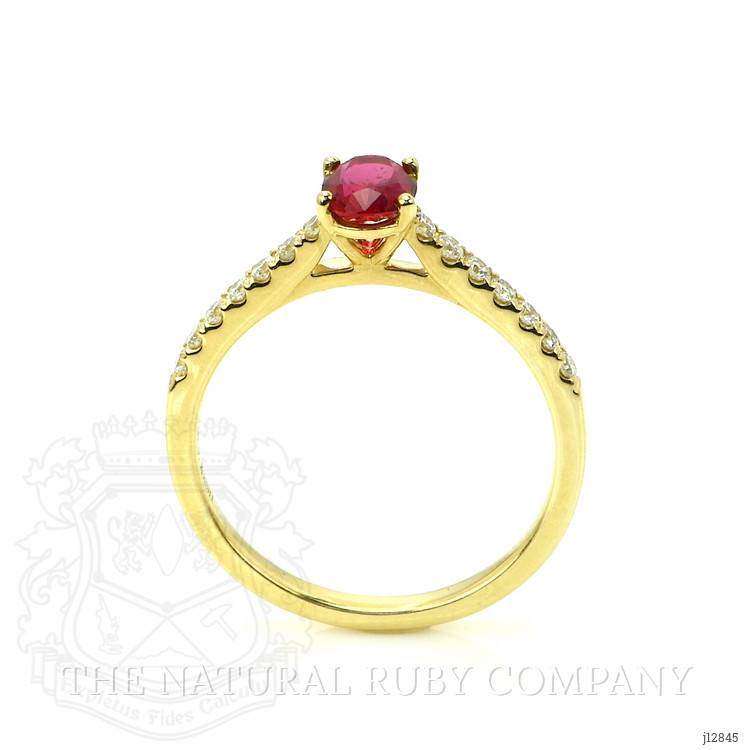
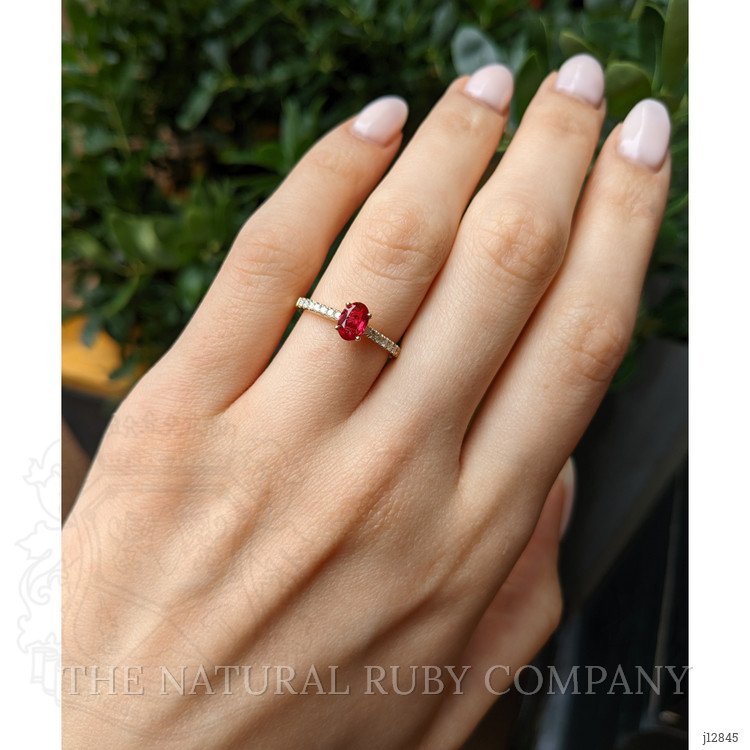
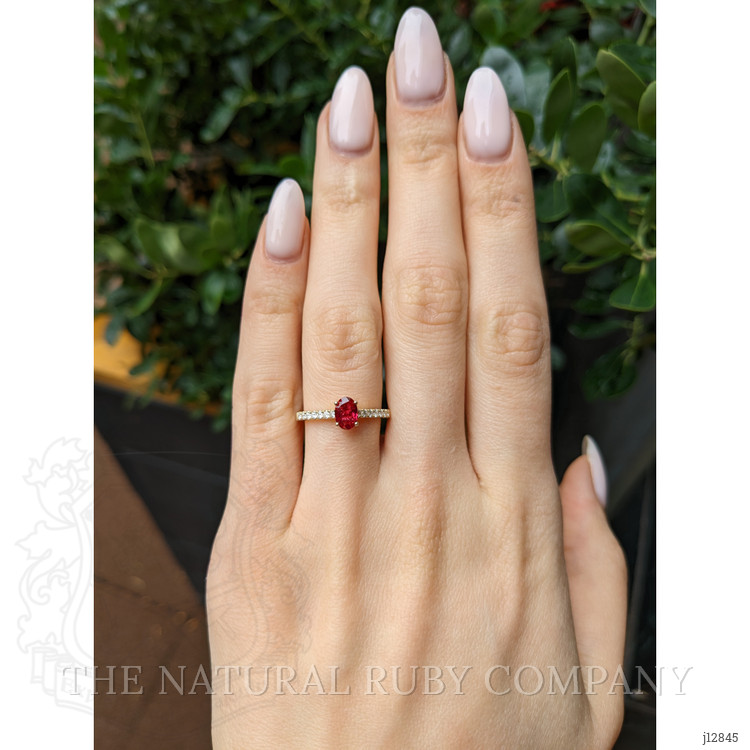
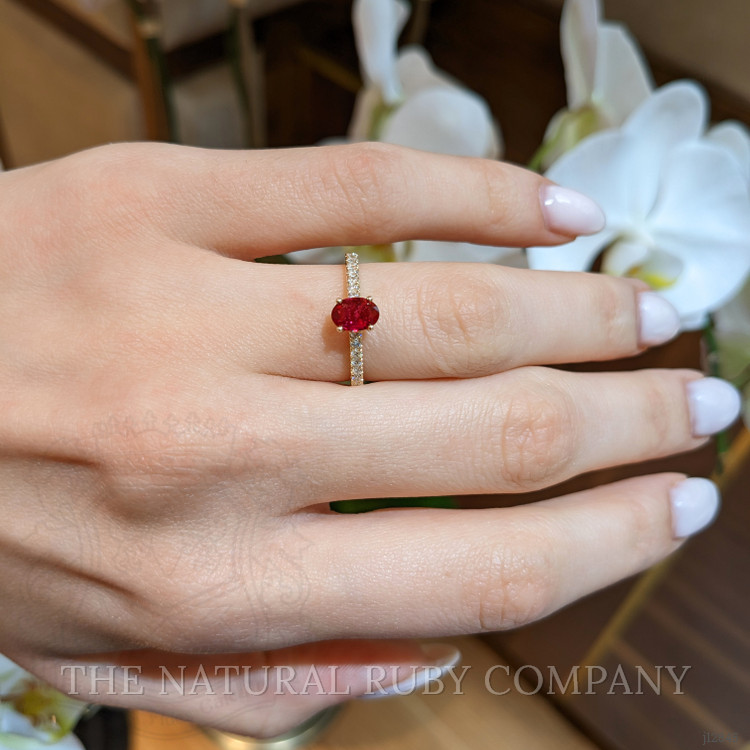
This ring presents a classic, restrained silhouette executed entirely in 14K yellow gold, with an oval ruby set at its center, elevated in a four prong basket and flanked by a single row of pavé set diamonds along the shoulders. The ruby reads as a richly saturated red with medium to strong tone, offering a depth of color that immediately draws the eye, while the yellow gold warms and intensifies the stone’s red, creating a traditional and romantic color pairing. The pavé diamonds are small and closely spaced, adding scintillation without overwhelming the central gem, and the gallery beneath the ruby features triangular openwork that both lightens the profile and admits light to the pavilion for added liveliness. This piece reads as a modern, wearable classic, suitable for an engagement ring or a significant gift, with proportions that emphasize the ruby’s color and presence rather than sheer carat dominance.
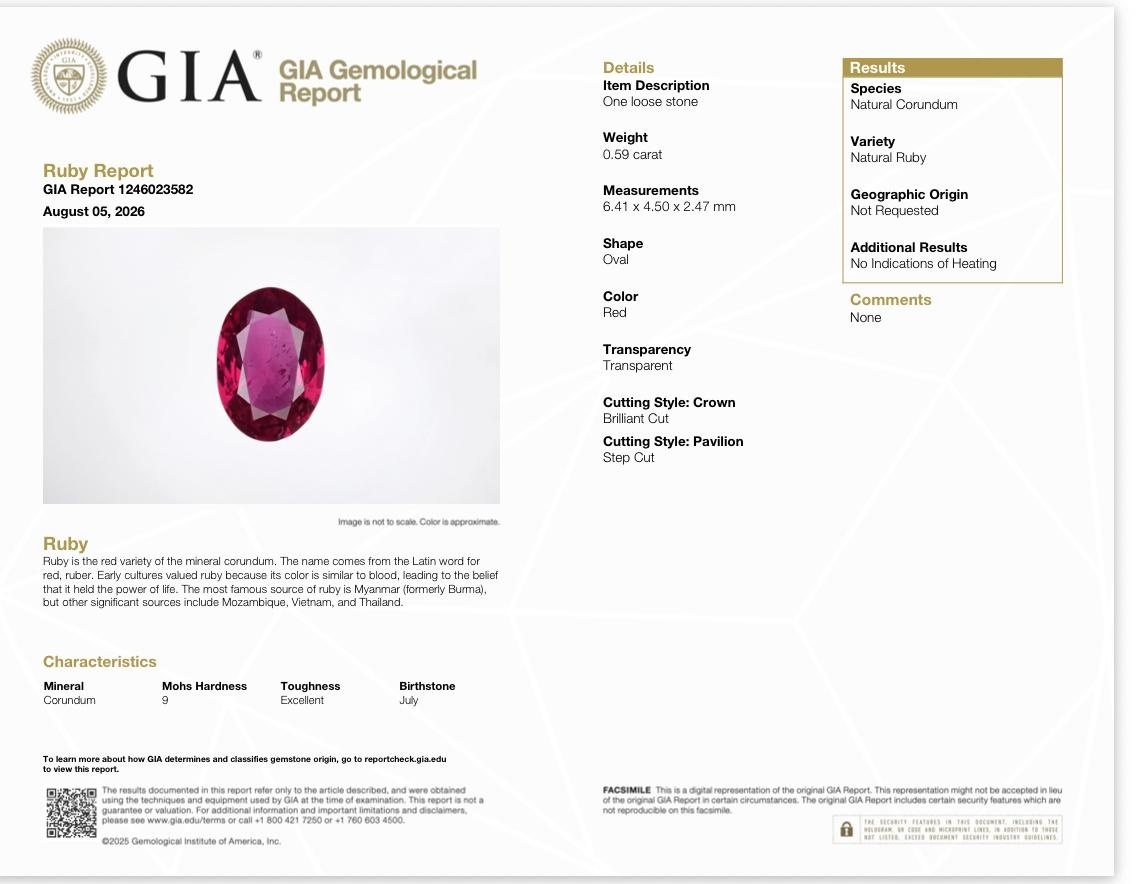
An educated buyer will evaluate the ruby first by the three fundamental attributes of color, clarity, and cut. Color describes hue, tone, and saturation, and in this case the dominant hue is pure red with minimal secondary hues, a mid to deep tone and strong saturation, characteristics that typically increase a ruby’s market desirability. Clarity in rubies is more nuanced than in diamonds, because natural inclusions such as rutile silk and crystal needles are common and can attest to a gem’s natural origin and treatment history. Eye clean rubies without obvious surface reaching fractures command premium prices, while rubies that have undergone glass filling or extensive fracture filling require disclosure and are valued differently. Cut and proportions determine how the stone interacts with light, and oval cuts balance face up size with brilliance, often presenting a larger apparent size than round equivalents of equal weight. As a salesperson familiar with gemology, I recommend that purchasers request a reputable laboratory report when purchasing valuable rubies, a report that addresses origin if determinable, the presence or absence of heat treatment, and any evidence of glass or lead based filling, because certified documentation will materially affect both value and future resale or insurance appraisals.
The setting and metal choice are equally important to an educated buyer assessing long term value and wearability. Four prongs provide a secure yet elegant framing for the oval ruby, allowing maximum visibility of the table and crown while protecting the girdle. The pavé shoulders are executed in small bead or micro prong settings that keep the diamonds flush and reduce snagging, a construction detail that reflects careful craftsmanship. The choice of 14K yellow gold is deliberate, 14 karat gold being approximately 58 percent pure gold alloyed for durability, a practical balance for daily wear that resists bending and holds settings well. Historically, this ring’s aesthetic finds lineage in several well known traditions, the elevated prong solitaire reminiscent of Georgian era rings that displayed gemstones prominently above the shank, the delicate openwork gallery recalling Edwardian and Belle Époque pieces that favored filigree and lightness, and the diamond encrusted shoulders nodding to the Art Deco and mid twentieth century enthusiasm for pavé and channel settings that increased glitter along the band. The triangular gallery cutouts under the seat of the center stone are a modern reinterpretation of antique openwork, combining vintage architectural drama with contemporary minimalism.
For the discerning buyer this ring offers both aesthetic and practical advantages. Rubies are corundum, second only to diamonds in hardness with a Mohs rating of nine, which means the center stone is durable enough for everyday wear provided normal precautions are observed. The yellow gold setting complements the warm red tones of the ruby, and the diamond pavé adds contrast and brightness that elevates the overall composition without detracting from the central color. Value considerations for an informed purchaser should include obtaining documented provenance and treatment disclosure, because natural, unfilled rubies, and those with certifiable desirable origins, generally retain greater appreciation potential. Care is straightforward, periodic inspections of prongs and pavé settings will ensure stones remain secure, and cleaning with mild soap and a soft brush will maintain brilliance without risk. This ring is an elegant synthesis of historic inspirations and modern execution, offering a refined choice for someone seeking a ruby ring that reads as both timeless and wearable, and I encourage prospective buyers to request gemological documentation and a close inspection so that they can fully appreciate the technical and aesthetic qualities that justify its value.


