What Does “Pigeon’s Blood” Really Mean in a Ruby?
By the gemologist team at The Natural Ruby Company. Last reviewed: 12 November 2026.
What does “pigeon’s blood” mean in a ruby? It is a trade phrase for the finest ruby red: a vivid, fully saturated pure red with no orange, blue or brown, at most a slight purplish tint, not too dark and not too light, usually with a strong red glow (fluorescence) in daylight. It describes a color, it has long been associated with Burmese rubies, and it is not a single legal grade. Each major gem lab sets its own rules for the term, and some labs will not use it for a heated stone, so the lab and its policy matter as much as the words.
Where the Phrase Comes From
The name is a poetic one. Gem dealers in the East are said to have compared the best rubies to the red of the first drop of blood from a freshly caught pigeon, and the description stuck. Over time it came to be tied to rubies from Mogok in Myanmar (Burma), whose best stones combine strong chromium color with natural red fluorescence. If you enjoy the history, our story on the Burmese kings and the rubies of Mogok shows why that origin still carries so much weight. The most famous modern example is the 25.59-carat Sunrise Ruby; its auction story is told in The Sunrise Ruby.
What Color Is a Pigeon’s Blood Ruby?
Gemologists describe color with three terms, hue, tone and saturation, and for pigeon’s blood the labs add a fourth feature: the glow. Here is how the four fit together.
- Hue: a pure red. The Swiss labs accept no more than a slight purplish tint; orange, blue or brown moves the stone out of the category.
- Tone: medium to medium-dark. Too light and the stone reads pink; too dark and the red turns dull.
- Saturation: vivid. The color should look rich and clean, without a gray or brown mask.
- Glow: many fine Burmese stones show a strong internal red glow, the fluorescence caused by the same chromium that colors the gem. It is most visible in daylight and is one reason these stones look alive. SSEF, Gübelin and GRS Type 1 all look for strong or medium-to-strong fluorescence.
Which Labs Certify Pigeon’s Blood Rubies?
Several leading labs will name a ruby “pigeon’s blood” (or “pigeon blood red”), each under its own published rules. The table summarises their policies as published on their websites when this post was last reviewed.
| Lab | Where the term appears | Heated rubies? | Key requirements |
|---|---|---|---|
| SSEF (Swiss Gemmological Institute) | On the report as a color term | No. Any treatment disqualifies | Vivid red, no blue or brown modifier (slight purplish tint accepted), strong UV fluorescence, fine clarity, even color |
| Gübelin Gem Lab | On the report as a color term | No. Heating or fissure filling disqualifies | Same harmonised criteria as SSEF since 2015 |
| GRS (GemResearch Swisslab) | Appendix to the report, as “GRS-type Pigeon’s Blood” Type 1 or Type 2 | Yes, if heated without residue; not for beryllium, lead-glass, surface-diffused or synthetic rubies | Vivid red with no brown or orange overtone; Type 1 has medium to strong UV fluorescence, Type 2 weaker fluorescence |
| AGL (American Gemological Laboratories) | A separate Appendix Letter with the Prestige Report | Not stated as a blanket rule | Issued at the lab’s discretion for gems that qualify |
SSEF and Gübelin: untreated stones only
In 2015 the two Swiss labs agreed to harmonise their “pigeon blood red” standards. SSEF describes the color as a vivid red, “similar to red traffic light”, with no or only a slight purplish tint, complemented by strong fluorescence, and uses the term only for untreated rubies. Gübelin Gem Lab states that any treatment, including heating or fissure filling, disqualifies a ruby, and that a minute purplish tint is acceptable but blue or brown is not.
GRS: heated stones can qualify
GRS introduced its “pigeon blood” term in 1996. Type 1 is a vivid red with medium to strong fluorescence under UV light; Type 2, added in 2012, is the right red with weaker fluorescence. GRS applies the term regardless of origin and to heated or unheated stones, but not to beryllium-treated, lead-glass-filled, surface-diffused or synthetic rubies, or to stones with certain heating residues.
AGL: an Appendix Letter
AGL may mention “Pigeon Blood” on an Appendix Letter that accompanies the Prestige Report, if the gem qualifies.
What the Phrase Does Not Tell You
Because the rules differ, a “pigeon’s blood” ruby from one lab can be a heated stone and from another lab must be untreated. The phrase alone does not guarantee origin, and it says nothing about cut. Always read the full lab report, including the enhancement line, not just the headline color word.
Learn the Look With Real Stones
This section lists stones in our inventory when this post was last reviewed. Individual stones can sell; the guidance above stays the same.
None of the stones below is described on its product page as “pigeon’s blood”, and we do not label them that way. They are a useful way to train your eye, because each is listed as a vivid red or pinkish red ruby from Burma (Myanmar).
| Stone | Weight and shape | Color | Clarity | Enhancement | Size (mm) |
|---|---|---|---|---|---|
| 12.46 ct oval Burmese ruby (R14699) | 12.46 ct oval | Pinkish Red, Vivid | Slightly Included | None | 14.95 × 11.93 × 8.48 |
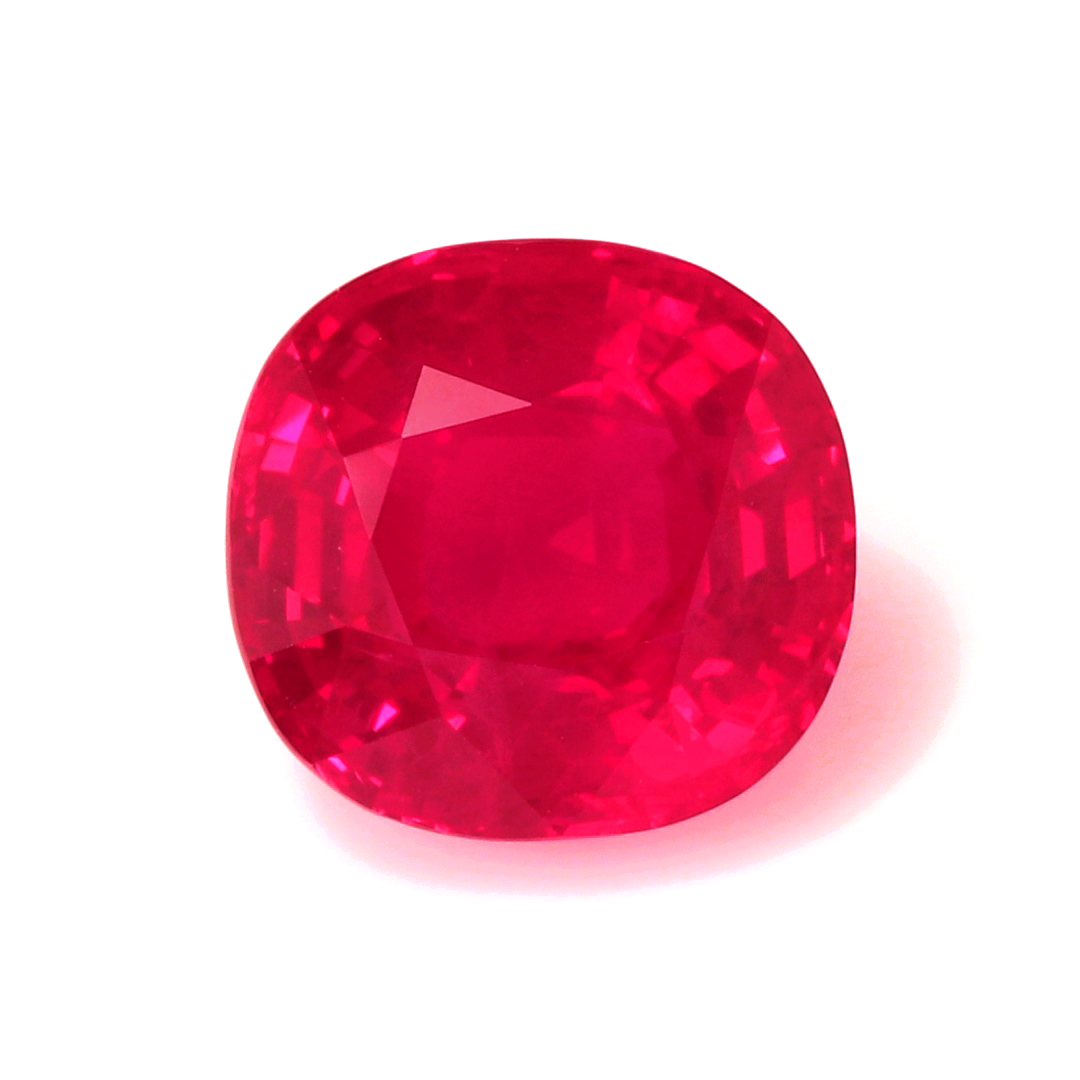
| 7.61 ct cushion Burmese ruby (R13357) | 7.61 ct cushion | Pinkish Red, Vivid | Very Very Slightly Included | Heat treated | 11.21 × 10.72 × 6.99 |
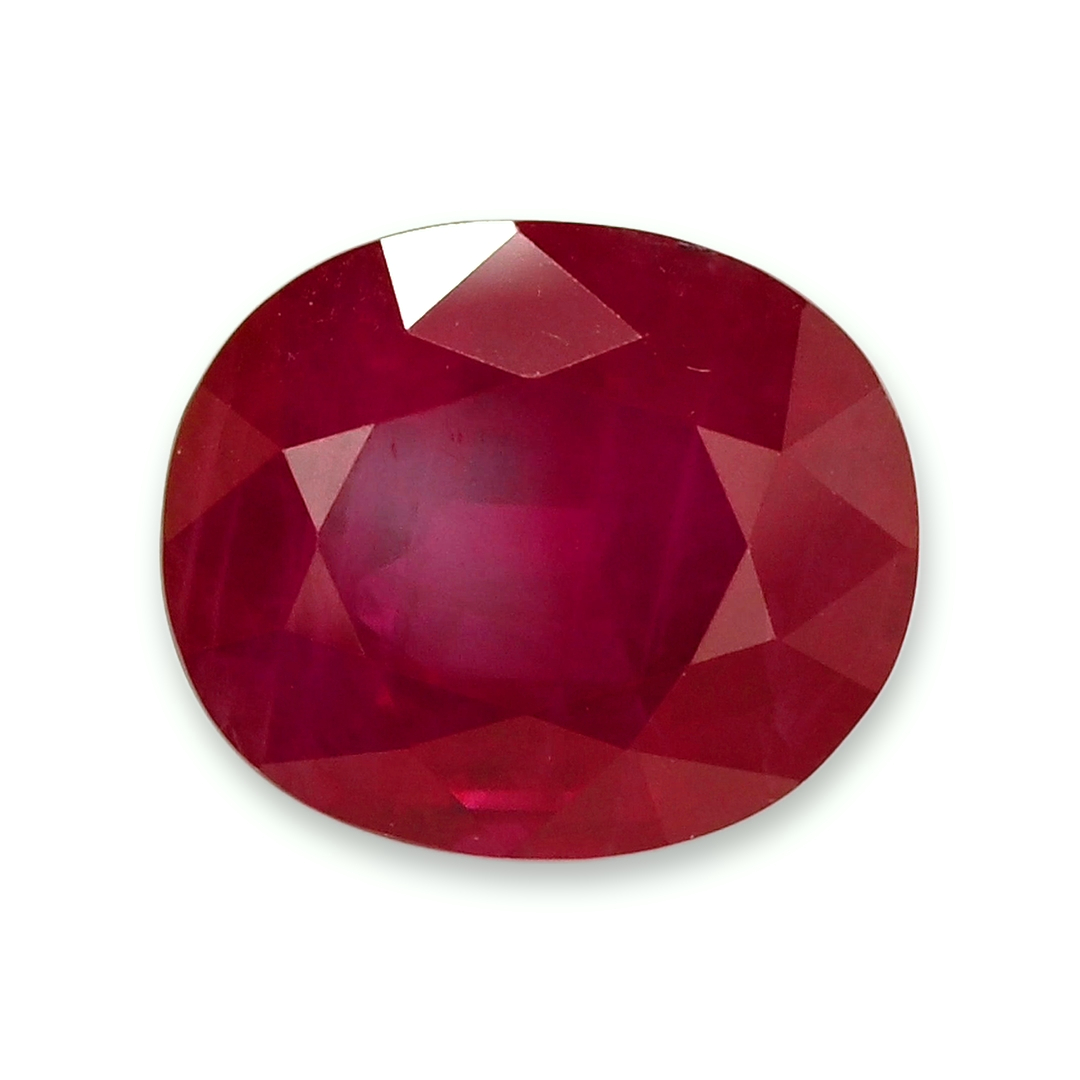
| 8.88 ct oval Burmese ruby (R16273) | 8.88 ct oval | Red, Vivid | Very Slightly Included | Heat treated | 12.79 × 10.79 × 7.41 |
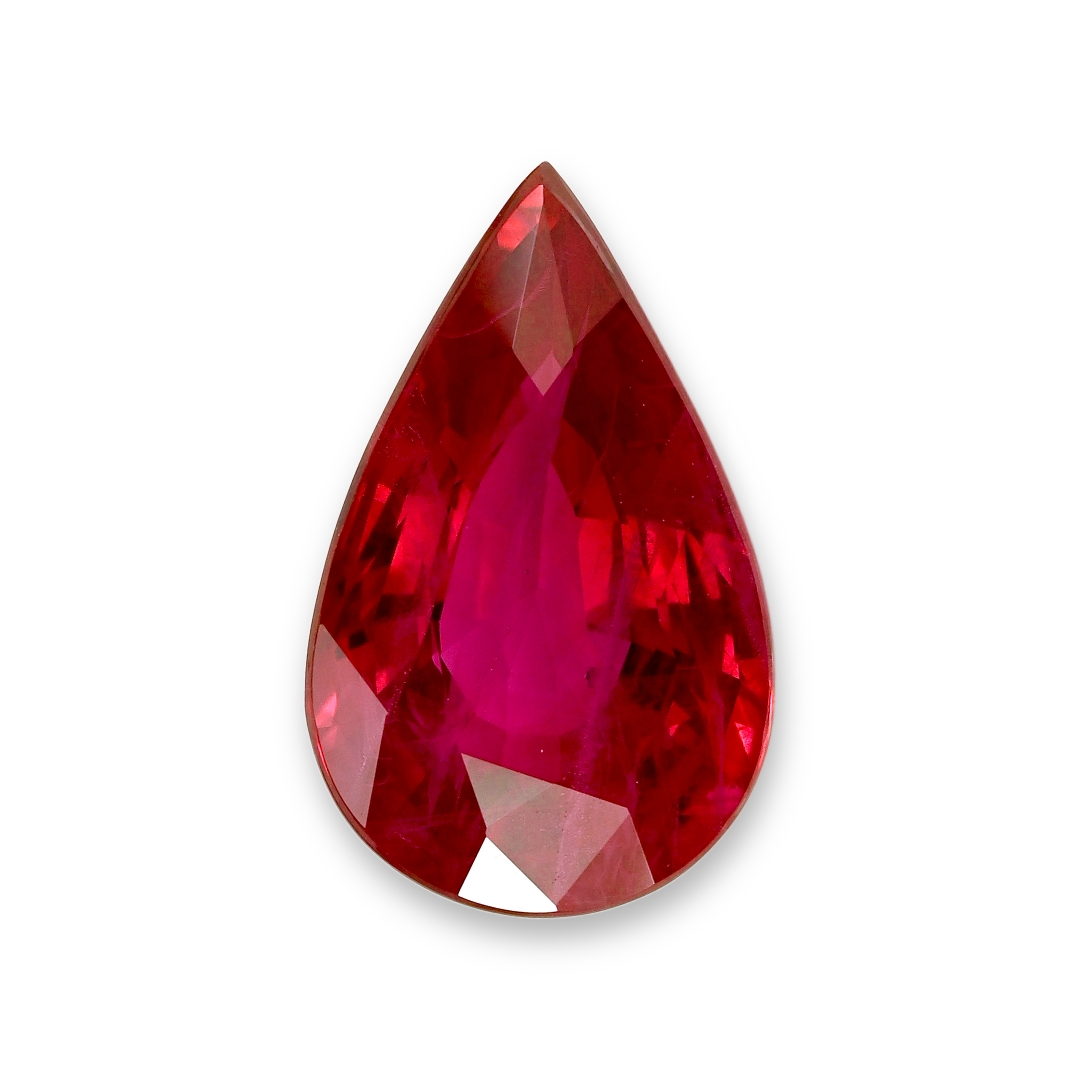
| 5.06 ct pear Burmese ruby (R16139) | 5.06 ct pear | Red, Vivid | Very Slightly Included | Heat treated | 14.11 × 8.78 × 5.28 |
| 7.99 ct oval Burmese ruby (R12348) | 7.99 ct oval | Red, Vivid | Included | Heat treated | 12.30 × 10.36 × 7.08 |
Three comparisons are worth making.
Pinkish red against pure red. Put the 7.61 ct cushion (R13357) beside the 8.88 ct oval (R16273). The first leans slightly toward pink and the second sits closer to a straight red. Both are listed as Vivid; the difference is a matter of taste.
Clarity against color. The 7.99 ct oval (R12348) is listed as Included, while the 8.88 ct oval is Very Slightly Included at a similar size. Many buyers accept more inclusions in exchange for color they love, as long as the stone stays bright and durable.
Shape against saturation. A pear such as the 5.06 ct pear (R16139) has a long, narrow outline that concentrates color toward the tip, while an oval spreads it more evenly. The same red can look different in a different shape.
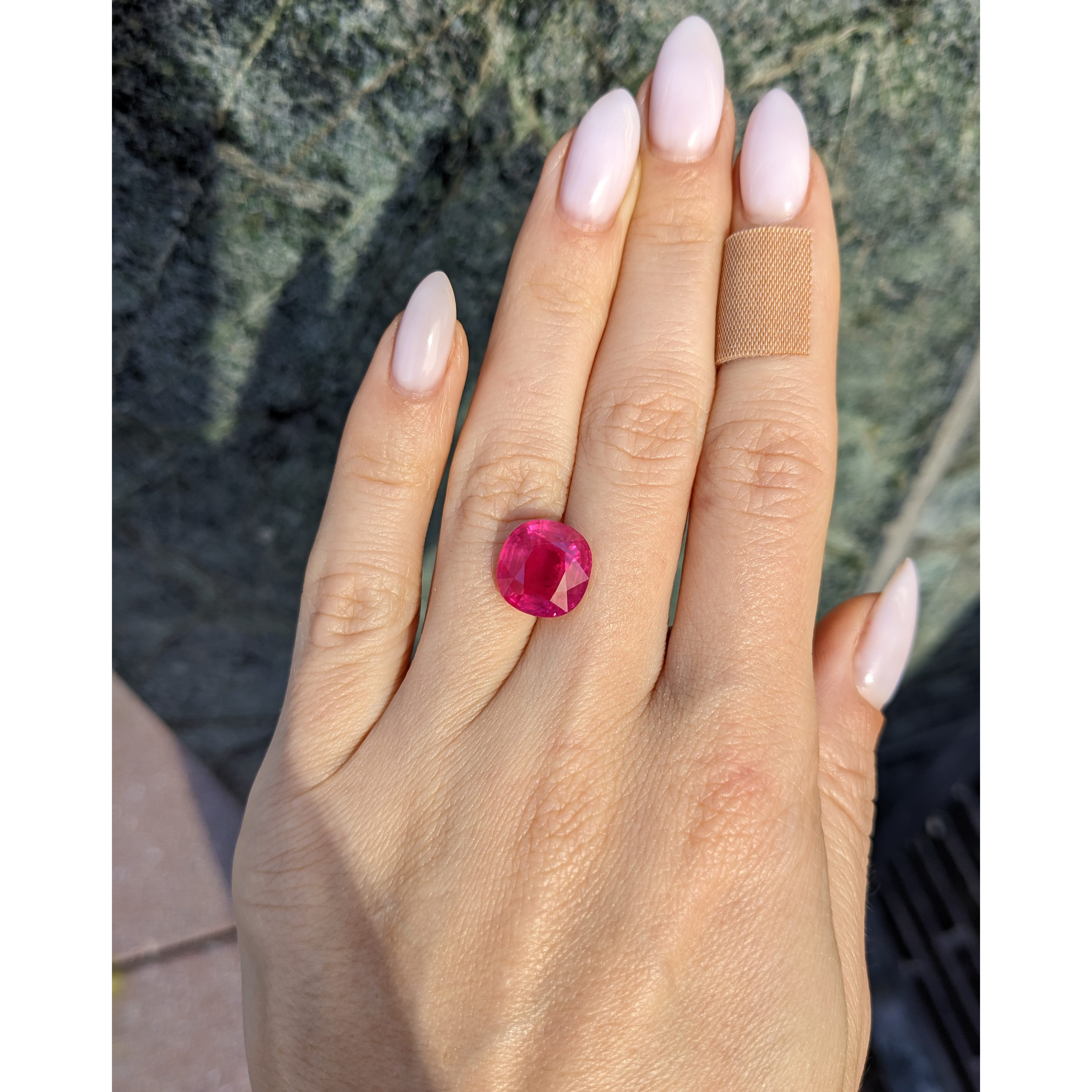
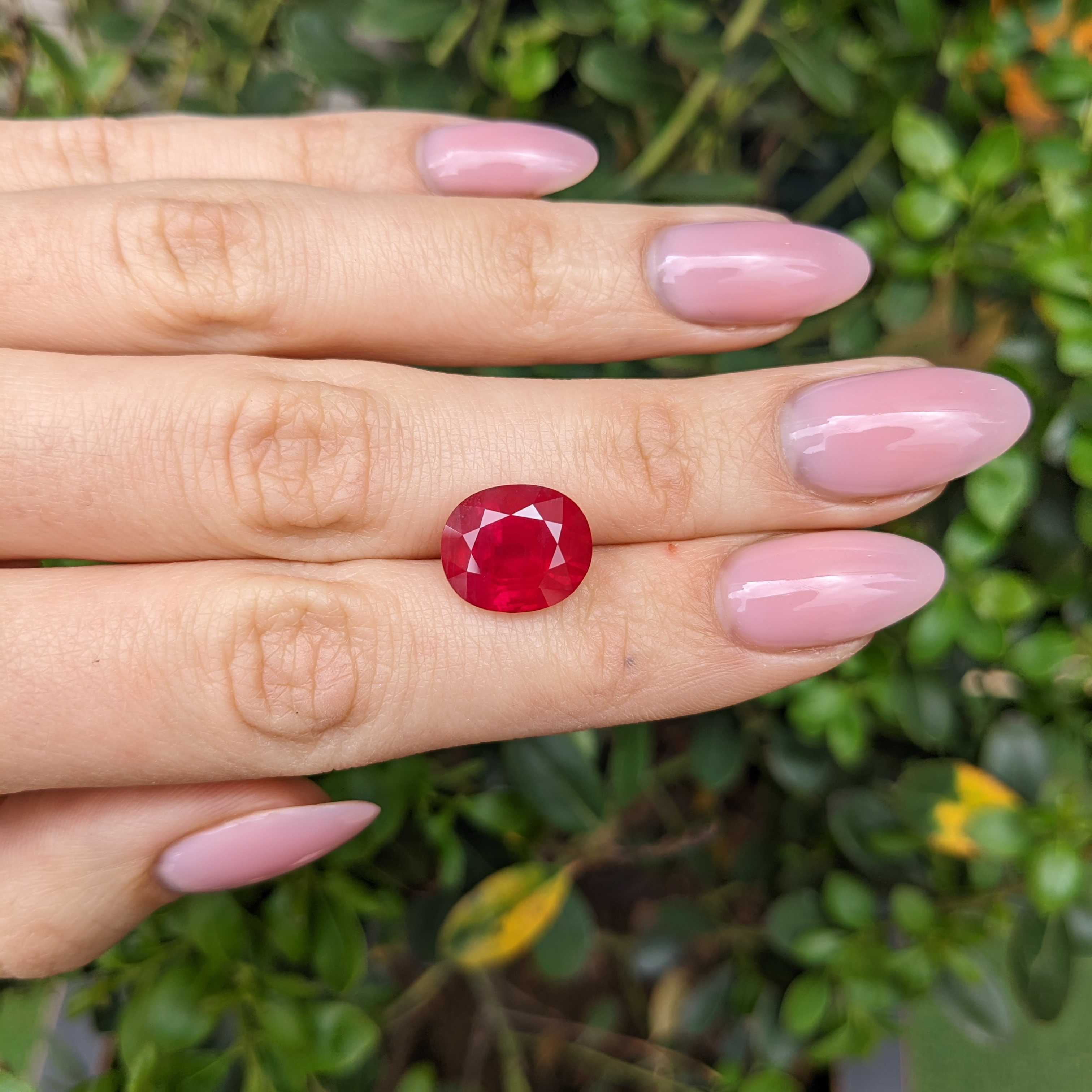
Moving a gem in the light is the best way to judge red. These videos show the two rubies in the first comparison.
How Can I Judge Ruby Color Myself?
- Use daylight first. Look near a window, away from direct sun, then compare under warm indoor light. A ruby that holds its red in both is more versatile.
- Tilt the stone. A bright, even red across the face points to good cutting. A dark or washed-out patch can signal a “window” or “extinction”.
- Compare, don’t guess. Put two stones side by side. Differences that you cannot name in words become obvious.
- Read the report. Look at origin, enhancement and the lab’s color wording together, and check which lab issued it.
For more on how scarcity affects price, see How Rare Is a Natural Ruby?. To compare more reds yourself, browse our Burmese rubies.
Frequently Asked Questions
What does pigeon’s blood mean?
It is a trade term for a vivid, saturated pure red ruby with no orange, blue or brown (at most a slight purplish tint), usually with a strong red glow in daylight. It describes color, not a fixed legal grade.
Which labs certify pigeon’s blood rubies?
SSEF and Gübelin Gem Lab use “pigeon blood red” on reports for untreated rubies that meet their shared criteria. GRS issues a “GRS-type Pigeon’s Blood” appendix (Type 1 or Type 2), which can apply to heated stones. AGL may name it on an Appendix Letter with its Prestige Report.
Can a heat-treated ruby be pigeon’s blood?
It depends on the lab. SSEF and Gübelin do not use the term for any treated ruby. GRS can use it for a heated ruby without heating residues. Heat treatment should always be disclosed, and unheated stones of the same quality are generally valued higher.
Is every pigeon’s blood ruby from Burma?
No. The phrase is most closely associated with Burma (Myanmar), but labs grade the color, not the country. GRS applies its term regardless of origin, and Guinness World Records describes the record-setting Estrela de Fura from Mozambique as a pigeon’s-blood ruby. Origin is confirmed separately by a gem lab.
Is pigeon’s blood a gem lab grade?
It is a color term that each lab defines for itself. Read the full report for origin, enhancement and color description.
Why do some rubies look pinkish?
Hue sits on a spectrum. A ruby with a lighter tone or a touch of purple reads pinkish red, and many buyers love that look.
How do I know if the red I’m buying is good?
Compare the stone in daylight and indoor light, check the videos, and read the lab report. Our team can walk you through the options.
Sources: SSEF: Colour terms; SSEF and Gübelin harmonisation (2015); Gübelin Gem Lab: Gemstone colour terms; GRS: GRS-type “pigeon blood” ruby; GRS: Pigeon’s Blood definitions; AGL: Appendix Letter. Stone specifications are taken from the product pages linked above.