
Why Are No Two Natural Rubies Exactly Alike?
Why are no two natural rubies exactly alike? Every ruby is colored by chromium, but each one grows with its own mix of other trace elements, such as iron, in its own geological setting, and then passes through a cutter’s decisions about orientation and proportions. Those layers combine so that even two stones from the same mine, of the same weight, can differ in hue, brightness and character. The result is that choosing a natural ruby is a personal experience, closer to choosing a piece of art than ordering from a catalog.
The Same Mineral, Many Variations
All rubies are corundum, a crystal of aluminum oxide, colored red by chromium. But nature rarely works with pure ingredients. As a ruby crystal grows, it can absorb small amounts of other elements from its surroundings. These trace elements, together with the conditions of growth, give each stone its own fingerprint.
Chromium: The Source of Red
The more chromium a ruby contains, broadly speaking, the stronger its red color, up to a point. Chromium also causes red fluorescence under ultraviolet light, which can make some rubies appear to glow.
Iron: The Modifier
Iron is a common companion in corundum. In ruby, higher iron content tends to darken the color and suppress fluorescence. Rubies from marble-hosted deposits often have relatively little iron and can look especially vivid, while rubies associated with basaltic rocks often contain more iron and may appear deeper and darker.
Other Influences
Small amounts of other elements, and the way they interact with chromium and iron, can push a ruby’s hue slightly toward purple or orange. The result is a wide range of reds, from bright cherry tones to deep, wine-like shades.
Growth History Leaves a Unique Record
A ruby can take a very long time to grow, and its environment changes as it does. The arrangement of silk, crystals and healed fractures it captures is unique to each stone, like a fingerprint, and we explain how gemologists read those clues in What Do Inclusions Tell Us About a Natural Ruby?.
Color Zoning
As the chemistry of the surrounding fluids shifts, a ruby may grow bands of stronger and weaker color. In some stones this zoning is invisible face-up; in others it creates subtle variations that give the gem depth.
Geography Shapes Character
Rubies form in different geological environments around the world, including Myanmar, Mozambique, Thailand, Sri Lanka, Madagascar, Tanzania, Vietnam, and Afghanistan. Each environment offers different combinations of chemistry, temperature, and pressure.
As a result, rubies from different regions can show tendencies in color, inclusions, and fluorescence. These are broad patterns, not rules. Any deposit can produce a wide range of qualities, and origin alone never tells the whole story of a stone’s beauty.
The Cutter’s Decisions Add Another Layer
Even two identical pieces of rough would not become identical gems, because every cutter makes choices.
Orientation
Ruby is pleochroic, showing slightly different colors in different directions, typically purplish red in one and orangy red in another. How the cutter orients the rough determines which color dominates face-up.
Shape and Proportions
Rough rubies vary in form, and cutters usually choose shapes that save weight while maximizing beauty. Ovals and cushions are common, but rounds, pears, and other shapes are also cut. Proportions affect brightness, how evenly the color spreads, and whether the stone shows windows or dark areas.
Two Rubies of Almost the Same Weight
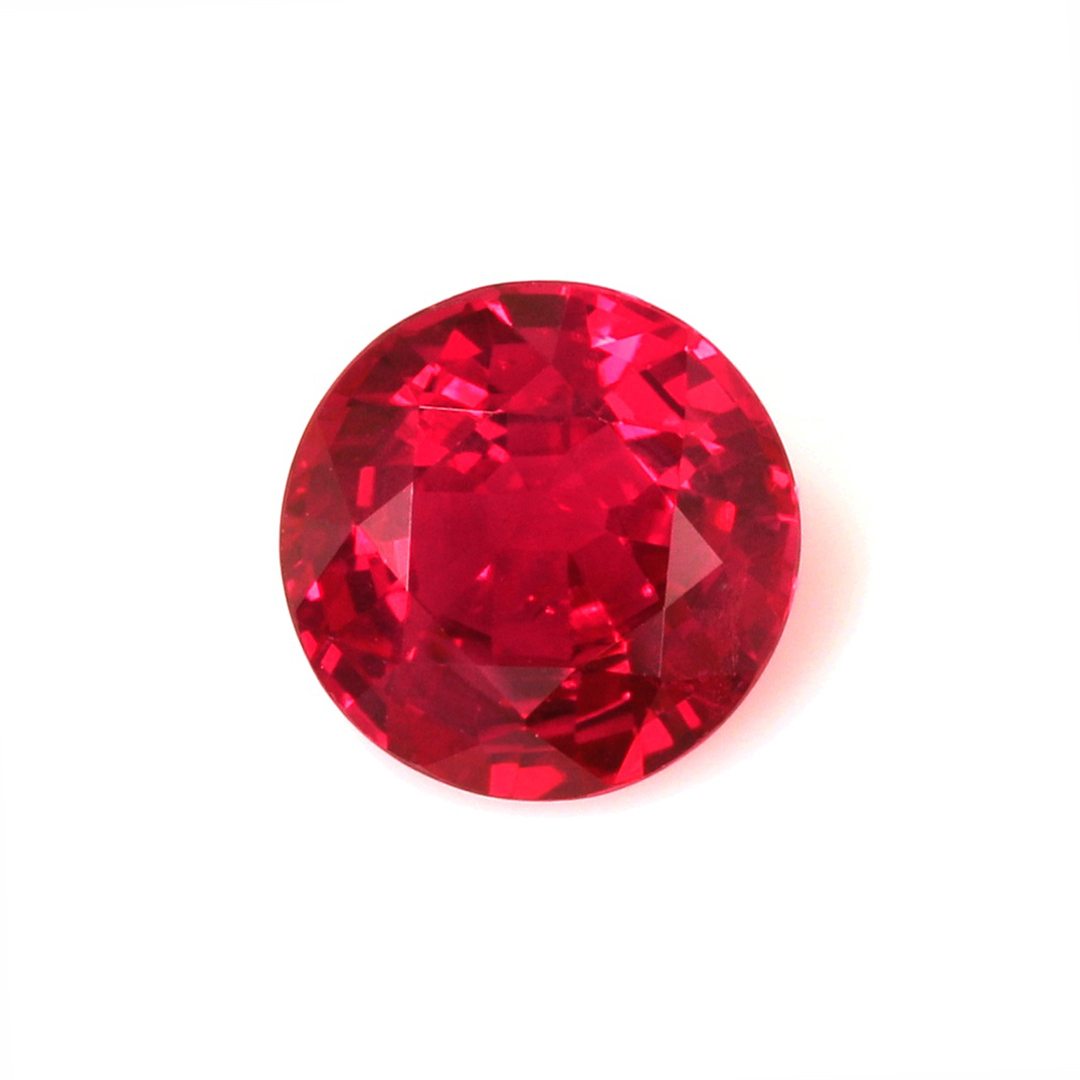
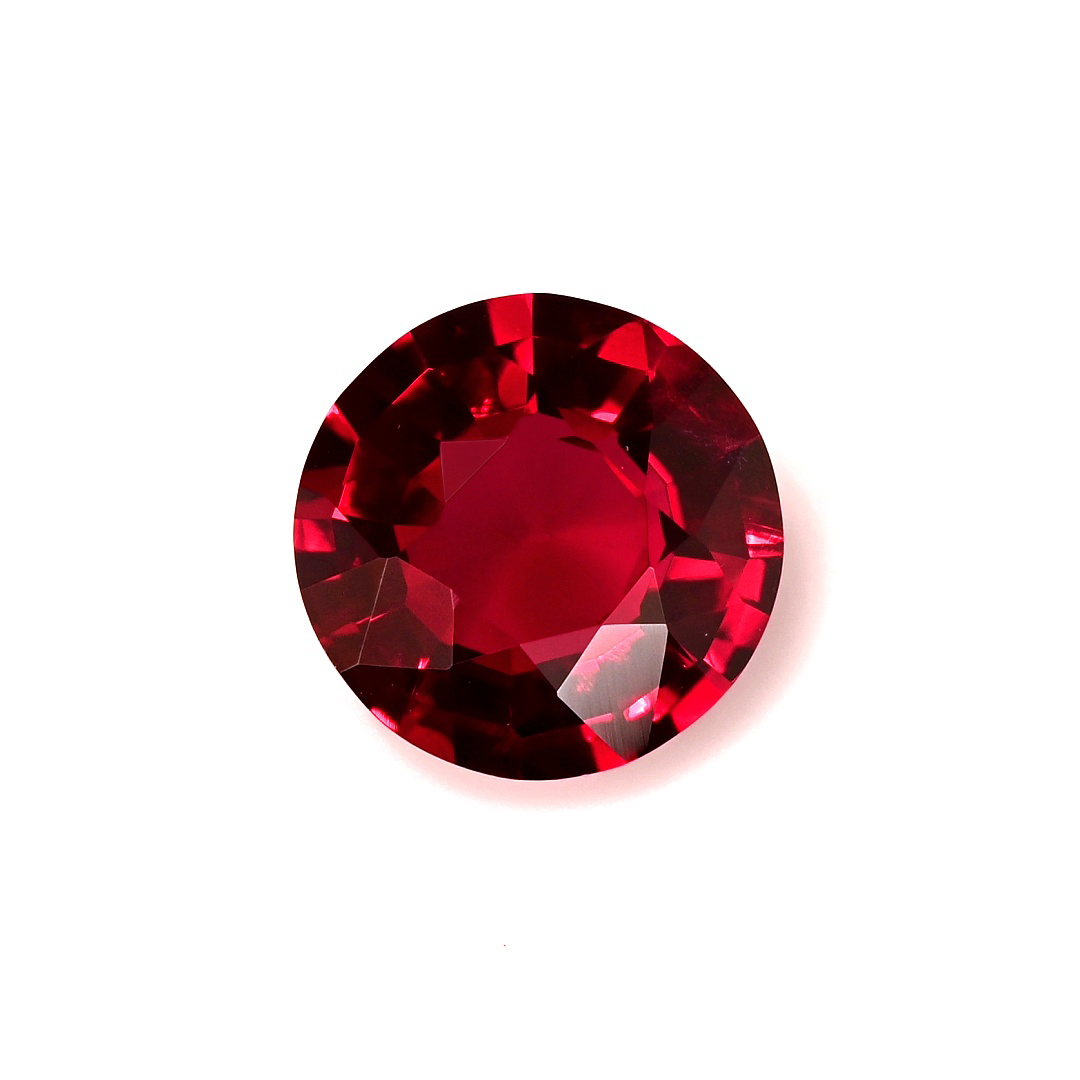
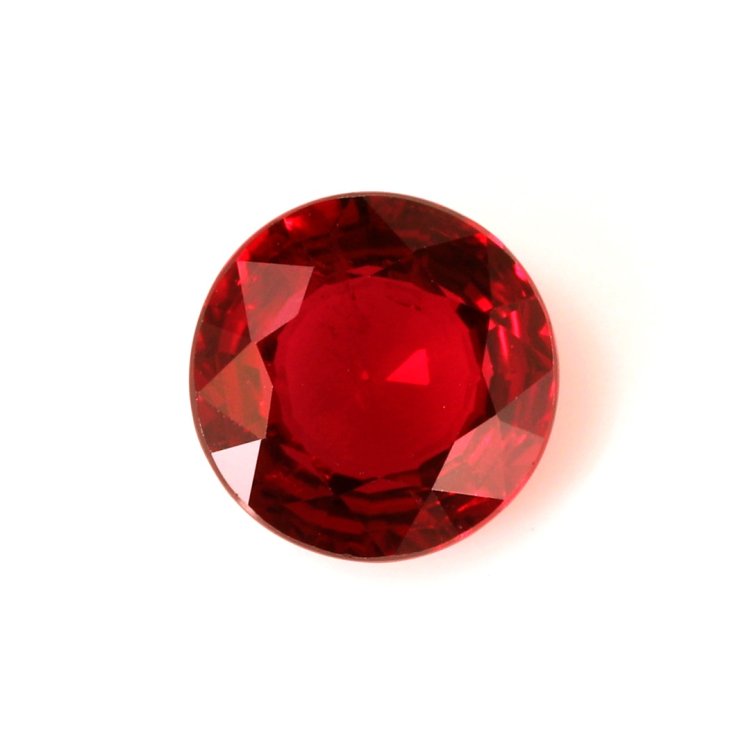
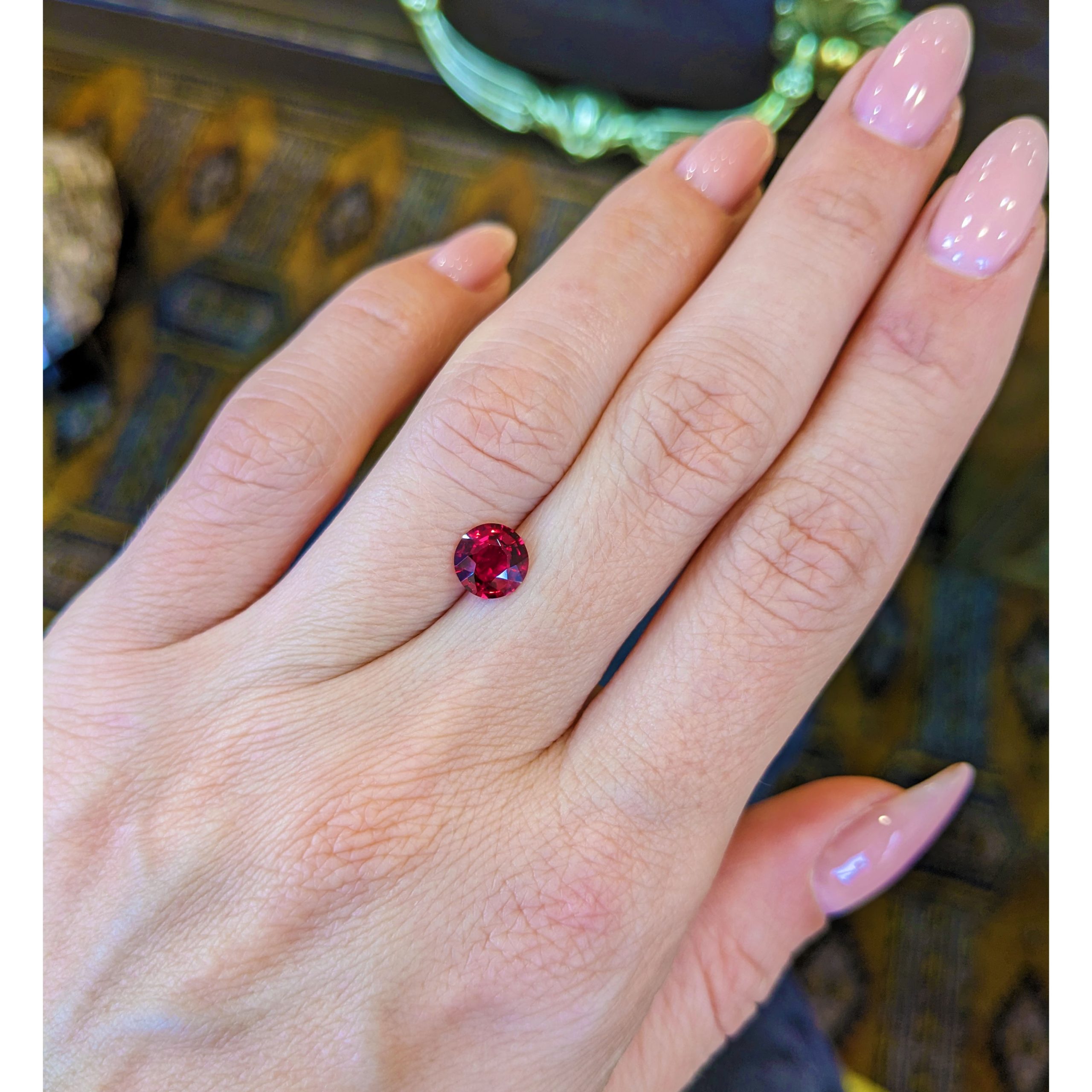
Our inventory gives a clear example. The R13730 is a 1.11 ct round ruby from Burma (Myanmar), listed as Vivid, Very Slightly Included and Heat Treated, and measuring 6.30 × 6.23 × 3.52 mm. The R14772 is a 1.08 ct round ruby from Mozambique, listed as Vivid, Eye Clean and No Enhancement, and measuring 6.68 × 6.56 × 3.19 mm. Their weight is almost the same, yet one is larger across the face and shallower, and the two photographs show different brightness and saturation even on a white background. A third round, the 1.40 ct R12697 from Mozambique at 6.82 × 6.77 mm, adds a different red again.
Pairs show the same individuality. PR6286 and PR10747 are both round Mozambique pairs, yet the first measures about 5.9 mm per stone and the second about 5.5 mm, and their listed color intensities differ (Intense and Vivid).
Four Rubies of About Six Carats
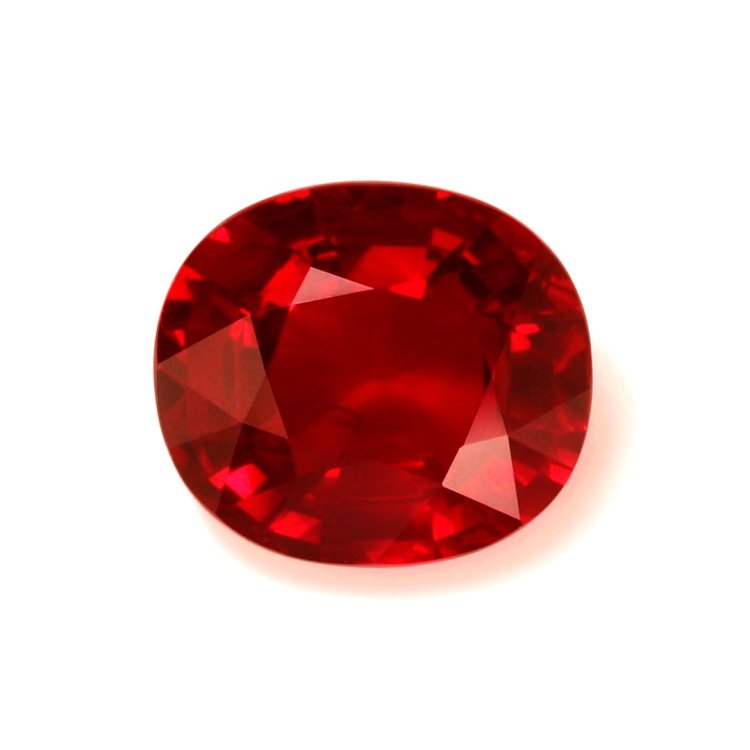
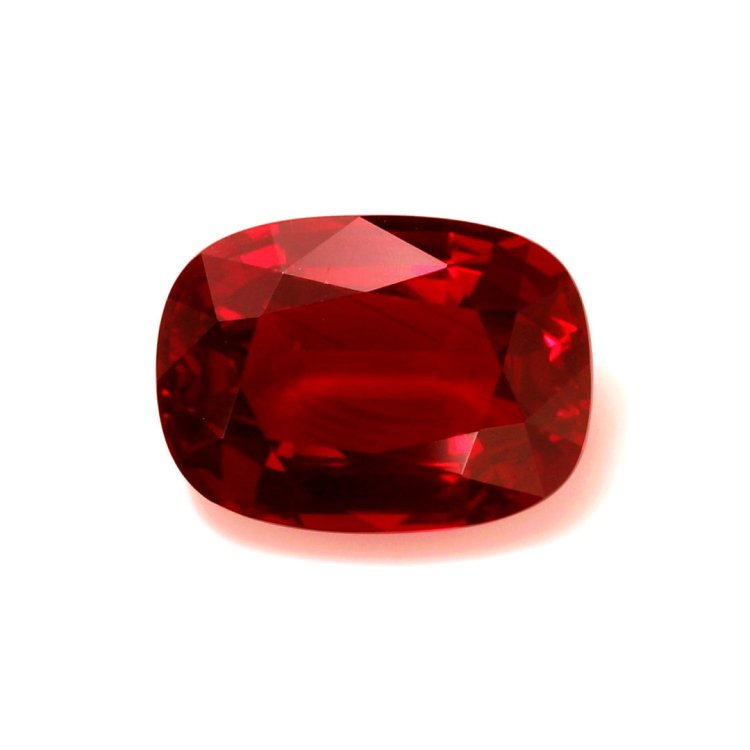
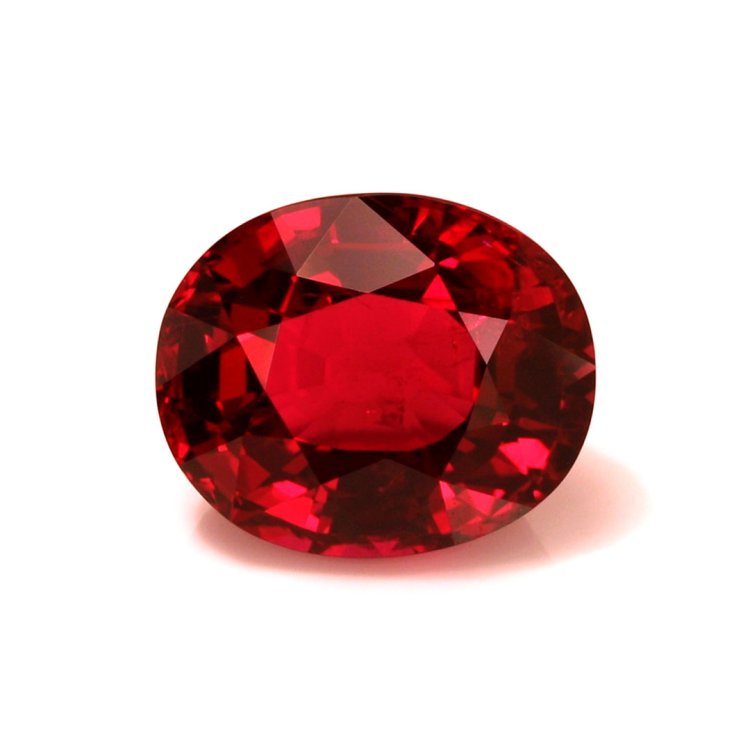
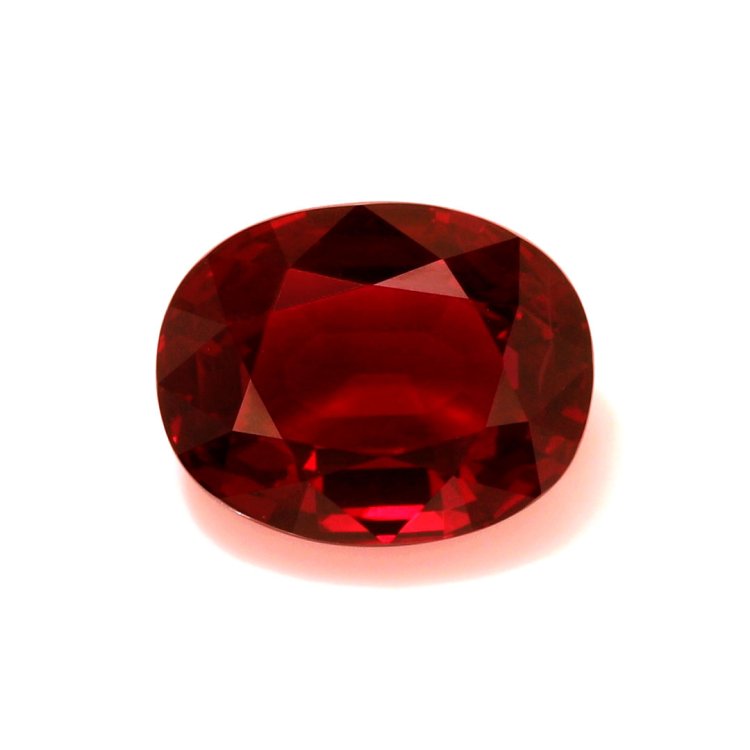
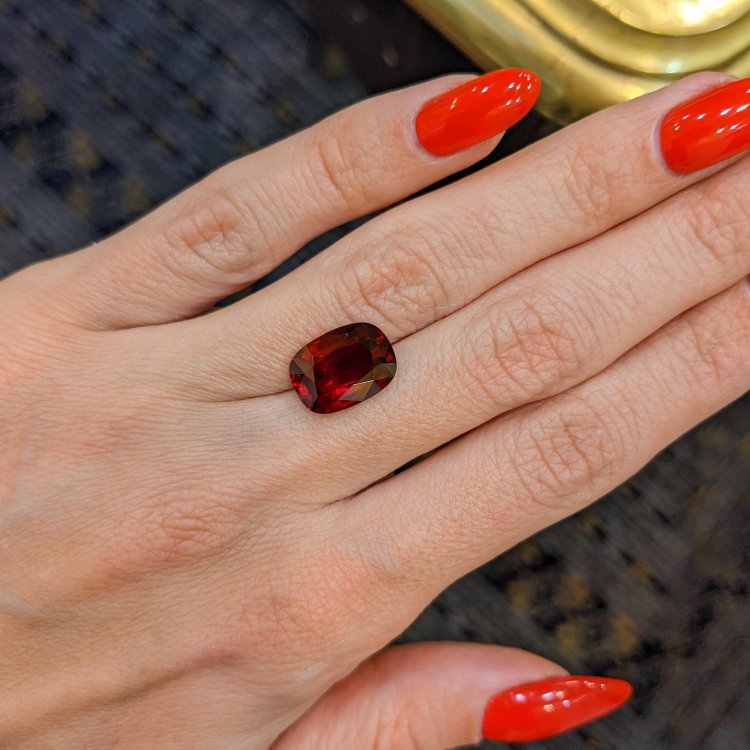
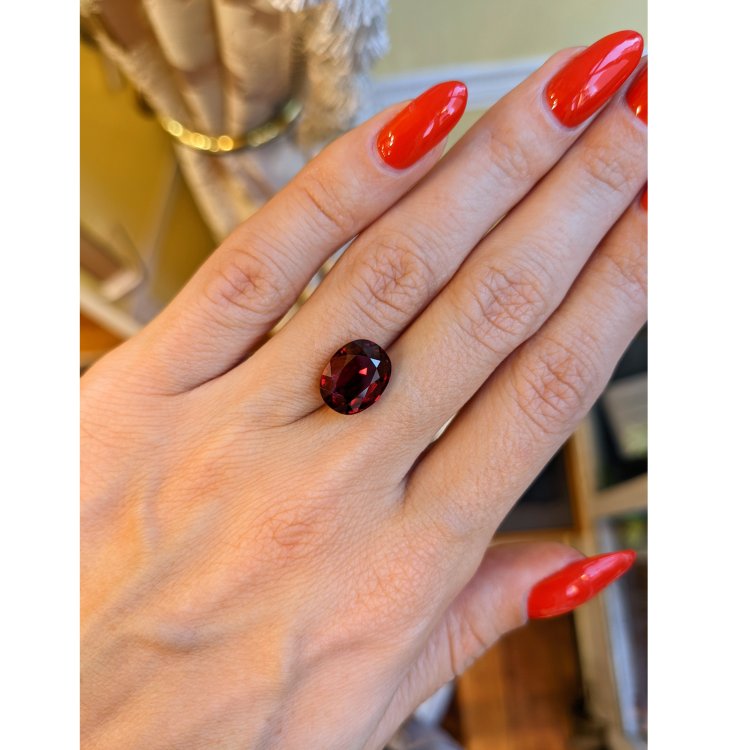
Four Mozambique rubies of about six carats each are listed in our inventory: R13145 (6.04 ct oval), R13146 (6.05 ct cushion), R13147 (6.02 ct oval) and R13148 (6.01 ct oval). Their weights are almost identical, and the photographs show how different they can still look. Use the links for current details.
Treatment Creates Further Differences
A heated and an unheated ruby from similar rough can end up looking quite different, and each treatment, or the absence of treatment, becomes part of the stone’s identity. That is why disclosure matters: it tells you what you are really buying. We follow where treatment sits in the journey from mine to market in How Does a Ruby Get From the Mine to a Piece of Jewelry?.
Light and Setting Change What You See
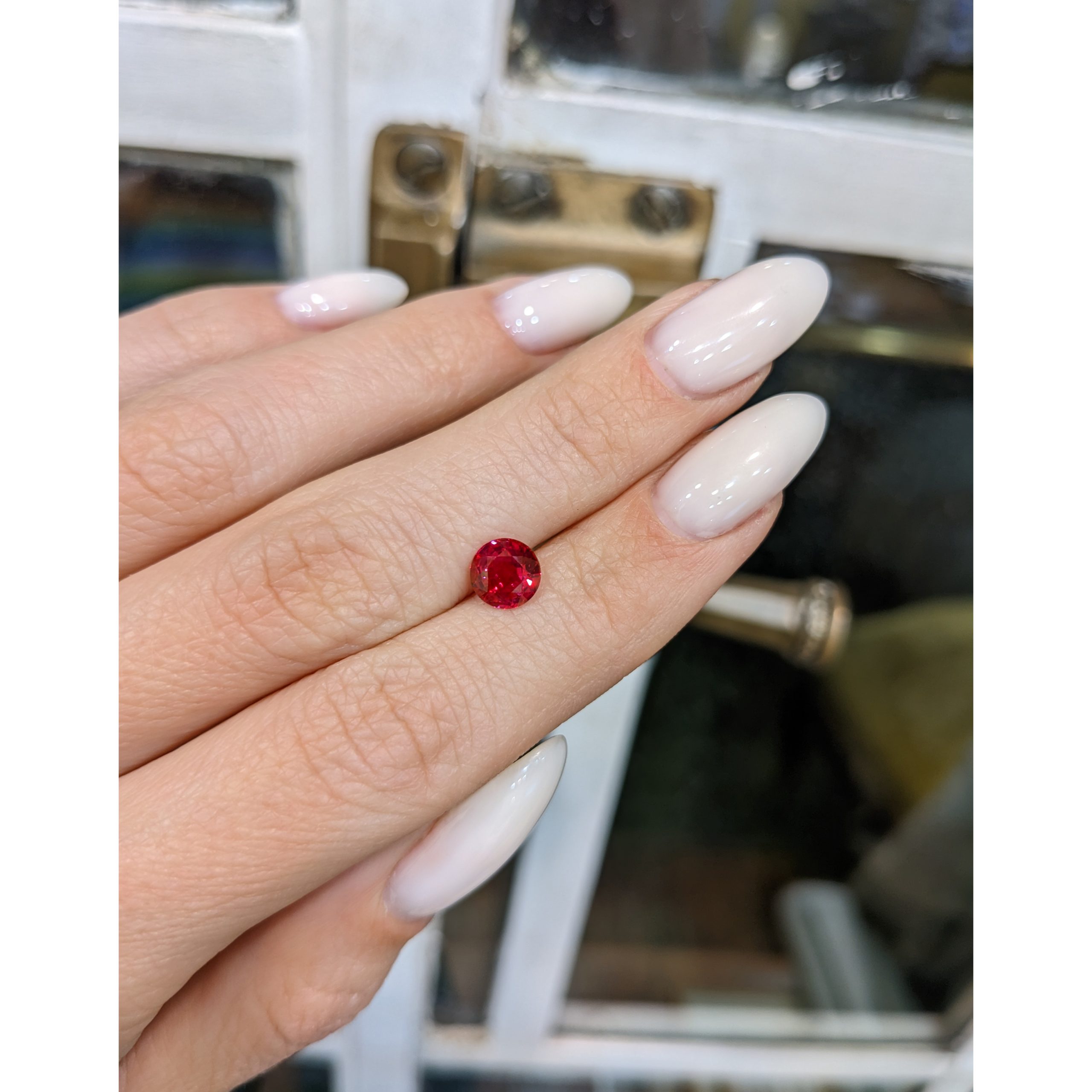
In daylight, fluorescence may make a ruby glow, and under warm indoor lighting its red can look richer. Metal color, setting style and even the clothing you wear can shift how the stone is perceived, so we recommend viewing rubies in several lighting conditions before choosing. The on-hand photos earlier in this article show two of these stones in different surroundings.
Why Uniqueness Matters When Buying
Because natural rubies vary so much, buying one is less like choosing from a catalog and more like choosing a piece of art. Consider:
- Your personal color preference, rather than only what is considered “ideal.”
- How the stone looks to your eye in different lighting.
- Clarity in context, focusing on beauty and durability rather than perfection.
- Clear disclosure of treatment and, where available, a laboratory report.
Frequently Asked Questions
Can two rubies from the same mine look different?
Yes. Even within a single deposit, variations in chemistry, inclusions, and growth conditions mean every stone is distinct.
What makes a ruby look more purple or orange?
Trace element chemistry and the way the stone is cut both play a role. Pleochroism means the cutter’s orientation can emphasize purplish-red or orangy-red tones.
Are matched pairs of rubies possible?
Yes, but matching takes patience. Pairs for earrings are typically selected from many stones to find two with closely similar color, tone, and size.
Is a unique ruby harder to replace?
Since no two rubies are identical, an exact replacement is never possible. A close match can usually be found, which is one reason good insurance and documentation are worthwhile.
Can the same ruby look different in two photos?
Yes. Lighting, background and angle all change how a ruby’s red appears, which is why we show each stone on a white background and on the hand, and why we suggest viewing a stone in the light you will wear it in.
Conclusion
No two natural rubies are exactly alike because each is shaped by its own chemistry, growth history, geological home, cut, and treatment. That individuality is not a flaw in the system; it is the very thing that makes a natural ruby feel personal.
If you would like to compare rubies side by side and find the one that speaks to you, our team at The Natural Ruby Company would be glad to help. Explore our collection at thenaturalrubycompany.com.