- Stone12
- Reports4
-oval-ruby-1.8000-cts-r13265-1.jpg?d=200x200&v=20230612110036)
-oval-ruby-1.8000-cts-r13265-lifestyleimage-1.jpg?d=200x200&v=20250922030719)
-oval-ruby-1.8000-cts-r13265-lifestyleimage-2.jpg?d=200x200&v=20250922030719)


-oval-ruby-1.8000-cts-r13265-1.jpg?d=750x750&s=nrc&v=20230612110036)
-oval-ruby-1.8000-cts-r13265-lifestyleimage-1.jpg?d=750x750&s=nrc&v=20250922030719)
-oval-ruby-1.8000-cts-r13265-lifestyleimage-2.jpg?d=750x750&s=nrc&v=20250922030719)


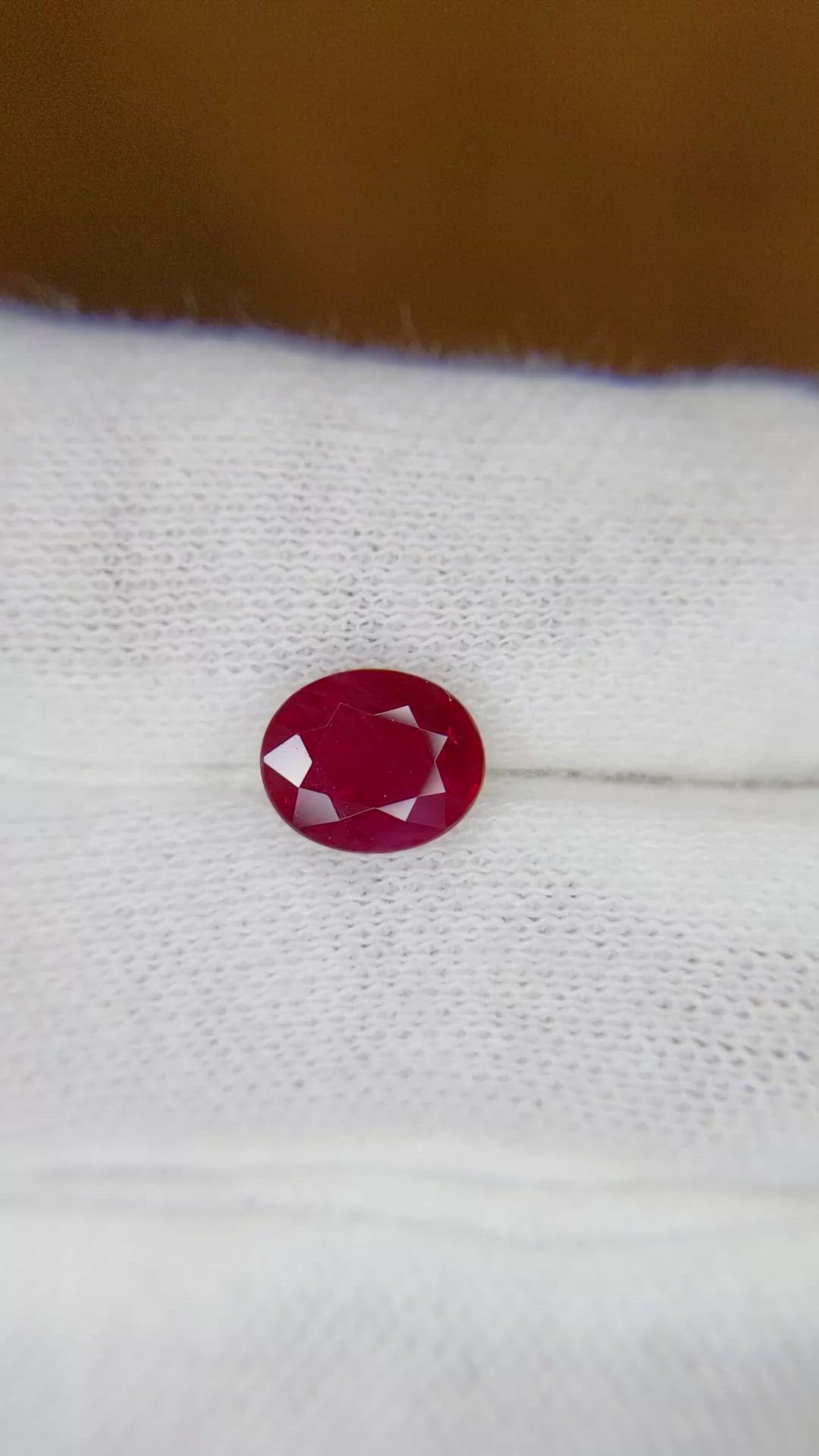
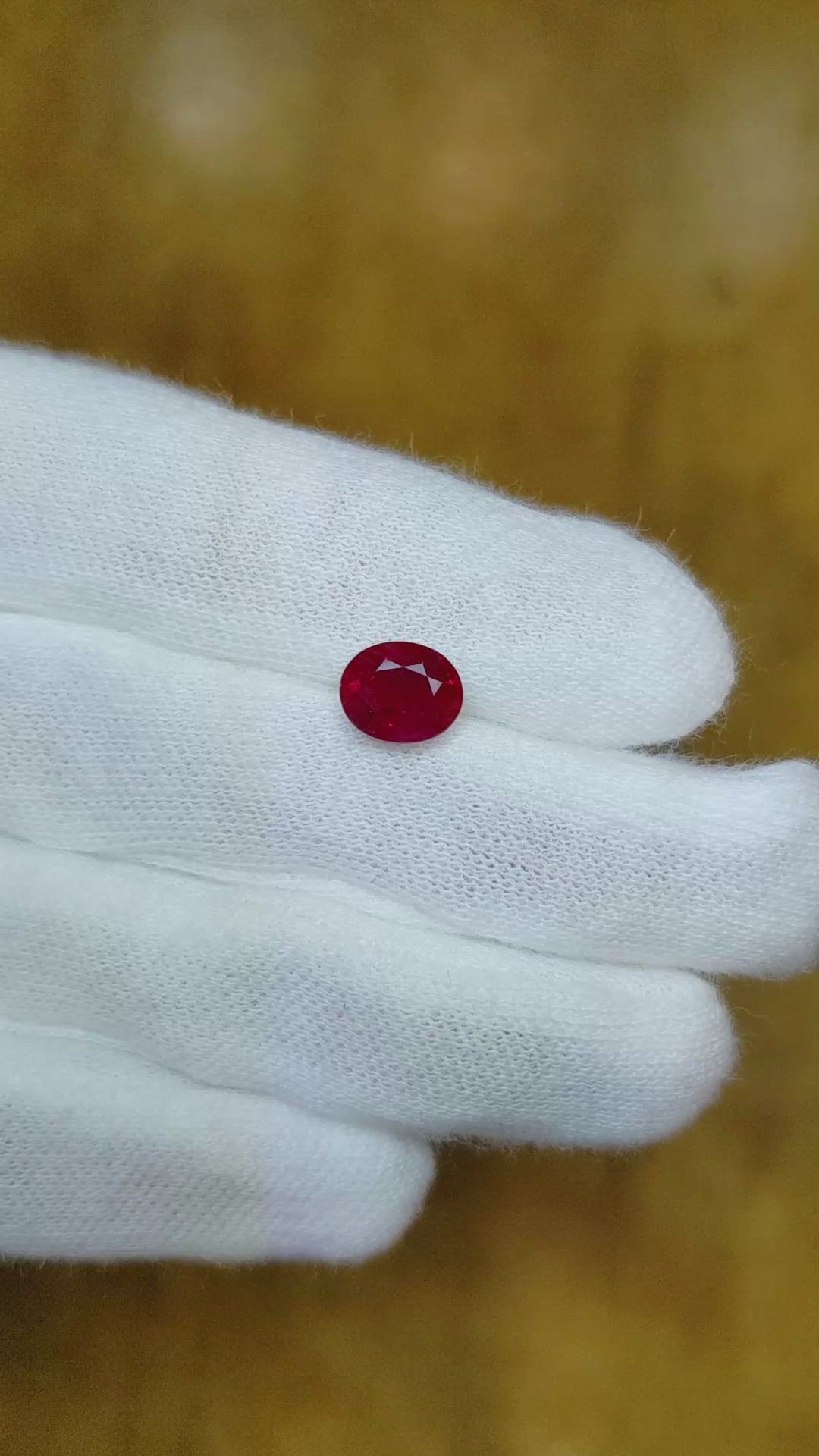
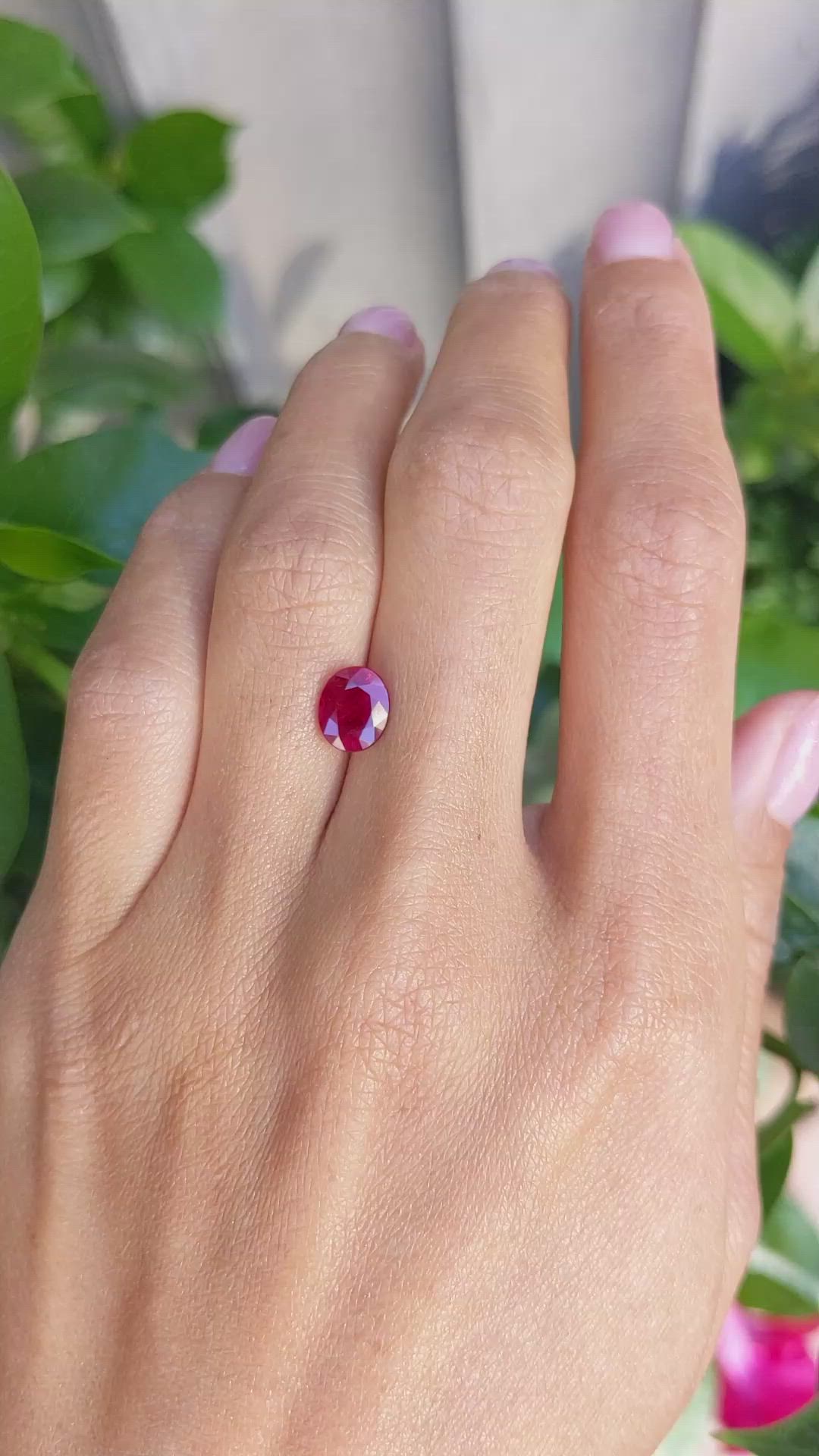
1.80 Ct. Ruby from Burma (Myanmar)
This loose stone is available to ship now
Item ID: | R13265 |
|---|---|
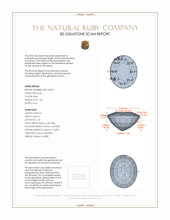
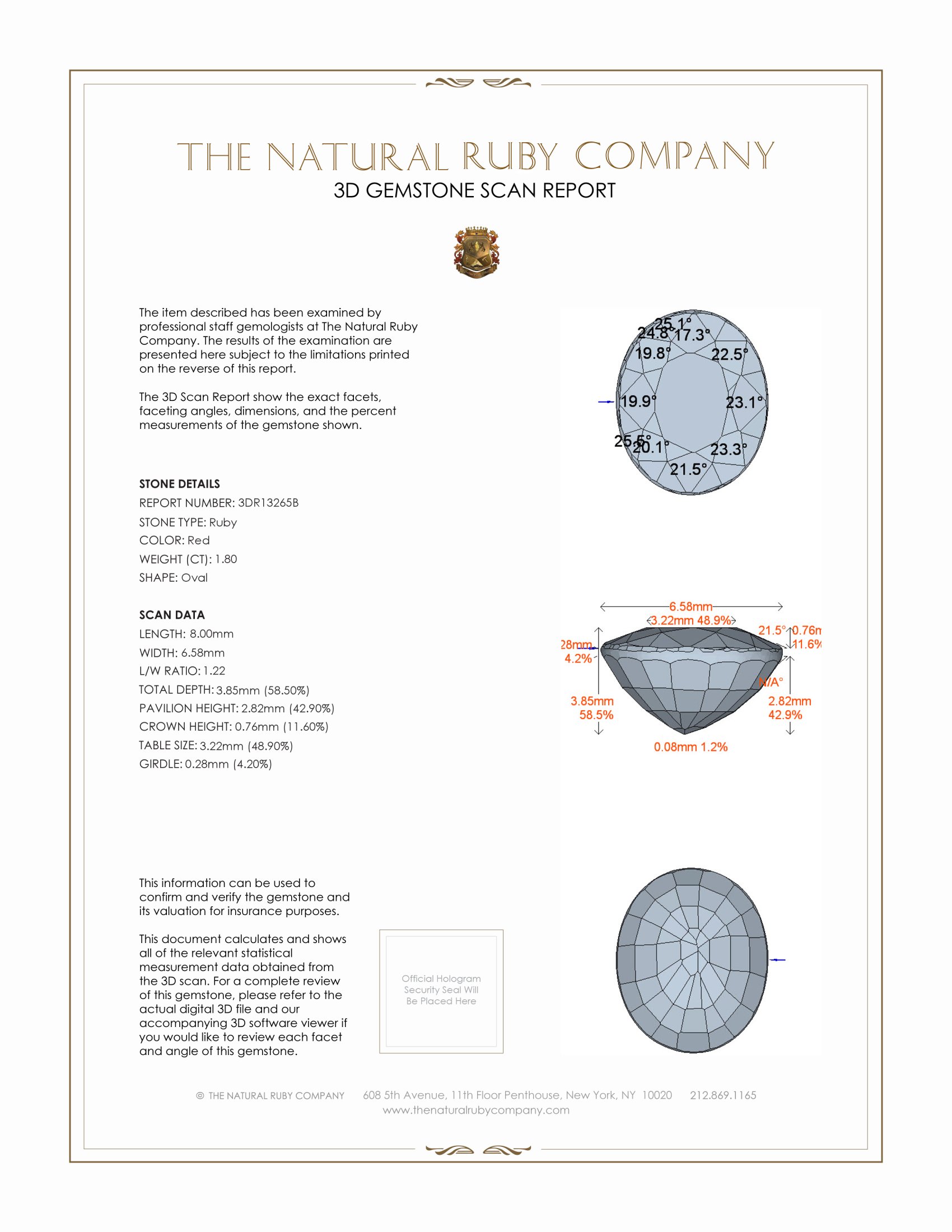
Dimensions (MM): help | Length: 8 Width: 6.58 Height: 3.85 |
Weight: | 1.80 Ct. |
Color: help | Red |
Color intensity: help | Vivid |
Clarity: help | Very Slightly Included |
Shape: help | Oval |
Cut: | Mixed Brilliant Cut |
Cutting style: | Faceted |
Enhancements: help | Heated with Residue |
Origin: help | Burma (Myanmar) |
Per carat price: help | $4,070 |
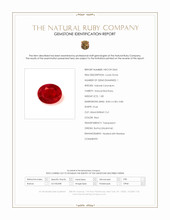
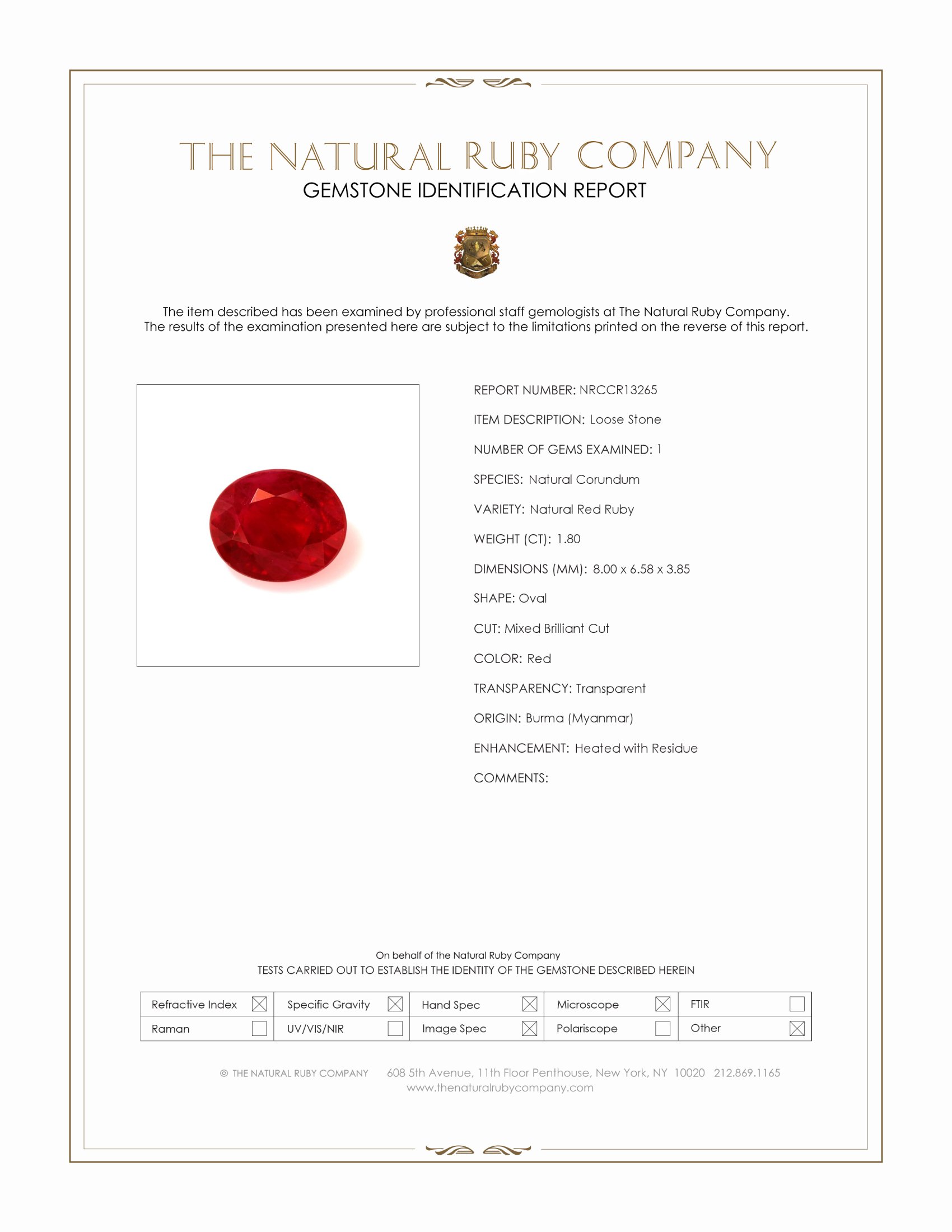
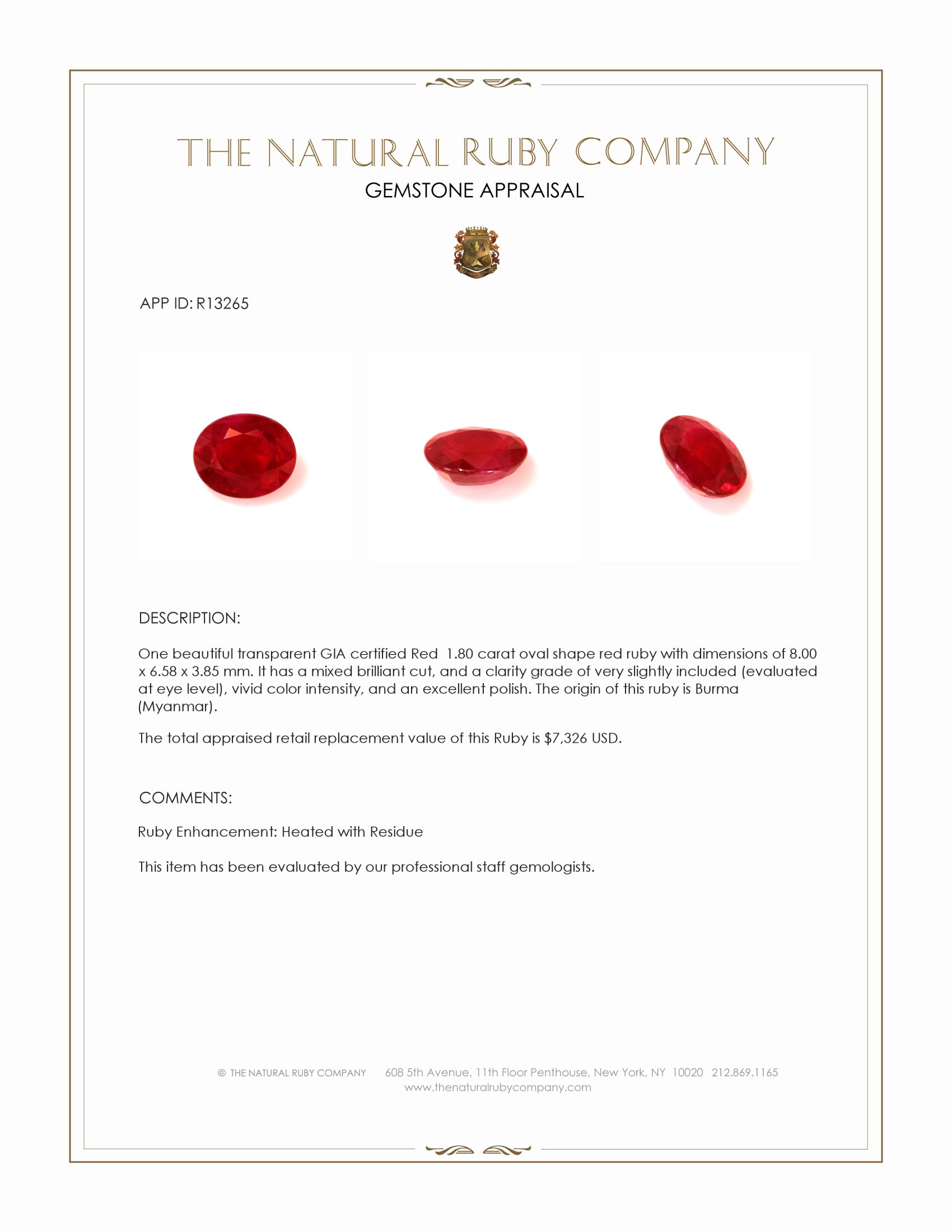
This listing presents a GIA certified natural red ruby, weight 1.80 carat, oval shape, dimensions 8.00 x 6.58 x 3.85 mm, faceted with a mixed brilliant cutting style, clarity graded as very slightly included evaluated at eye level, color intensity graded as vivid, polish graded as excellent, enhancement recorded as heated with residue, origin Burma Myanmar, offered by The Natural Ruby Company. The mixed brilliant cutting style in this oval was chosen to optimize both color saturation and light return, employing a modified crown with brilliant style facets to concentrate white light and a pavilion that blends step and brilliant elements to preserve depth of color while producing strong scintillation. The overall presentation is transparent and clean to the unaided eye, with internal characteristics that are typical of Burmese material, and the GIA report provides an independent verification of the weight, measurements, cutting style, clarity observations, color intensity, and enhancement status.
From a precision cut perspective the proportions are engineered to balance face up size and optical performance, the length to width ratio is approximately 1.22 which yields a classic oval silhouette that presents a broad table and even color distribution across the surface. The measured depth of 3.85 mm results in a depth percentage of 52.8 percent relative to the average of the length and width, a proportion that sits comfortably within the range that avoids excessive windowing and limits dark pavilion leakage, while maintaining a degree of pavilion depth sufficient to concentrate the ruby red body color. The mixed brilliant lay out concentrates pavilion facet junctions near the girdle to intensify color saturation when viewed face up, and the excellent polish ensures minimal surface diffusion of light, which enhances both brilliance and the perception of vivid saturation. In practical settings this cutting strategy gives the stone strong lively scintillation under point light, with consistent color zones under diffuse illumination, and a balanced distribution of white and colored return that speaks to careful lapidary control.
Color analysis for this specimen is critical to its value profile, the hue is a pure red leaning subtly toward a cool red axis, the tone is medium dark and the saturation is vivid, producing the deep luminous red commonly associated with high quality Burmese stones. Compared to classic Mogok provenance Burmese rubies that are celebrated for pigeon blood tones with a slight blue undertone, this ruby exhibits a similar purity of red with a faint cool bias that enhances perceived intensity without tipping into purple. Versus Mozambique rubies which often display a slightly purplish or orangey red spectrum depending on deposit and treatment, this Burmese example sits closer to the archetypal pure red end of the spectrum rather than the purplish or orangey extremes. When placed alongside Thai and Chanthaburi area rubies that frequently carry a darker, brownish tone and lower saturation owing to iron content and local geologic chemistry, the present stone reads noticeably cleaner and more vivid. Sri Lankan rubies on average trend toward lighter tone and pinkish hue, producing a noticeably different face up appearance, making this Burmese ruby superior for buyers seeking the dense vividness associated with fine classic red rubies.
Regarding clarity and treatment the GIA notation of very slightly included evaluated at eye level indicates that the stone is largely eye clean under normal viewing conditions, while internal features are observable with magnification and with careful scrutiny, typical features include oriented rutile silk, small crystals, and healed fissures that are commonly recorded in Burmese material. The enhancement description heated with residue points to traditional heat treatments applied to improve color and clarity, with residual material detectable in fissures under close examination, and such treatments are widely accepted in the trade when fully disclosed and are stable under normal wear conditions. The minor inclusions present can contribute beneficially to the gem s overall visual texture by diffusing light to create a velvety appearance that can actually intensify perceived color in certain lighting, and the combination of natural origin, GIA certification, vivid color intensity, and excellent polish makes this example especially suitable for high end mounting where the cutter s intent to balance optical return and color saturation will be preserved. For buyers who prioritize provenance, optical performance, and the classic Burmese red character, this ruby from Burma Myanmar represents a technically sound choice, and staff at The Natural Ruby Company can provide the GIA report and additional imaging to support detailed examination and comparison with other rubies from Mozambique Thailand and Sri Lanka.


Other Rubies You May Like
