
Why Small Rubies Stand Out
Why do small rubies stand out? A ruby’s red comes from chromium in the crystal, not from its size, so a stone well under a carat can show the same vivid, saturated color as a much larger one while being easier to match, set and wear every day. That is why small natural rubies anchor eternity bands, halos and earrings, and why a well-chosen one is a gem in its own right and not a lesser version of a big stone. Below we look at what to check when you buy one, with real examples from our inventory.
The Color of a Ruby Does Not Depend on Size
Ruby is the red variety of corundum, an aluminum oxide, colored by trace amounts of chromium that replace some of the aluminum in the crystal. That chemistry is the same whether the finished gem weighs 0.10 carats or 3 carats, so a small ruby can show exactly the saturated red that collectors prize in larger stones. Because fine red color is the most important value factor for ruby, a well-chosen small stone delivers the essential ruby experience in a more accessible form. For how chromium, iron and growth history make every ruby look different, see Why Are No Two Natural Rubies Exactly Alike?.
Why Larger Fine Rubies Are So Rare
Rubies grow in geological settings where chromium is present but silica is scarce, and where conditions stay stable enough for crystals to form. Large, clean, richly colored crystals are uncommon, and much ruby rough is fractured or included. When rough is cut, the cutter must work around those flaws, so the yield of large finished gems is low. As a result, prices per carat rise steeply as size increases. Small rubies are more readily available, which is part of what makes them so useful in jewelry design.
Small Rubies and the Art of Matching
One of the most demanding skills in the gem trade is matching small stones. A line of rubies in an eternity band or a halo needs to look consistent in color, tone, and brightness. Even slight differences become visible when stones sit next to each other.
Calibrated Sizes
Many small rubies are cut to calibrated sizes, meaning standard millimeter dimensions such as 2.0 mm or 3.0 mm rounds, or set ovals and cushions. Calibration lets jewelers set stones accurately in prepared mountings. A well-matched calibrated set represents careful sorting from a much larger parcel of gems, which is why matched suites are valued.
Color Harmony With a Center Stone
Small rubies are often used as accents around a center gem. When surrounding a diamond, they create contrast. When surrounding a larger ruby, they should harmonize rather than compete. A good jeweler will compare accent rubies against the center stone in several lighting conditions before setting.
Small Rubies From Our Inventory
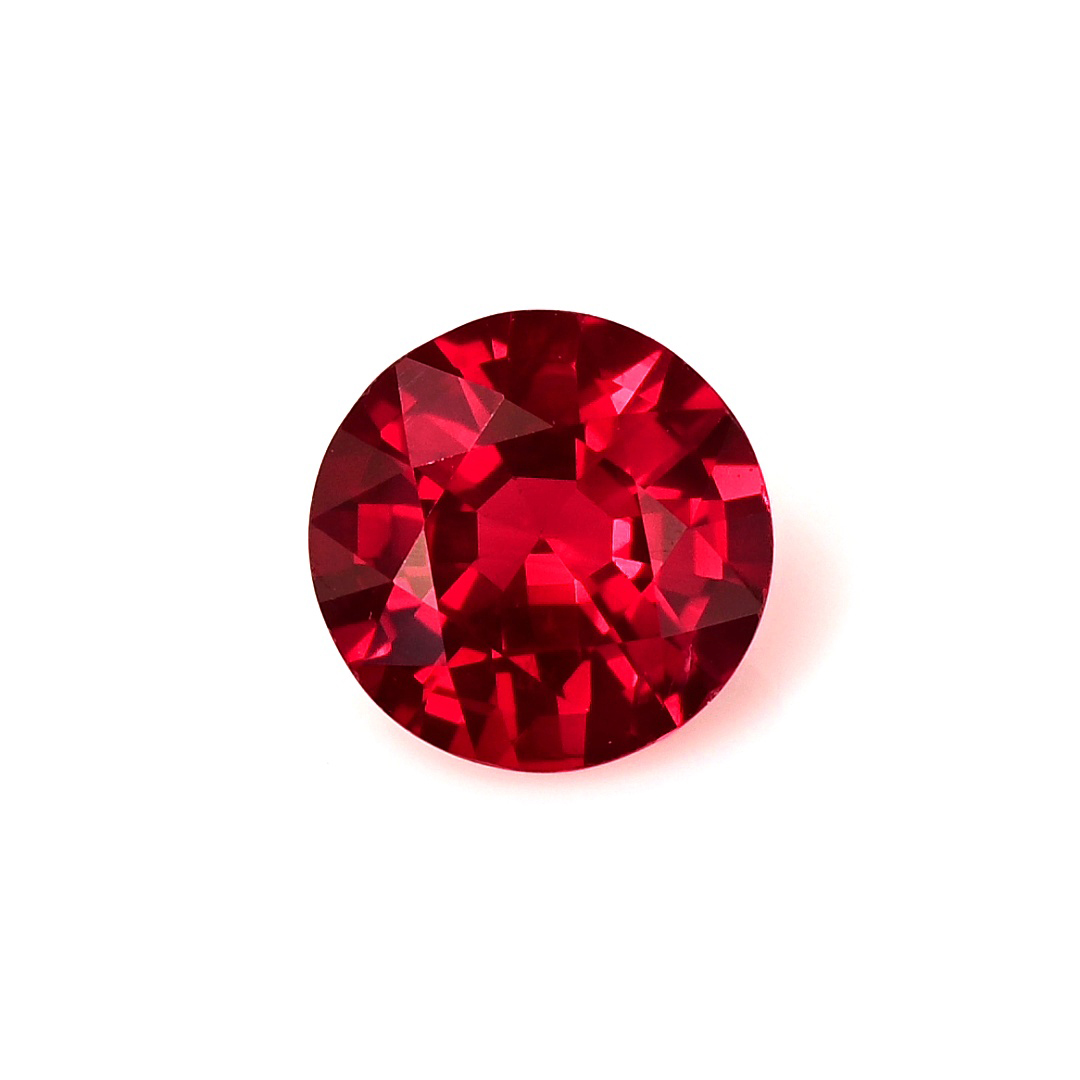
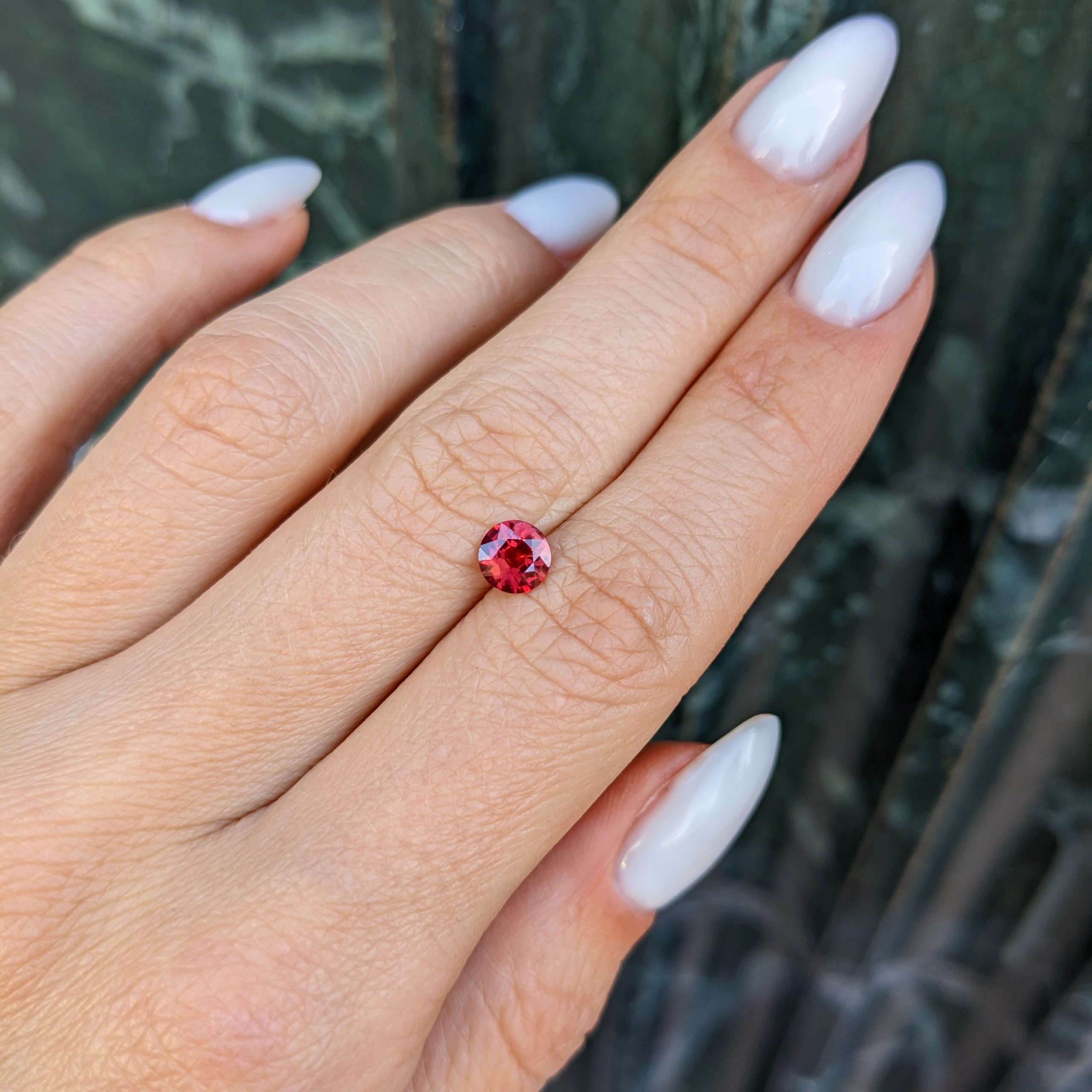
Small stones are judged in millimeters, so numbers help. Three round Mozambique rubies in our inventory, 0.67 ct (R14935), 0.69 ct (R14925) and 0.74 ct (R14934), each measure about 5.5 mm across, and all three are listed as Vivid red. Their weights differ by a few hundredths of a carat at almost the same diameter, which is why we suggest comparing millimeter size and not only carat weight. Each page also states the treatment: R14935, for example, is listed as Very Very Slightly Included and Heat Treated.
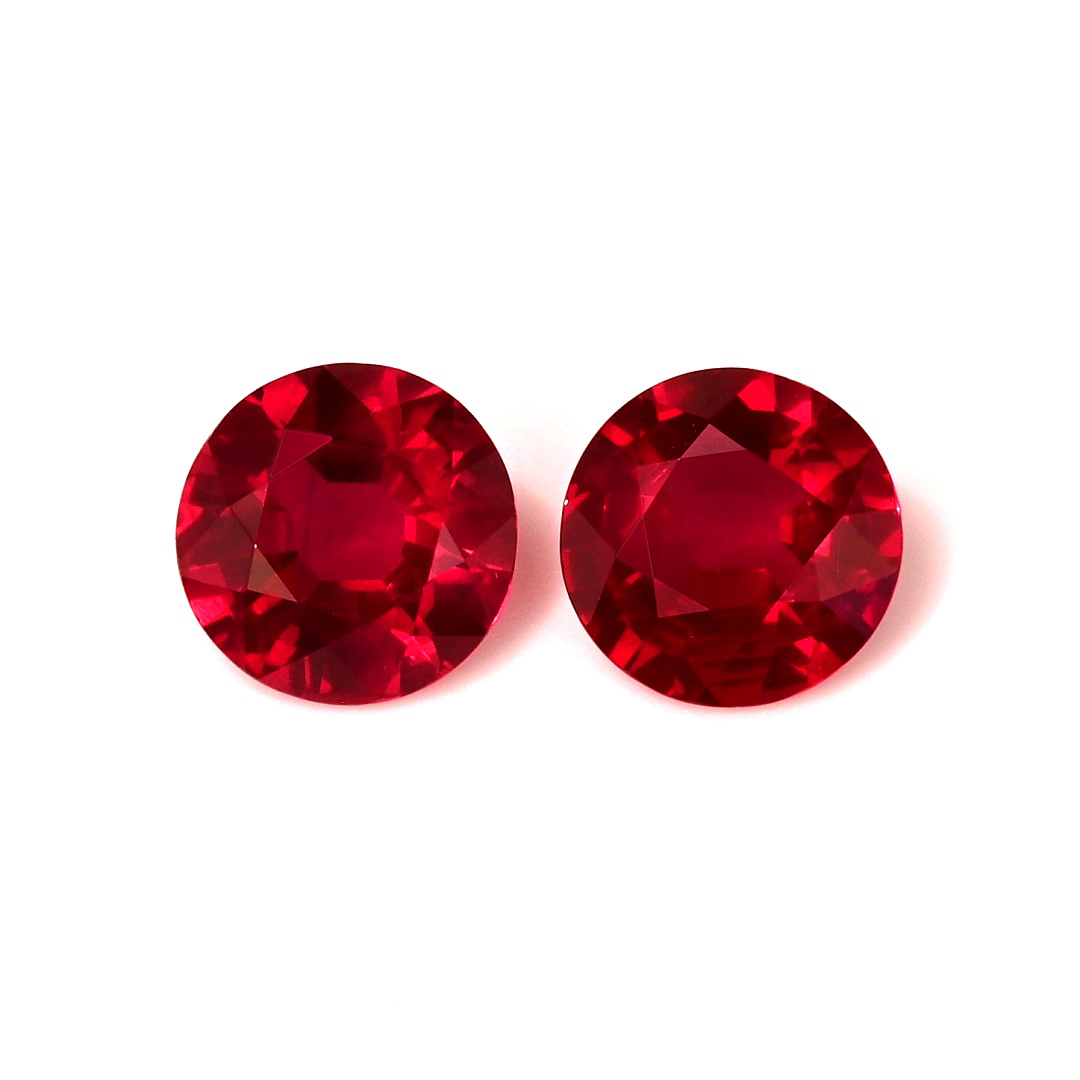
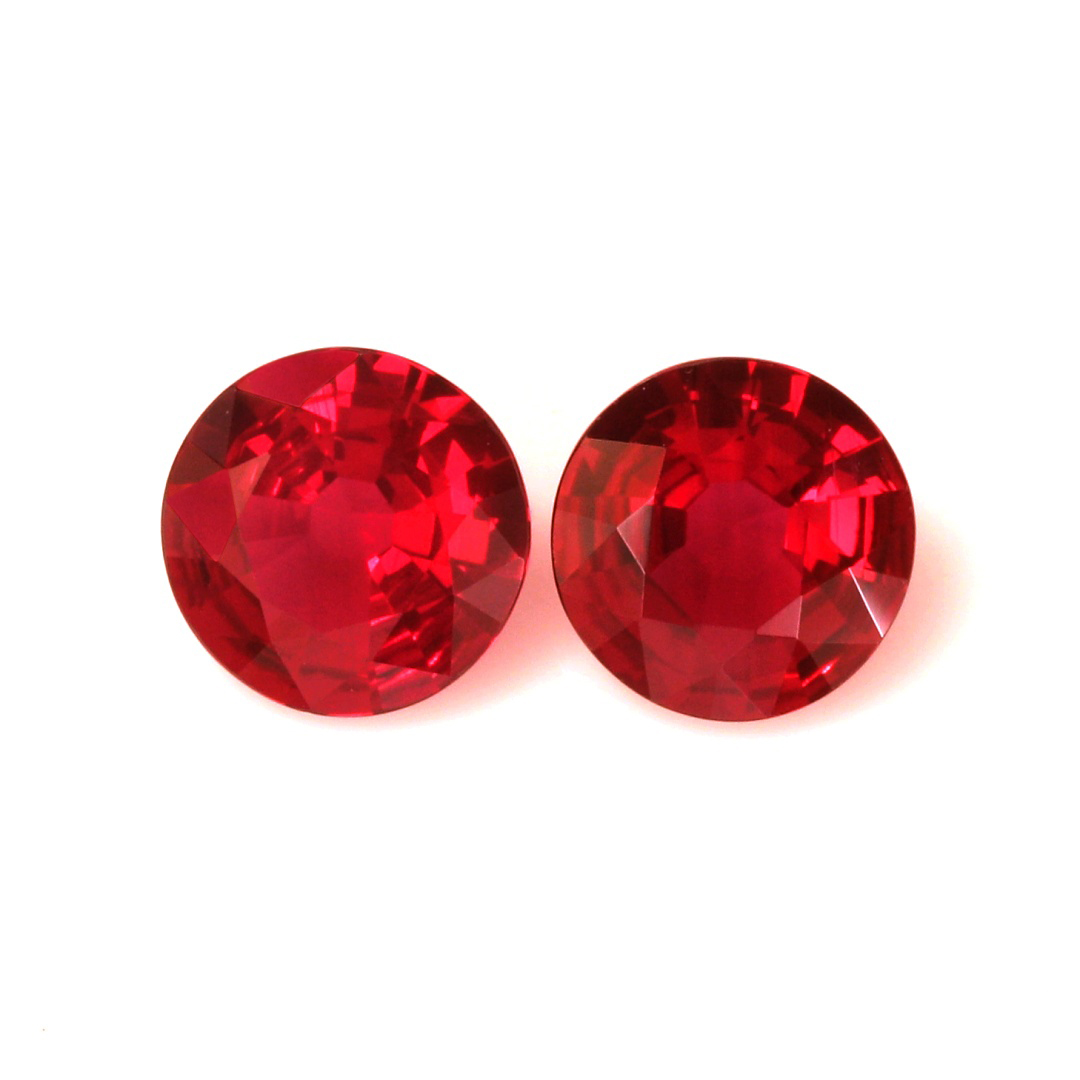
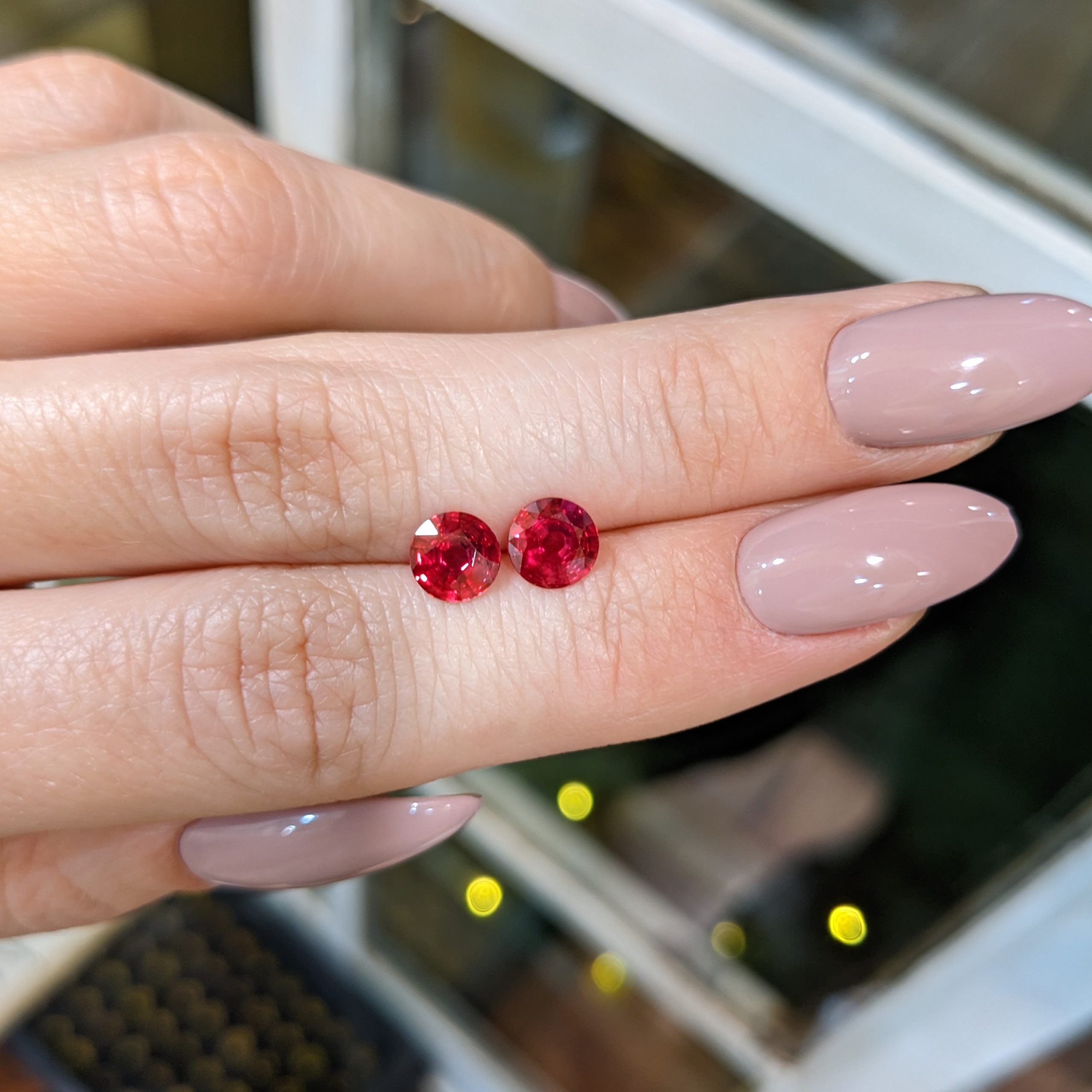
Matching matters most in earrings, so the pairing work is already done in PR10747 (a round pair listed at 1.22 ct total weight, about 5.5 mm per stone) and PR6286 (a round pair listed at 1.43 ct total weight, about 5.9 mm per stone). At just over a carat, the round 1.08 ct ruby R14772 measures 6.68 × 6.56 mm and is listed as Eye Clean with no enhancement, showing the same family of red at a size that works as a center stone.
How to Judge the Quality of a Small Ruby
The same value factors apply to small rubies as to large ones, though some matter differently at small sizes.
Color First
Look for a vivid, saturated red. Some rubies lean slightly purplish or slightly orangy; both can be beautiful, and preference is personal. Avoid stones that look very dark or brownish unless that is a deliberate design choice.
Clarity in Context
Most natural rubies contain inclusions. In a small stone, minor inclusions are often invisible to the unaided eye. What matters most is that inclusions do not reduce brightness or affect durability. Eye-clean small rubies are widely available, so you can usually prioritize color without much compromise.
Cut and Brightness
A small ruby should return light evenly across its face. Poorly proportioned stones may show a “window,” a washed-out area where light passes straight through, or dark “extinction” zones. With small stones, a good cut makes a visible difference in sparkle.
Treatment Disclosure
Heat treatment is widely used on ruby and is generally accepted in the trade when disclosed, while treatments such as lead-glass filling affect value and care far more. Our product pages list an enhancement status for every stone (for example “Heat Treated” or “No Enhancement”), and the same disclosure should come with a small ruby from any seller. For how treatment fits into a ruby’s journey, see How Does a Ruby Get From the Mine to a Piece of Jewelry?.
Durability: Small Rubies Are Built for Everyday Wear
Corundum rates 9 on the Mohs hardness scale, second only to diamond among popular gemstones. Ruby also lacks cleavage, the tendency to split along a plane, which makes it tough for daily wear. Small rubies are therefore well suited to rings and bracelets that see frequent contact.
That said, any gemstone can chip if it receives a hard knock at the wrong angle. Protective settings such as bezels or channel settings help shield small stones, especially in rings worn every day.
Ways to Wear Small Rubies
Small rubies are remarkably versatile. Popular options include:
- Eternity and half-eternity bands, where a continuous line of red adds rich color to a stack.
- Stud earrings, which bring a touch of color close to the face.
- Accent stones around diamonds or other gems, adding warmth and contrast.
- Cluster designs, where several small rubies combine to create a bold, larger look.
- Minimalist pendants, ideal for gifting, including as a July birthstone.
For a full walk-through of choosing a ruby for a ring, see Designing Your Own Ruby Engagement Ring, and for what makes natural rubies scarce in the first stage, see How Rare Is a Natural Ruby?.
Small Rubies in Hand: Handheld Videos
Small stones are best judged moving. Here are a round 0.67 ct ruby and two matched pairs of round Mozambique rubies turning in the hand.
For Scale: Our Highest-Priced Rubies
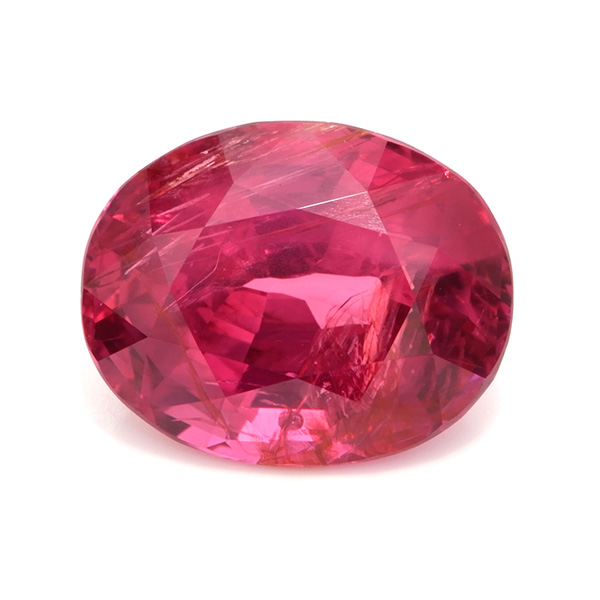
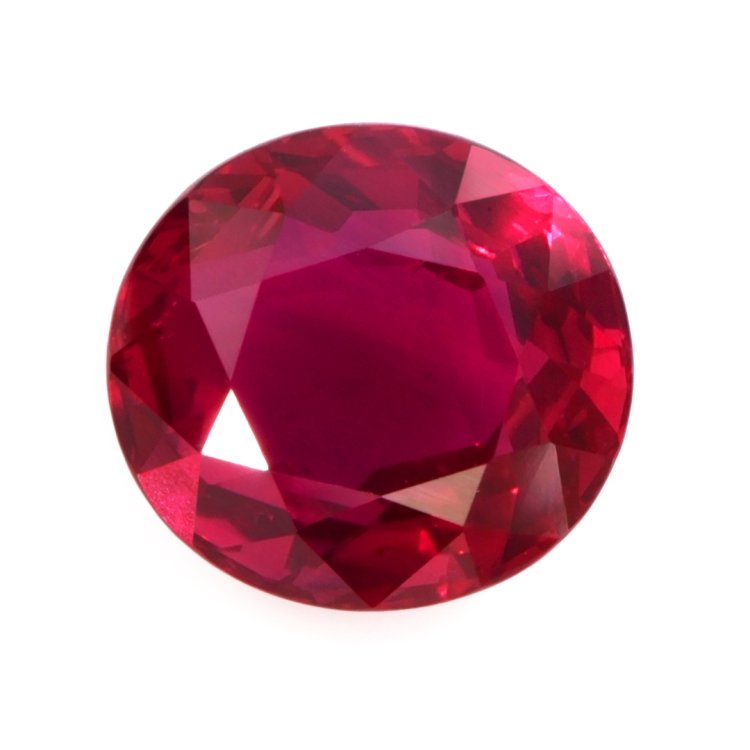
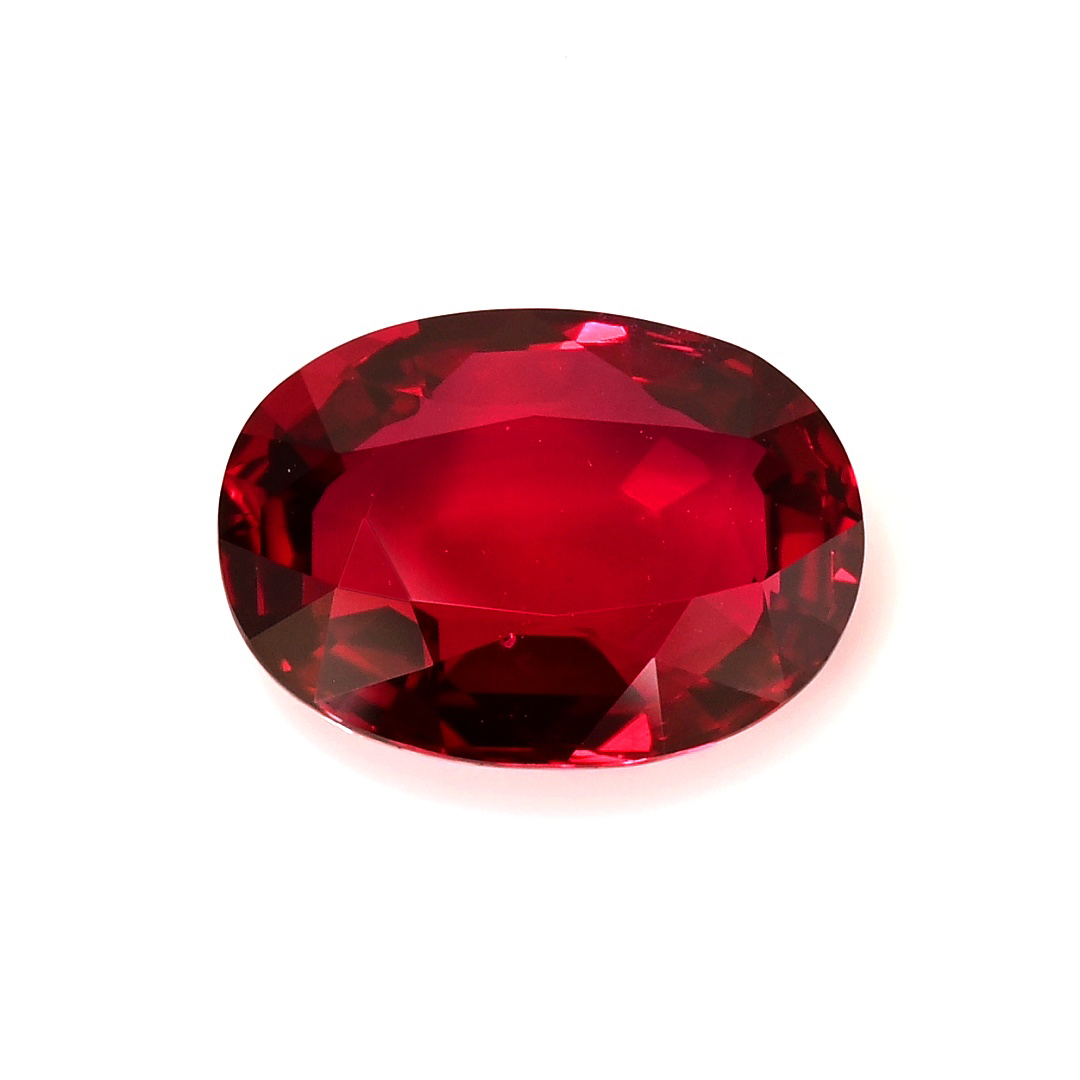
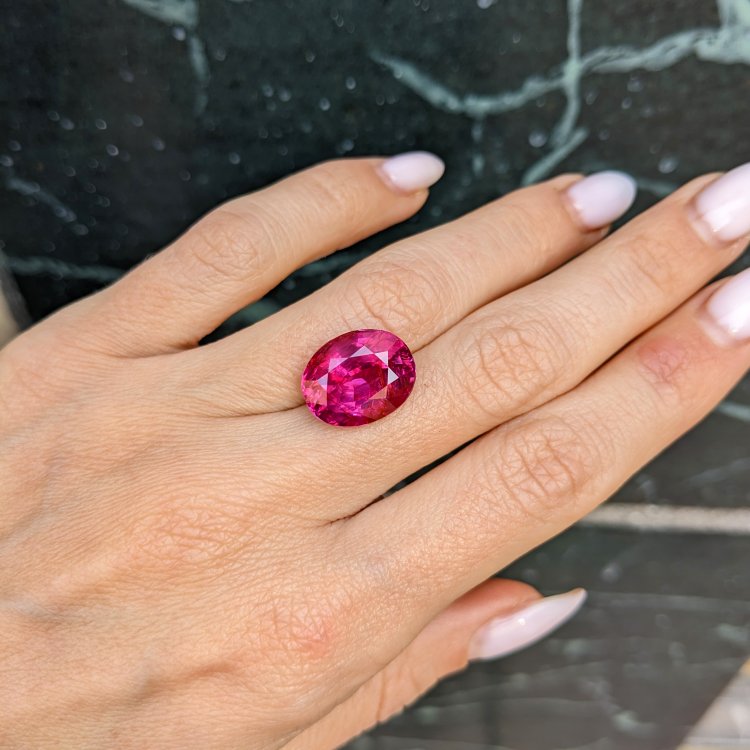
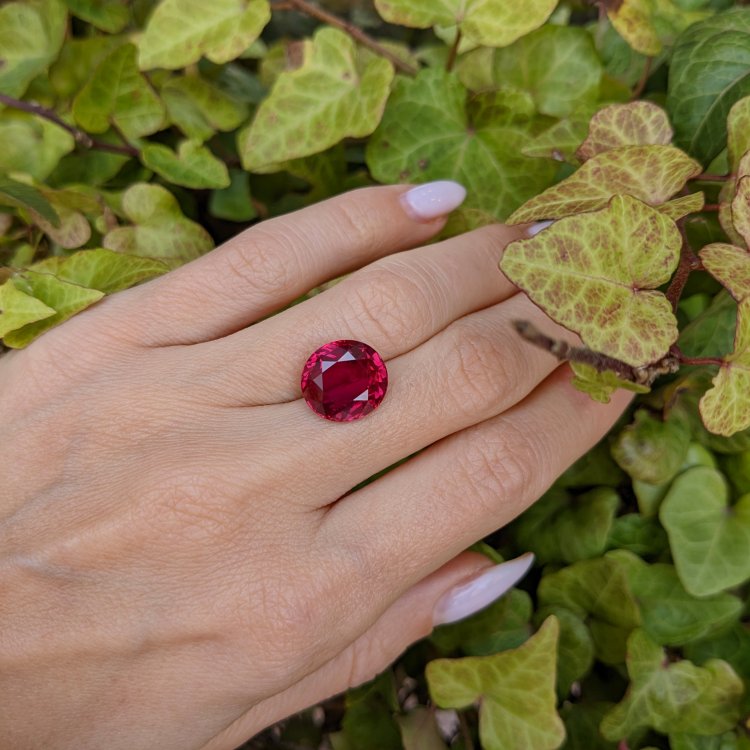
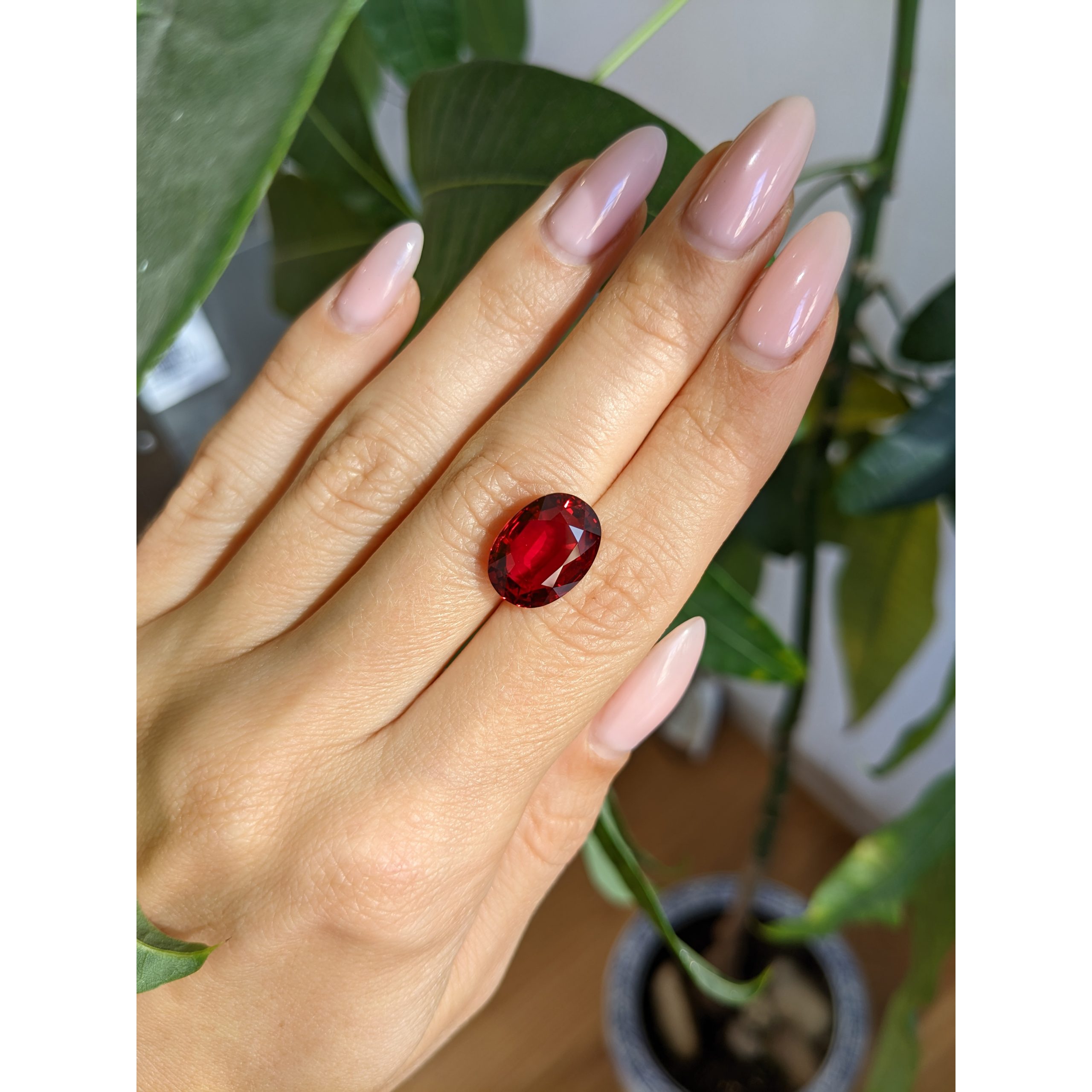
Small rubies are one end of our inventory; here is the other. These are three of our highest-priced rubies, much larger stones, shown on white and on the hand. Use the links for current details.
Frequently Asked Questions
Are small rubies less valuable than large rubies?
Per carat, small rubies typically cost less, because larger fine rubies are rarer. However, quality still matters greatly. A small ruby with excellent color can be worth more per carat than a larger stone with poor color.
Do small rubies have the same color as large ones?
Yes. Ruby’s color comes from chromium in the crystal, regardless of size. A small stone can show the same rich red as a large one, although larger stones may display color with more depth.
Can small rubies be untreated?
Yes. Unheated small rubies exist, though they are less common than heated stones. Ask the seller for disclosure, and for important pieces, consider a report from an independent gemological laboratory.
Are small rubies good for engagement rings?
Their hardness and toughness make them excellent for rings worn daily, whether as a modest center stone or as accents around another gem.
How big is a half-carat ruby?
It depends on the cut, so check millimeters. In our inventory, the 0.45 ct round ruby R14995 measures 4.93 × 4.88 mm, and the 0.67 ct round ruby R14935 measures 5.51 × 5.44 mm. A well-cut round near half a carat is therefore close to 5 mm across.
Conclusion
Small rubies stand out because they carry the full character of ruby: the chromium-driven red, the natural glow, and corundum’s impressive durability, all in a form that adapts to almost any design. When carefully matched and well cut, they can make a piece of jewelry feel rich and alive.
If you would like help choosing small rubies for a custom design or comparing matched sets, our team at The Natural Ruby Company is happy to guide you. Explore our collection at thenaturalrubycompany.com.