
- Stone12
- Reports3
-oval-ruby-2.2900-cts-r15038-1.jpg?d=200x200&v=20250707032512)
-oval-ruby-2.2900-cts-r15038-lifestyleimage-1.jpg?d=200x200&v=20250716120653)
-oval-ruby-2.2900-cts-r15038-lifestyleimage-2.jpg?d=200x200&v=20250716120653)

-oval-ruby-2.2900-cts-r15038-1.jpg?d=750x750&s=nrc&v=20250707032512)
-oval-ruby-2.2900-cts-r15038-lifestyleimage-1.jpg?d=750x750&s=nrc&v=20250716120653)
-oval-ruby-2.2900-cts-r15038-lifestyleimage-2.jpg?d=750x750&s=nrc&v=20250716120653)

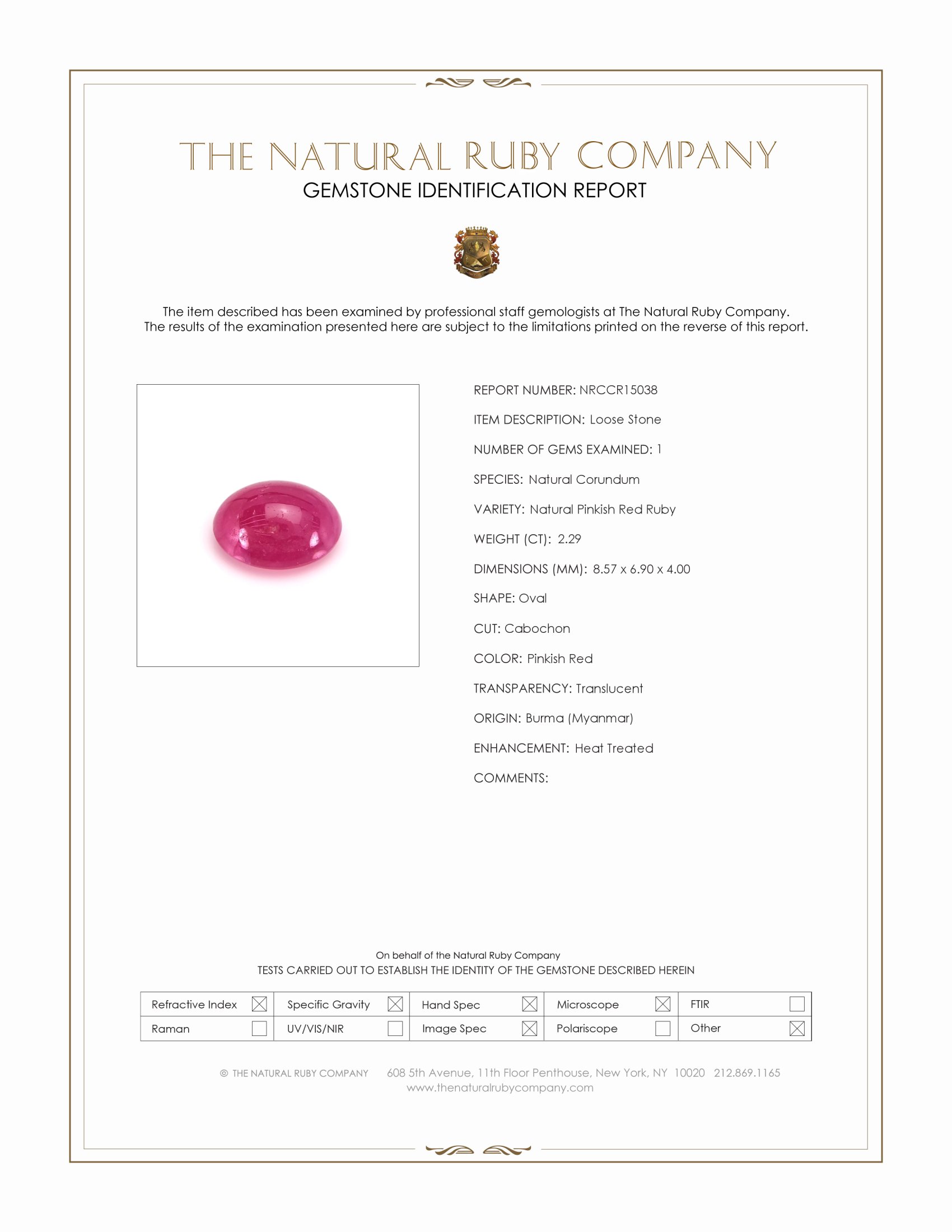
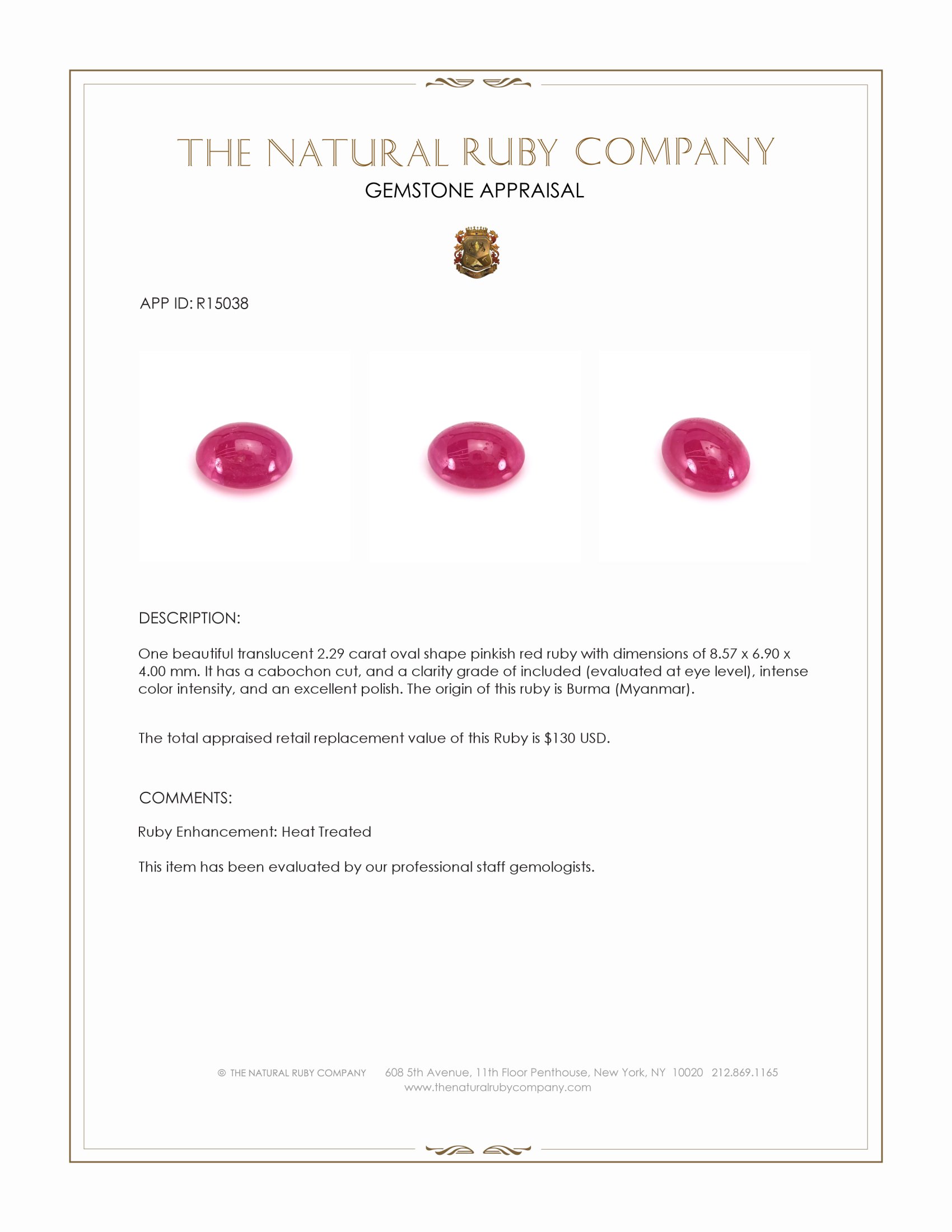
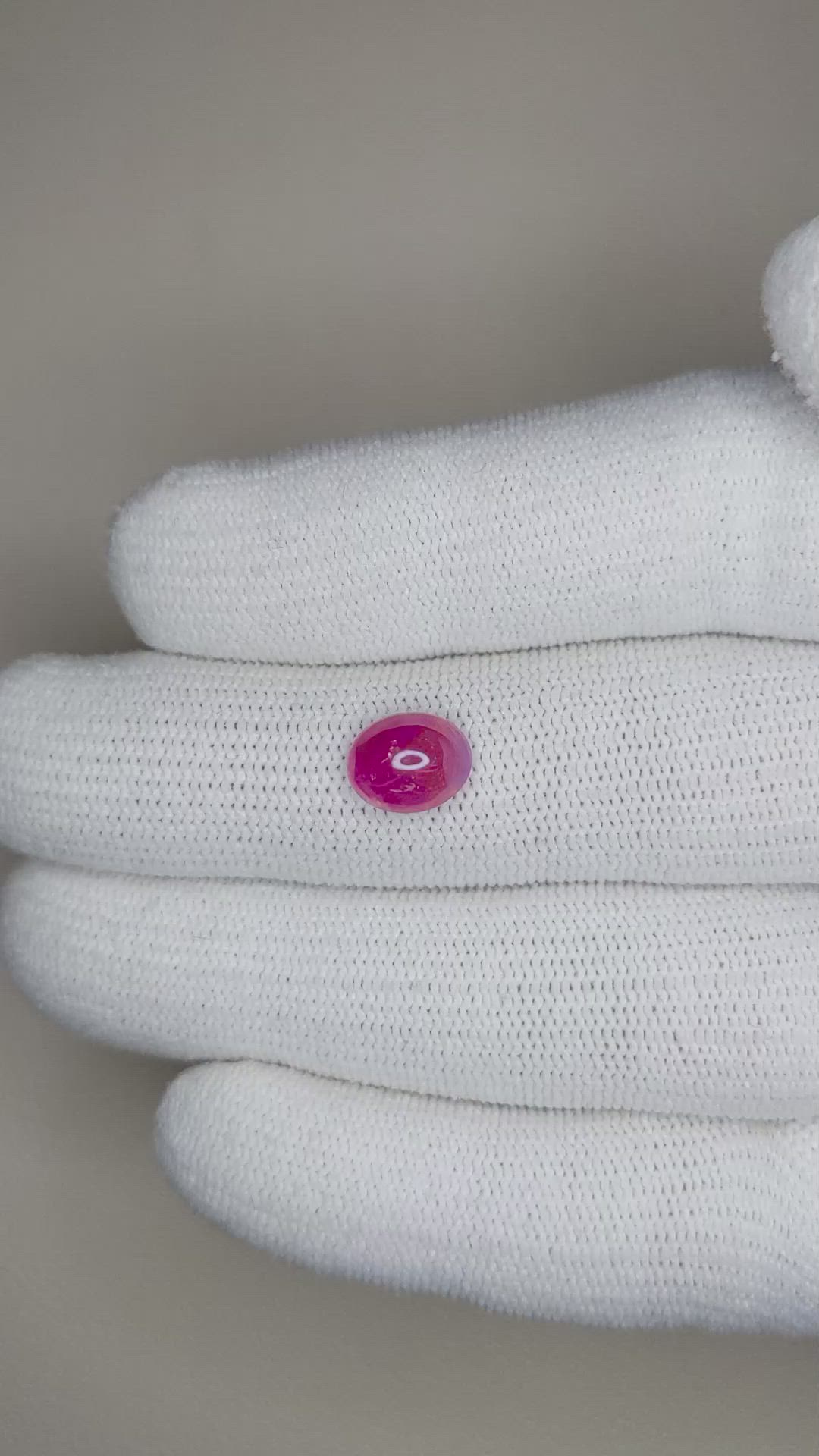
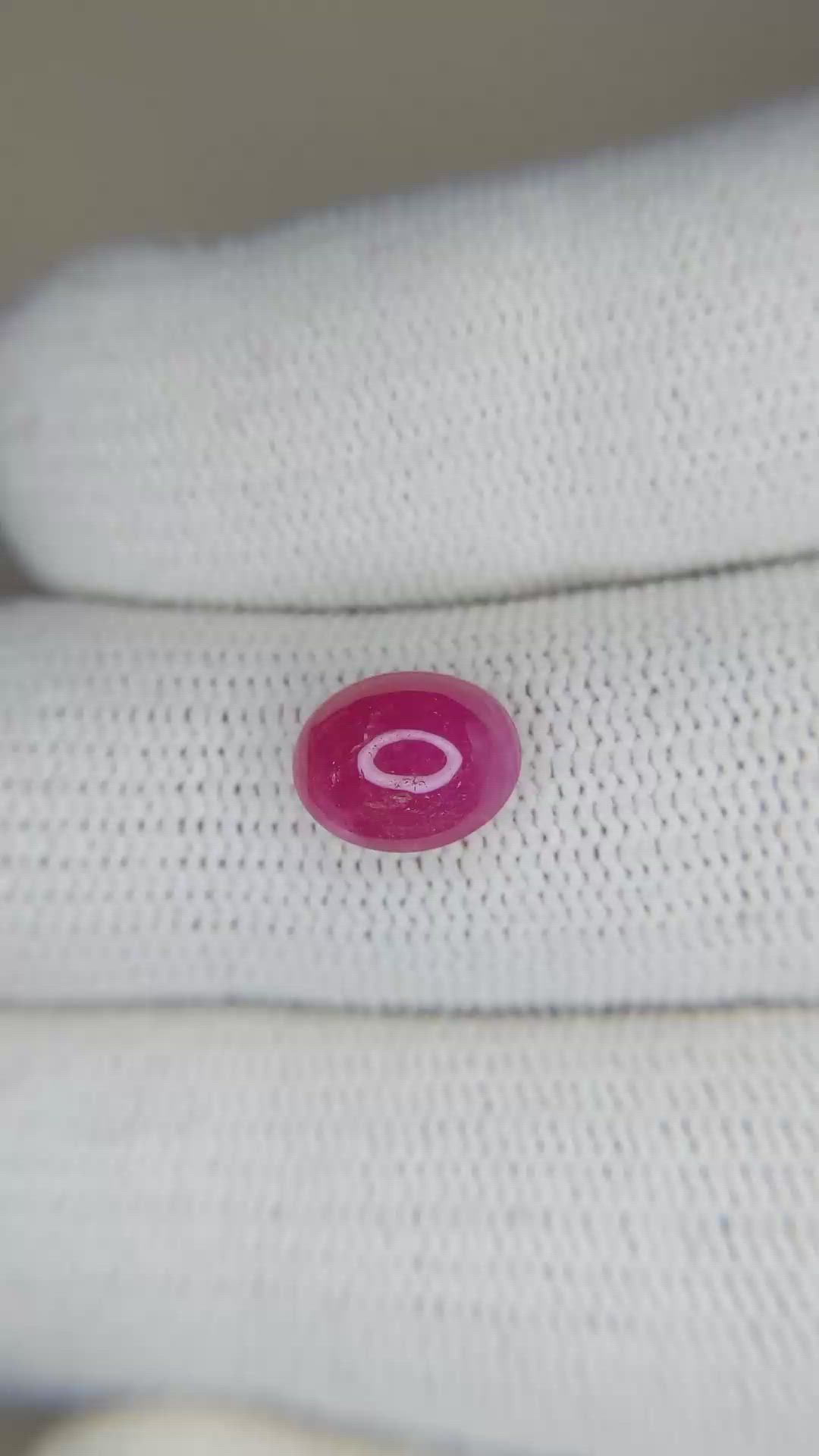
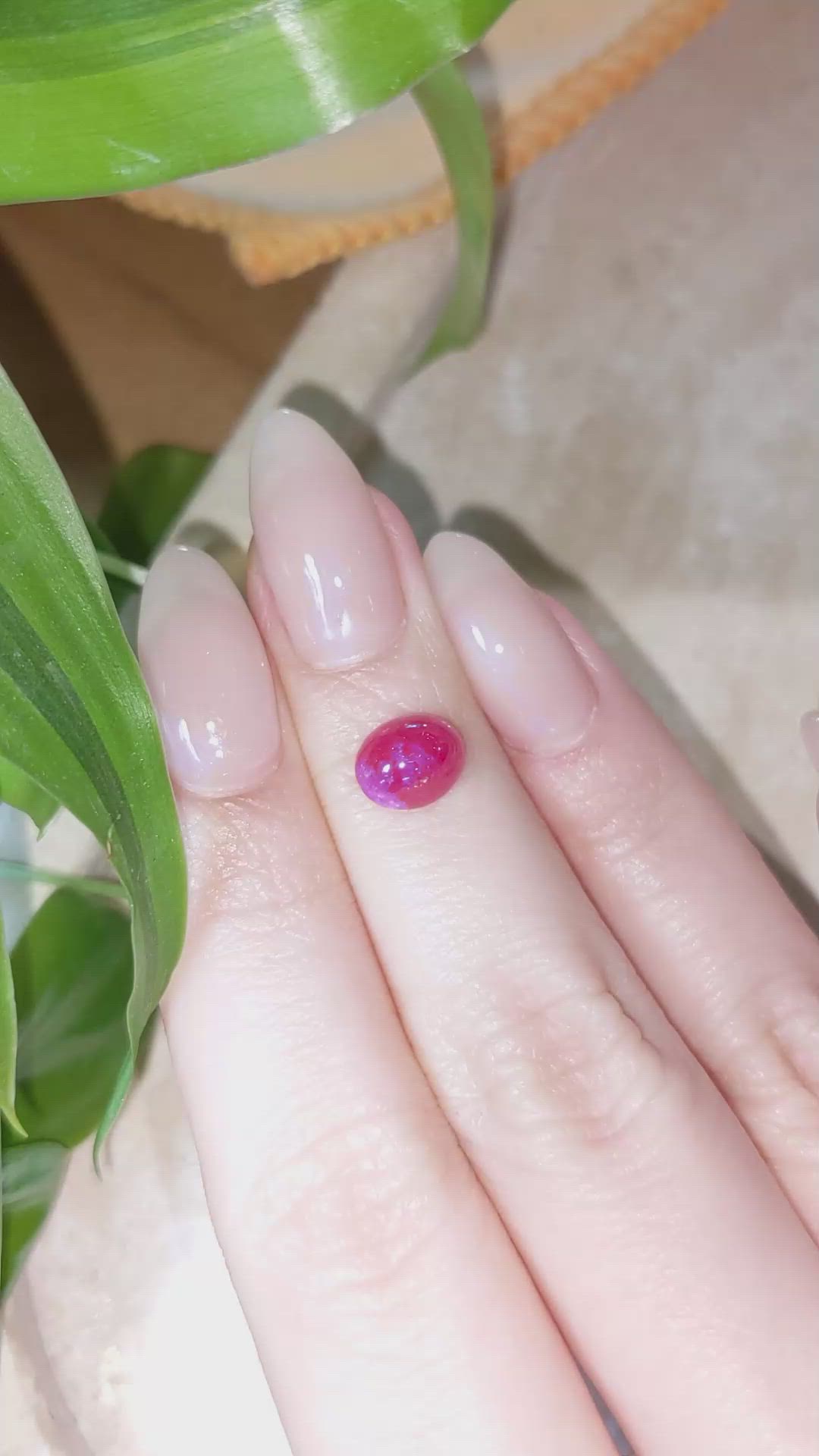
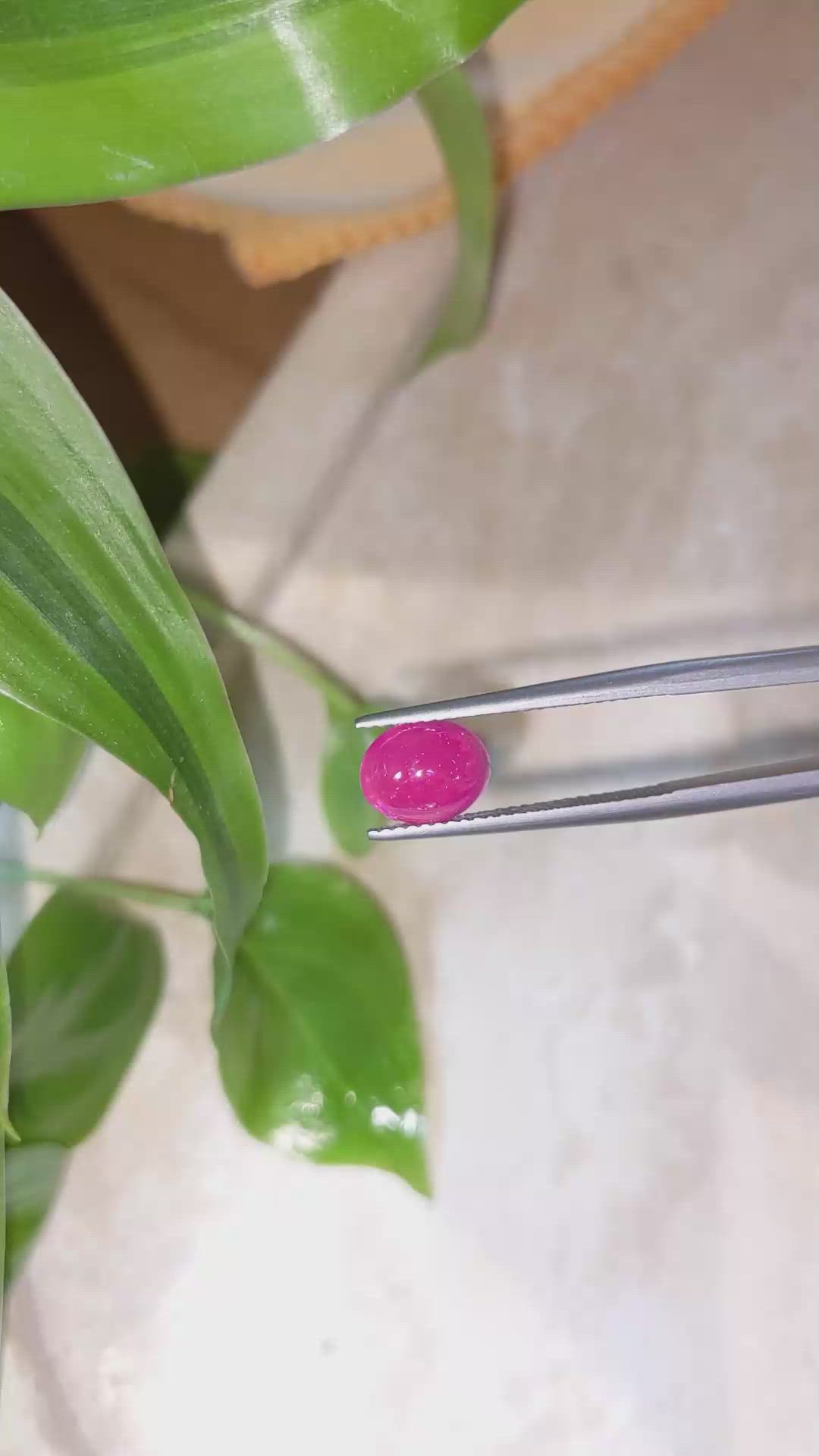
2.29 Ct. Cabochon Ruby from Burma (Myanmar)
This loose stone ships by Feb 15
Item ID: | R15038 |
|---|---|
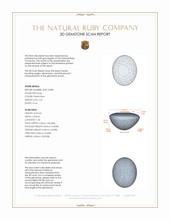
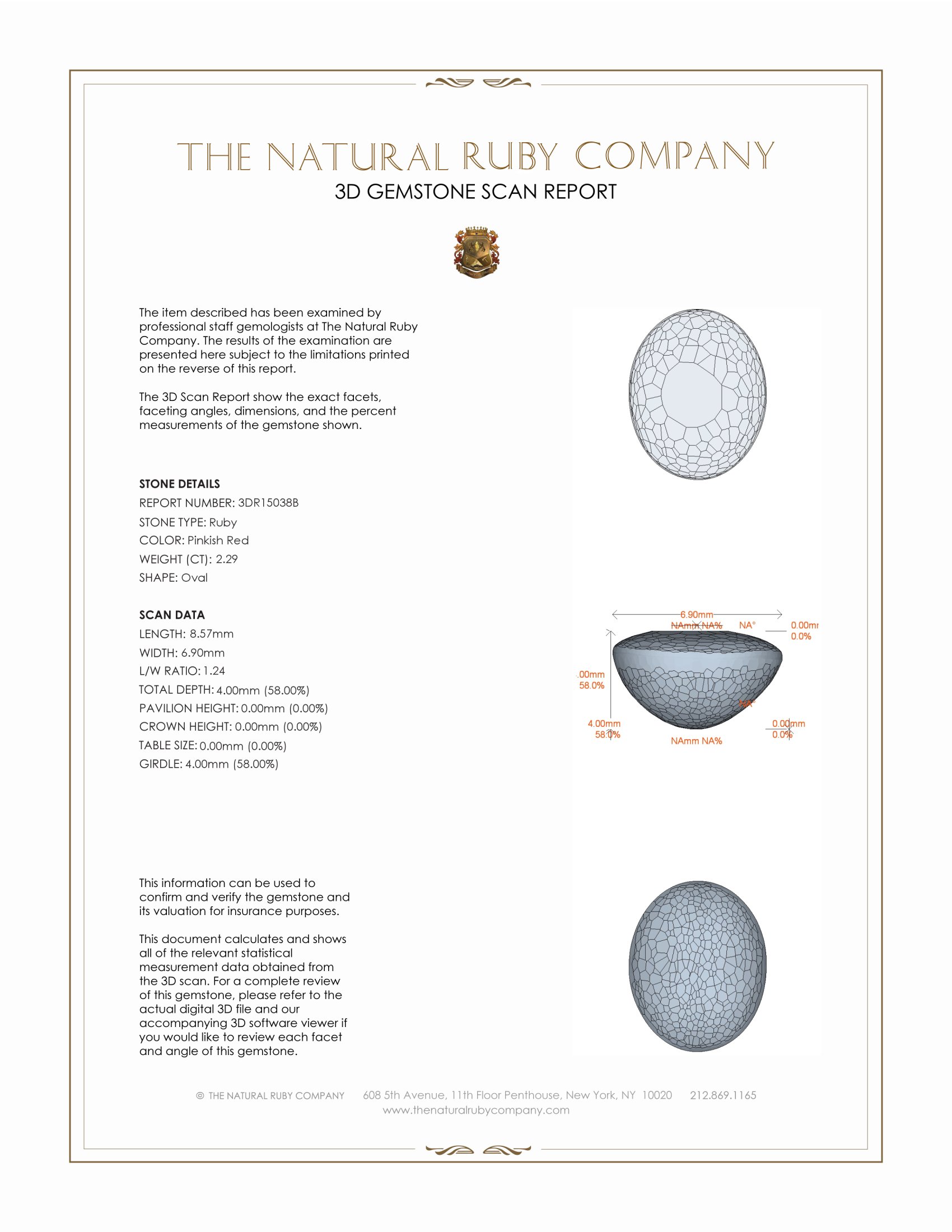
Dimensions (MM): help | Length: 8.57 Width: 6.9 Height: 4 |
Weight: | 2.29 Ct. |
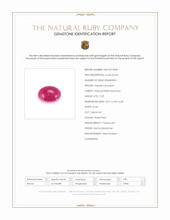
Color: help | Pinkish Red |
Color intensity: help | Intense |
Clarity: help | Included |
Shape: help | Oval |
Cut: | Cabochon |
Cutting style: | Cabochon |
Enhancements: help | Heat Treated |
Origin: help | Burma (Myanmar) |
Per carat price: help | $57 |
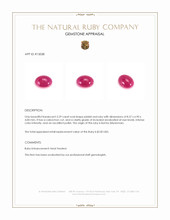
This piece is a translucent 2.29 carat oval pinkish red ruby, presented in a classic cabochon cut, with dimensions eight point five seven by six point nine zero by four point zero zero millimeters. The cabochon form emphasizes tone and saturation rather than faceted brilliance, producing a uniform internal glow and a smooth, lustrous dome. The color is graded as intense, with a pinkish red hue that carries strong saturation while maintaining a medium to medium dark tone. Clarity is graded included at eye level, with natural internal features visible without magnification, and the surface finish is of excellent polish. This ruby originates from Burma Myanmar and has been subject to standard heat treatment, disclosed and stable, a common enhancement that optimizes color and reduces silk opacity without altering the fundamental crystal structure. The Natural Ruby Company offers this stone with full disclosure of its origin and treatment history, and the presentation emphasizes gemological transparency for knowledgeable buyers.
In technical color terms, the stone exhibits a finely balanced hue where red dominates with a perceptible pink component, producing the described pinkish red appearance. Intense color intensity in a translucent cabochon manifests as an even saturation across the dome, with minimal color zoning when viewed face up. The cabochon shape distributes light through the body of the material rather than returning facets of light, so the perceived color depth is influenced by dome height and pavilion weight. At the stated dimensions and dome profile, the stone delivers a steady internal flash and a vivid wash of color under both daylight and warm incandescent lighting, though the perceived warmth will increase under incandescent sources. Translucency permits light transmission that creates an internal glow, which is desirable in cabochons because it enhances perceived saturation without the need for facet generated brilliance.
Clarity wise, inclusions are present and visible at eye level, consistent with an included grade. Typical internal features include fine rutile needles or silk that can soften transparency and contribute to the diffuse glow, small crystal inclusions and healed fractures that produce pinpoint light scatter, and growth related zoning that can be discerned on close inspection. These internal characteristics are diagnostic of natural corundum and consistent with Burmese origin, where silk and characteristic mineral inclusions are common. From a durability perspective, corundum ranks high on the Mohs scale, and this ruby is robust for everyday wear when properly set. The heat treatment applied is stable, and when performed correctly it reduces fluid or partially healed fracture visibility and improves color homogeneity, while leaving primary crystal integrity intact. For gemological reference the corundum family typically displays a refractive index range around one point seven six two to one point seven seven zero and a specific gravity near four point zero, properties that confirm identity during laboratory analysis.
Cutting and finishing considerations are critical with a cabochon, and this ruby demonstrates careful preforming and dome shaping to maximize color saturation and optical balance. The cutter selected dome curvature and proportions to deliver a uniform color field and to minimize windowing along the pavilion, optimizing face up appearance at the given carat weight. The excellent polish enhances surface luster and reduces microabrasion that could otherwise scatter light. For setting, a bezel mount is often recommended for cabochons because it secures the girdle and protects the dome from abrasion, while a well engineered prong setting may be used in designs that allow for protective railwork. The translucency of this piece invites designs that place light exposure from multiple angles, such as open back settings in pendants where light can enter and enhance the internal glow. For care, routine cleaning with warm, soapy water and a soft brush is appropriate, avoiding harsh chemicals and extreme heat exposure that could stress filled or healed fractures. The Natural Ruby Company stands behind product disclosure and provenance information, providing detailed measurements, treatment disclosure, and origin notes to support gemological assessment and confident acquisition by collectors and designers who prioritize technical accuracy and craftsmanship.


Other Rubies You May Like
