
- Stone9
- Reports4
-oval-ruby-7.9900-cts-r12348-1.jpg?d=200x200&v=20201210132050)



-oval-ruby-7.9900-cts-r12348-1.jpg?d=750x750&s=nrc&v=20201210132050)



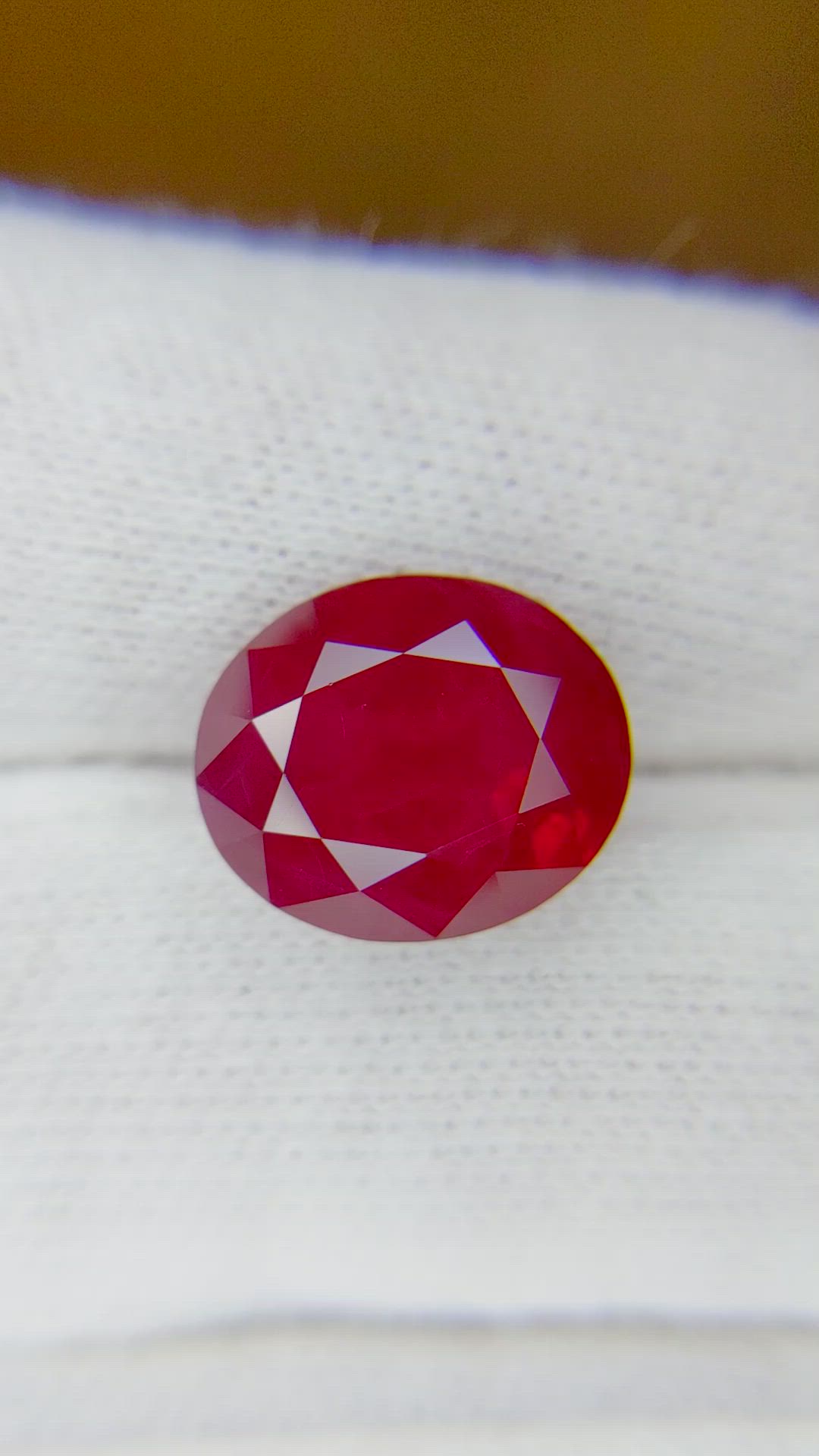
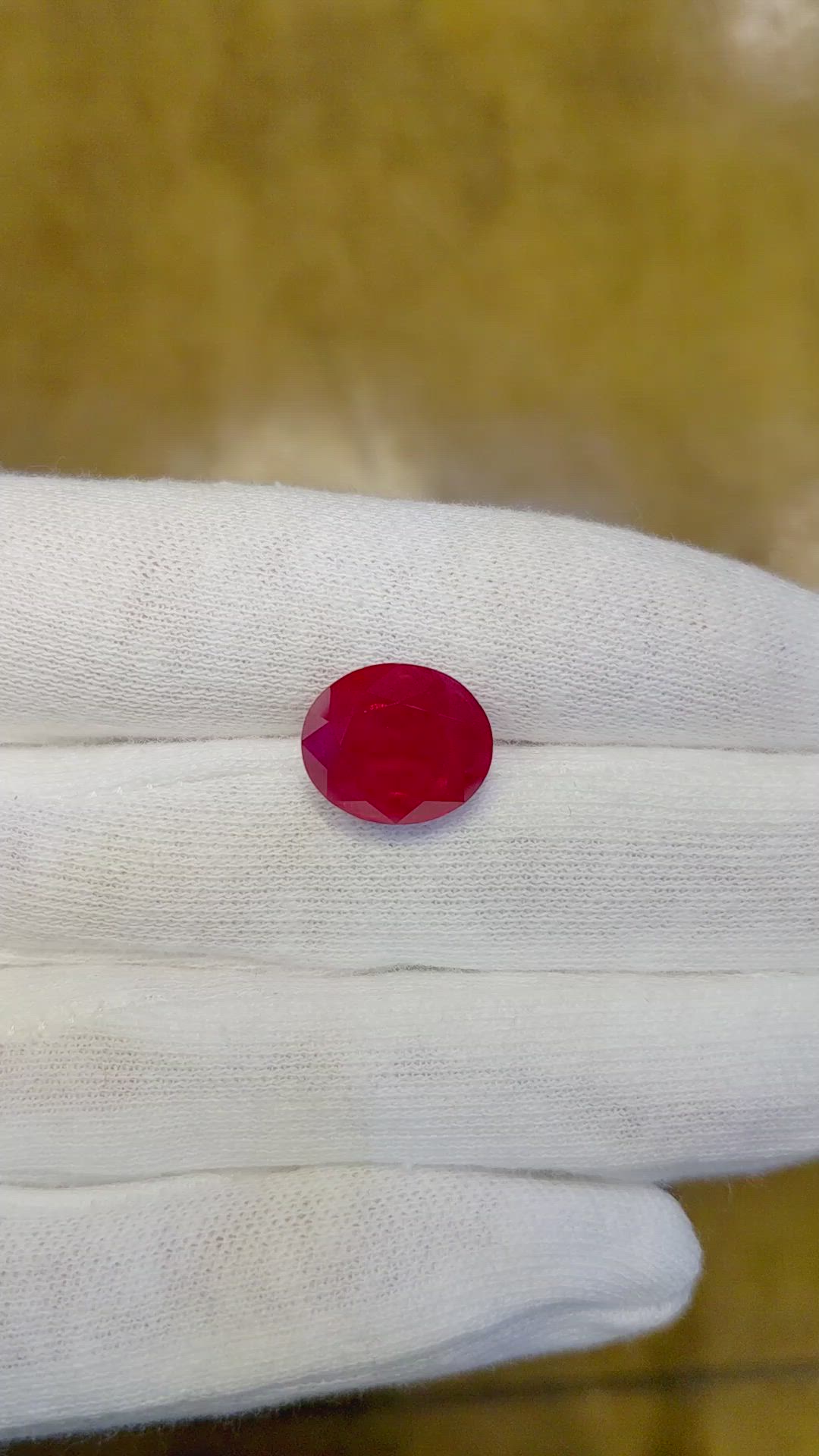
7.99 Ct. Ruby from Burma (Myanmar)
This loose stone is available to ship now
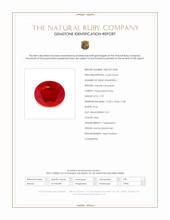
Item ID: | R12348 |
|---|---|
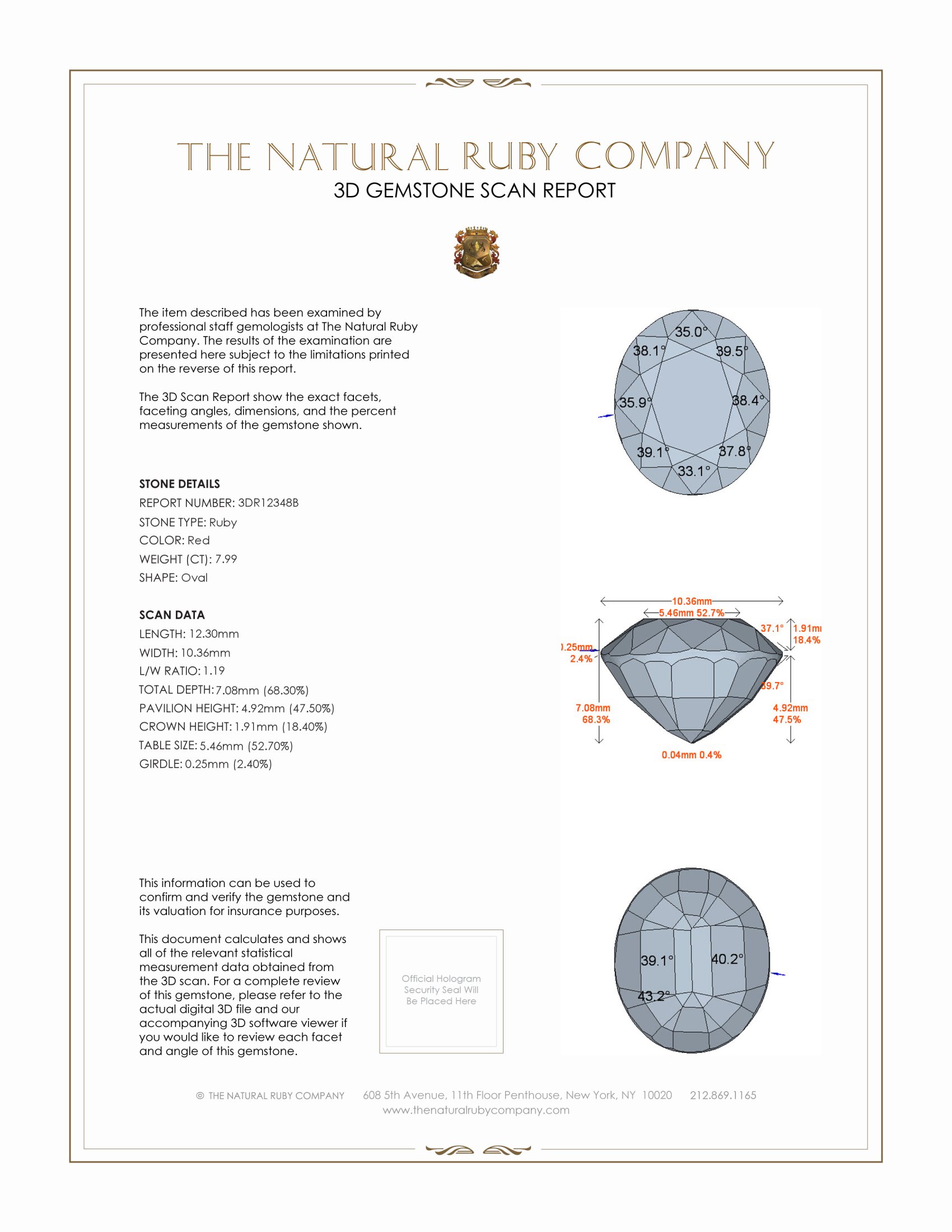
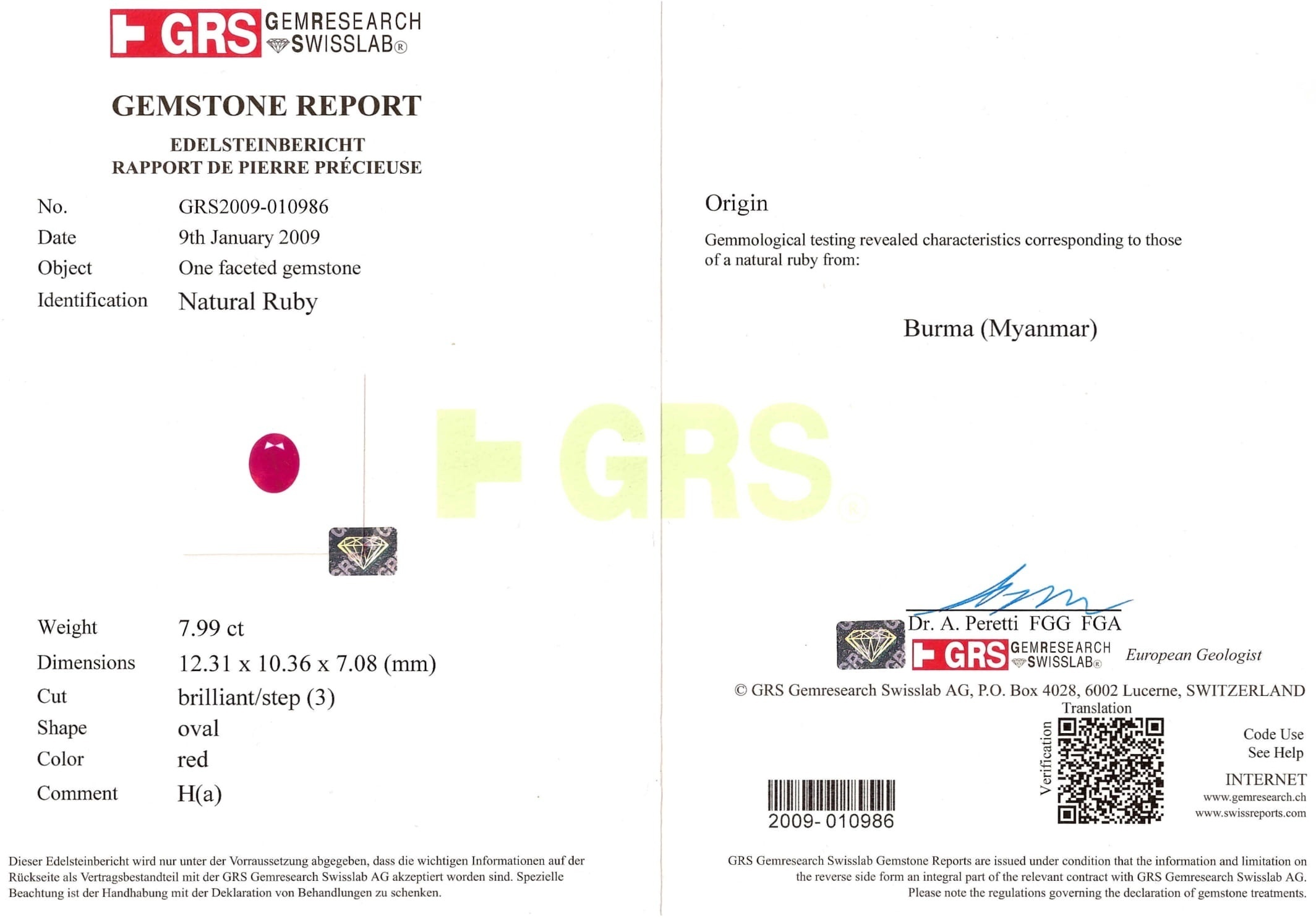
Dimensions (MM): help | Length: 12.3 Width: 10.36 Height: 7.08 |
Weight: | 7.99 Ct. |
Color: help | Red |
Color intensity: help | Vivid |
Clarity: help | Included |
Shape: help | Oval |
Cut: | Mixed Brilliant Cut |
Cutting style: | Faceted |
Enhancements: help | Heat Treated |
Origin: help | Burma (Myanmar) |
Per carat price: help | $10,270 |
I am pleased to present a stunning example of what discerning collectors and connoisseurs seek, a transparent GRS certified red ruby weighing 7.99 carat, with elegant oval proportions measuring 12.30 x 10.36 x 7.08 mm, and a mixed brilliant cut that balances fire and saturation. This stone comes to you from The Natural Ruby Company, backed by the GRS report that confirms its natural origin and gemological characteristics. The oval outline is a classical and flattering shape that maximizes face up surface and color distribution, while the mixed brilliant cutting scheme combines large pavilion facets with a finely faceted crown to deliver a lively response to light. The dimensions and carat weight place this ruby in a very desirable size category for investment quality rubies, and the excellent polish enhances the visual impact, creating a clean table and crisp facet junctions that speak to meticulous lapidary work.
Clarity is graded as included, evaluated at eye level, and this requires contextual explanation for an educated buyer, because inclusions in ruby are both diagnostic and often intrinsic to natural origin. In rubies from Burma, inclusions such as fine rutile silk, small needle arrays, and fingerprint type patterns are common, and they can act to soften and diffuse light, sometimes actually enhancing the apparent color saturation when the stone is well cut. The included grade does not mean the gem is unattractive, it means that at normal viewing distance there are natural internal features visible. In this specimen the vivid color intensity remains the dominant attribute, it reads with strong red saturation and a lively tone, and the mixed brilliant cut and excellent polish ensure that the inclusions do not interrupt the overall visual allure. For buyers focused on aesthetic superiority, the interplay of vivid color and skilled cutting often outweighs the presence of typical inclusions, especially when origin and treatment are fully documented.
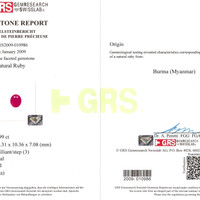
The origin of this ruby is Burma Myanmar, and that provenance carries both historical significance and a measurable premium in the marketplace. Burmese rubies are celebrated for producing some of the most desirable pigeon blood and vivid red tones in the trade, and stones from this region are highly sought after by collectors and investors because of their distinctive chroma and tone. The GRS certification included with this gem not only verifies natural origin but also provides an authoritative third party assessment of its properties, which increases market confidence and liquidity. Enhancement is disclosed as heat treatment, which is an established and accepted practice in ruby processing when documented. Heat treatment in rubies is applied to improve color and reduce unwanted inclusions in a manner that is stable over time. When heat treatment is properly performed and disclosed, it does not carry the same negative connotations as more invasive or unstable enhancements, and buyers often regard heat treated Burmese rubies with strong color and proper certification as both attractive and tradeable assets.
Durability is a key consideration for any piece intended for regular wear, and rubies are among the hardest gem materials used in jewelry, ranking nine on the Mohs scale of mineral hardness. By comparison diamond is ten on the Mohs scale, sapphire is nine because ruby is a variety of corundum, topaz is eight, and quartz is seven. This places ruby well above the majority of ornamental gems in resistance to scratching, and it is one of the main reasons that rubies are ideal for rings and other items that receive daily use. Hardness does not confer immunity to other forms of damage however, and rubies can be susceptible to cleavage like behavior from strong impact or to surface abrasion of setting metal over time. Because this ruby has internal inclusions, it is prudent to avoid harsh mechanical shocks and to use protective settings in high wear pieces. Ultrasonic and steam cleaning should be approached with caution for included stones, because trapped fluid filled inclusions or healed fractures can be sensitive to thermal and ultrasonic stress. For peace of mind The Natural Ruby Company recommends routine inspection, gentle warm soapy cleaning, and choosing secure prong or bezel settings for rings intended for continuous wear.
For the educated buyer seeking a gem that combines provenance, market appeal, and robust physical properties, this 7.99 carat Burmese ruby presents a compelling proposition. The vivid color intensity is the primary value driver for rubies, and in this stone it is complemented by a collectible carat weight and a mixed brilliant cut that maximizes both color and light return. The certified origin from Burma Myanmar enhances its desirability, and the GRS certification provides an objective basis for valuation and resale. Heat treatment is fully disclosed, and when taken together with the eye level included clarity and excellent polish, the net effect is a stone that balances natural characteristics and lapidary enhancement in a manner that is attractive to both collectors and jewelers. At The Natural Ruby Company we curate such examples because they represent the intersection of natural rarity, historical pedigree, and practical durability, making this ruby a sound choice for a statement commission or a long term addition to a collection.


Other Rubies You May Like
