- Stone10
- Reports2
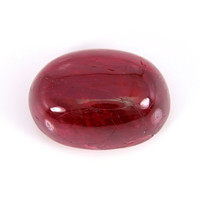
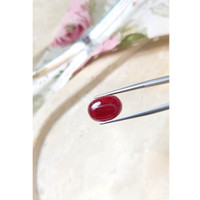
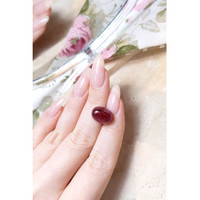
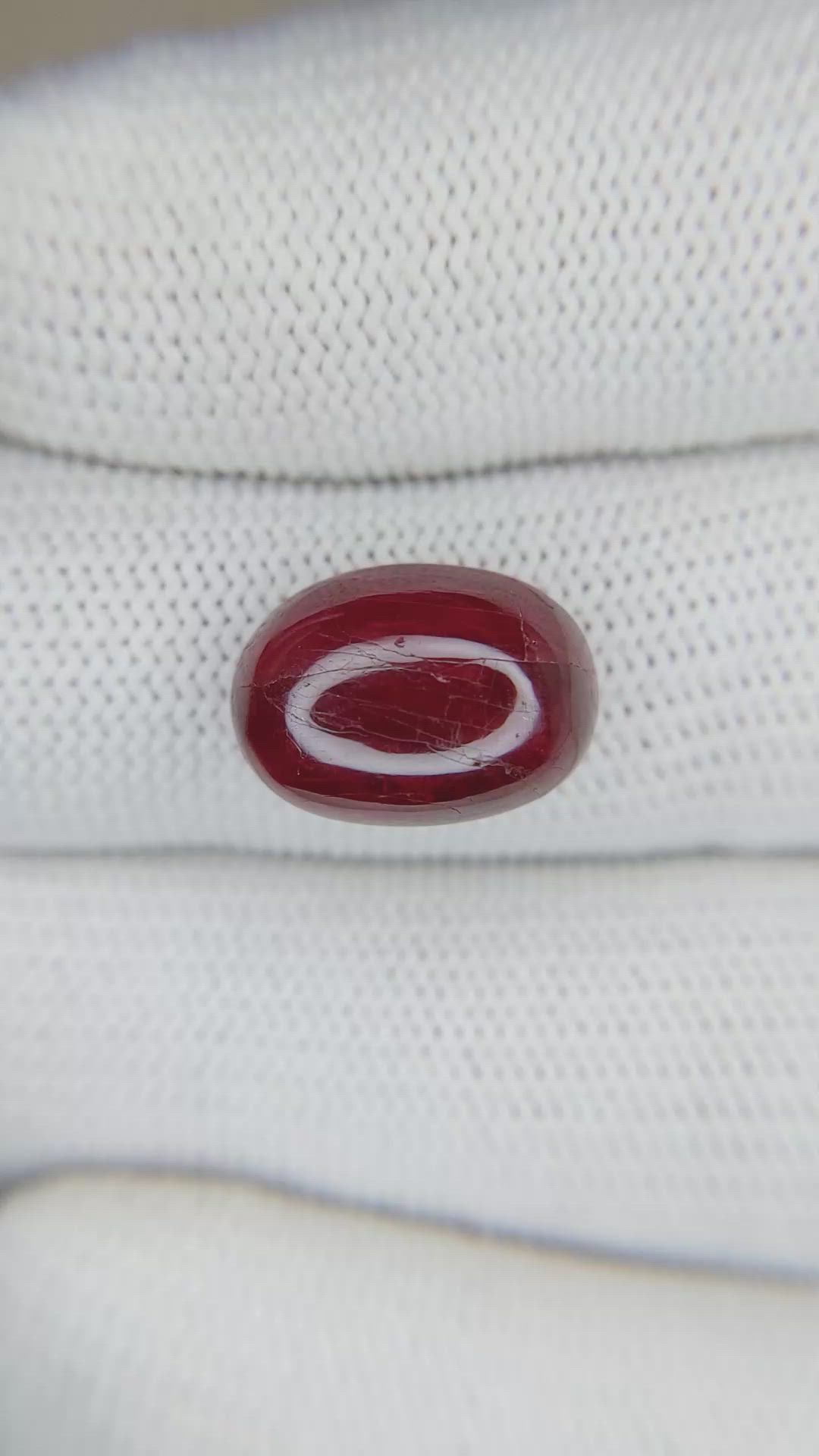
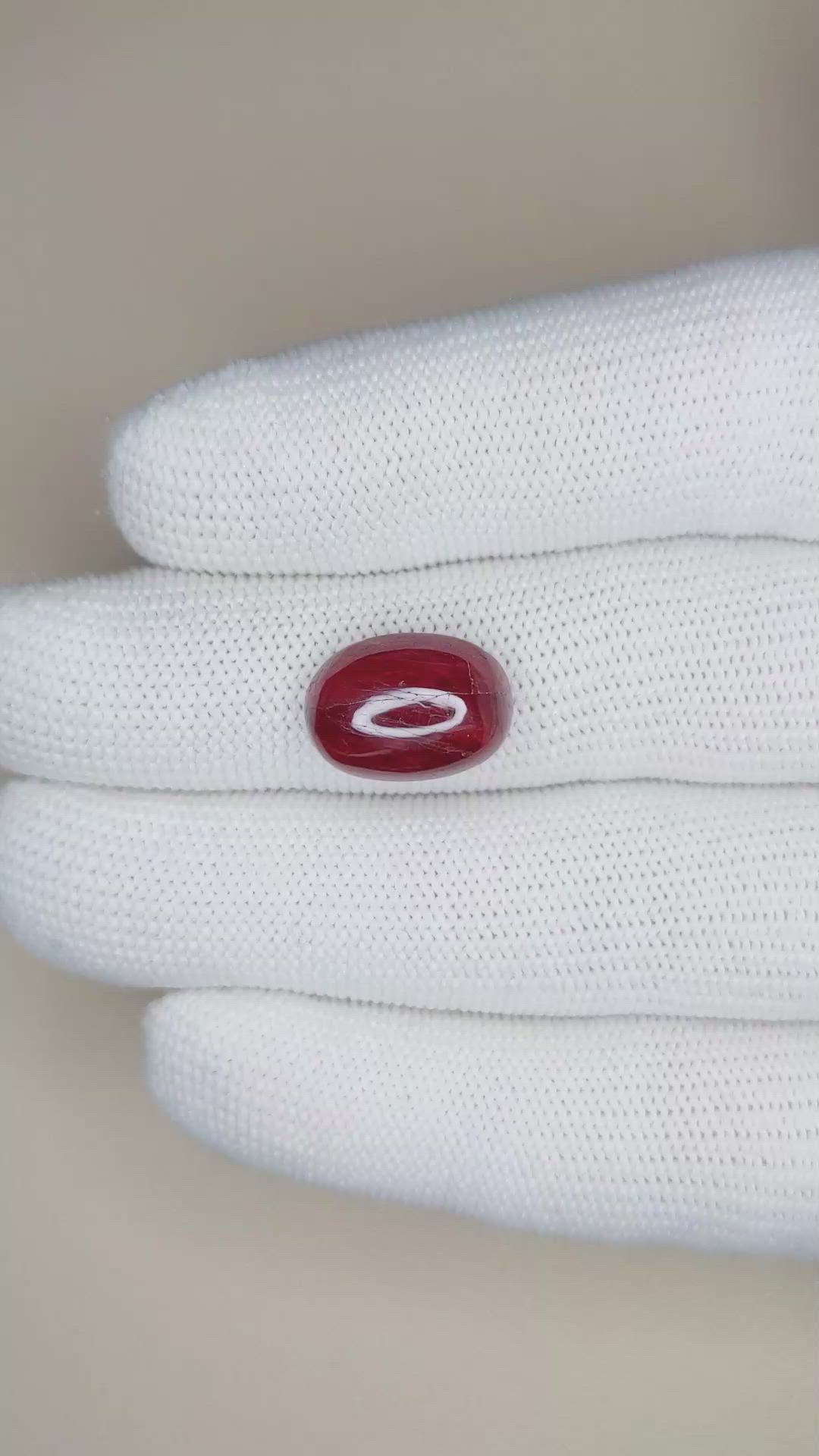
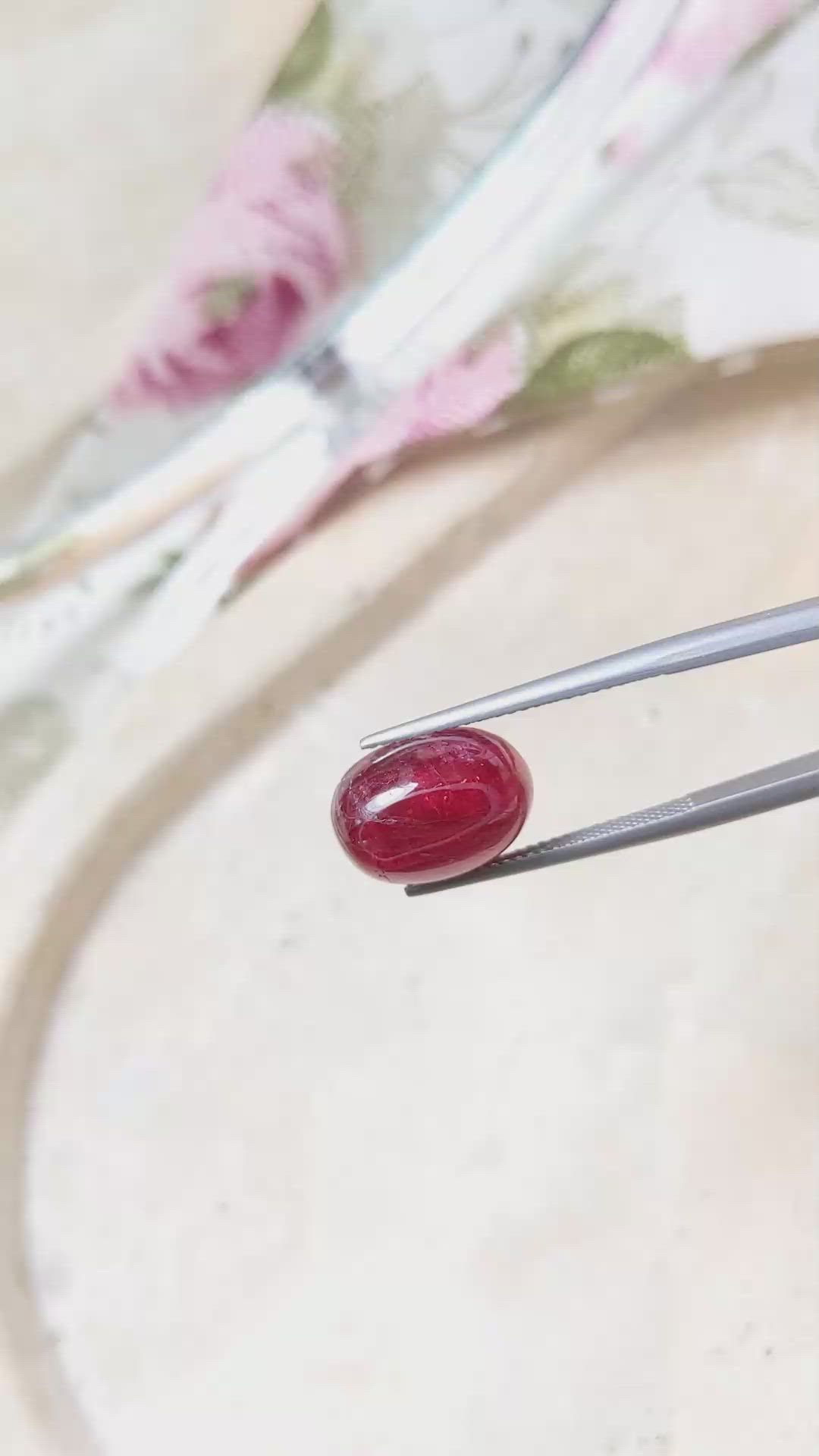
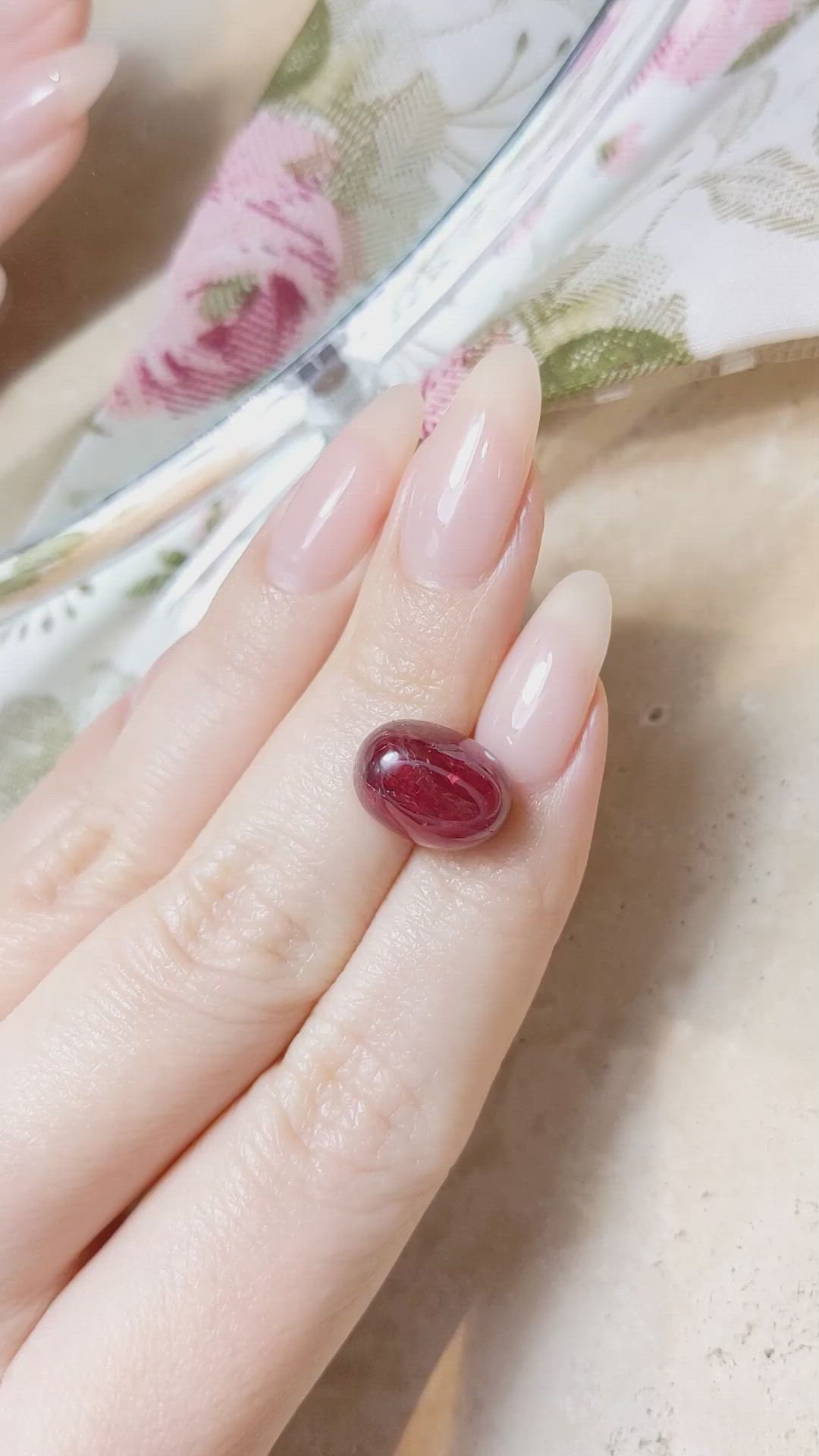
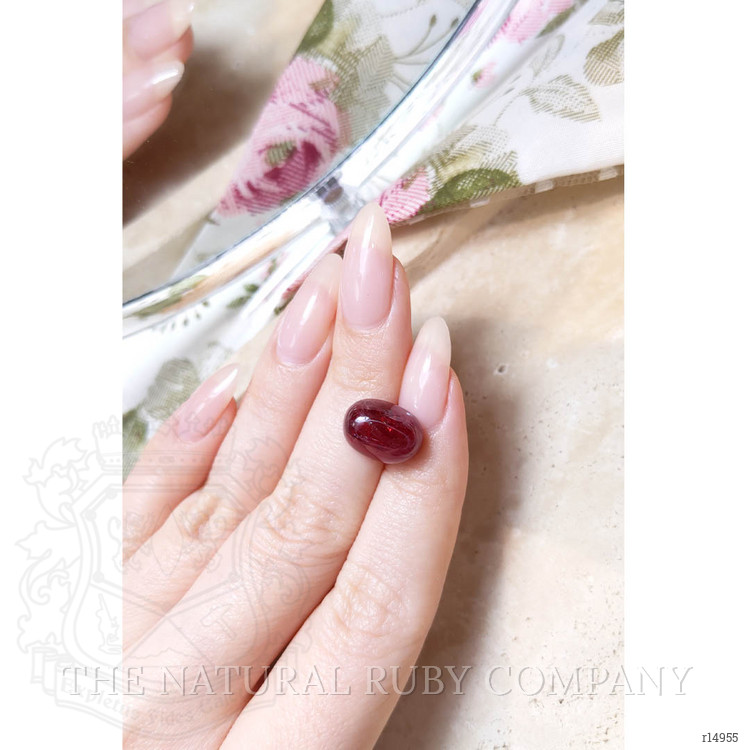

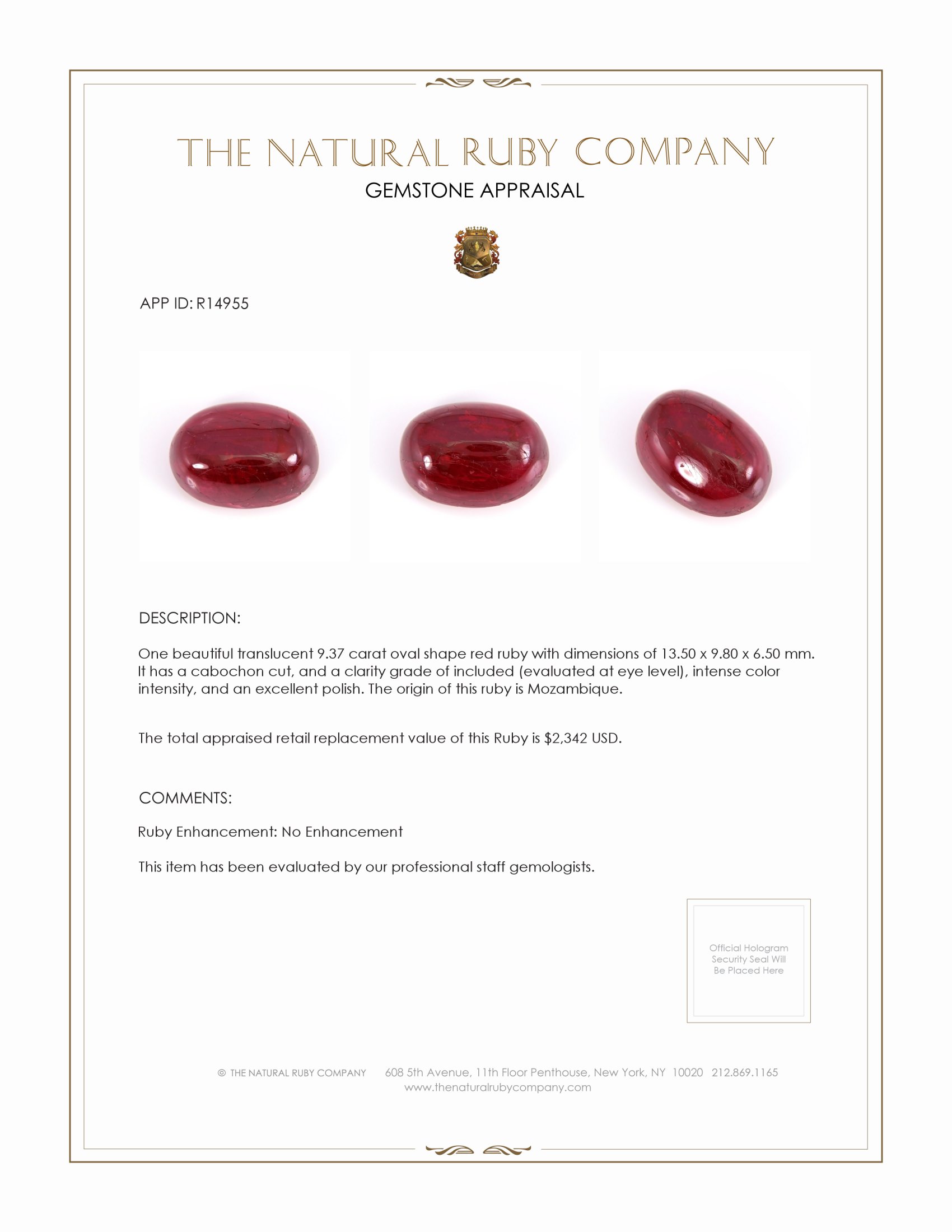
9.37 Ct. Cabochon Ruby from Mozambique
This loose stone ships by Feb 12
Item ID: | R14955 |
|---|---|
Dimensions (MM): help | Length: 13.5 Width: 9.8 Height: 6.5 |
Weight: | 9.37 Ct. |
Color: help | Red |
Color intensity: help | Intense |
Clarity: help | Included |
Shape: help | Oval |
Cut: | Cabochon |
Cutting style: | Cabochon |
Enhancements: help | No Enhancement |
Origin: help | Mozambique |
Per carat price: help | $250 |
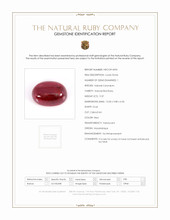
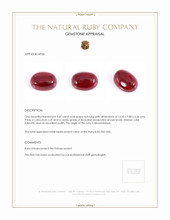
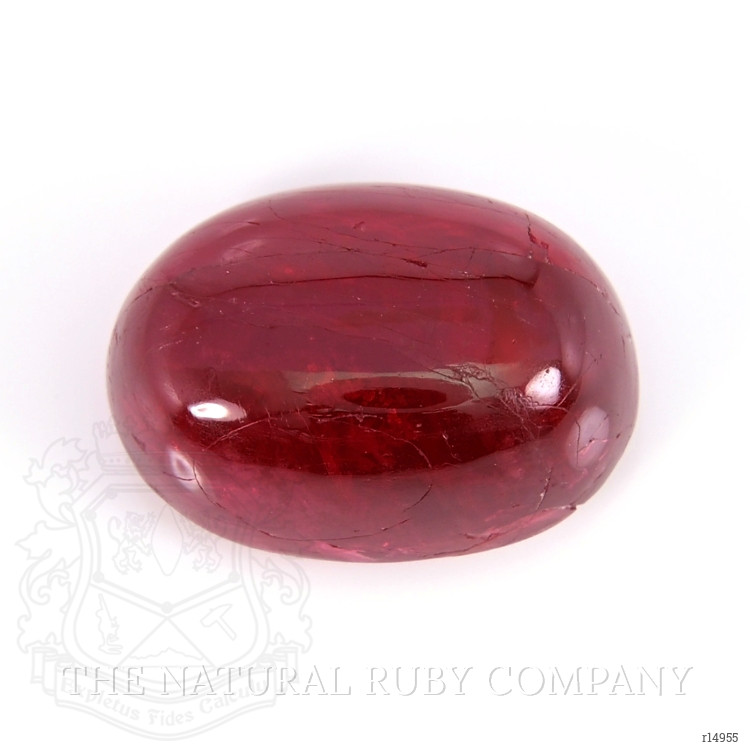
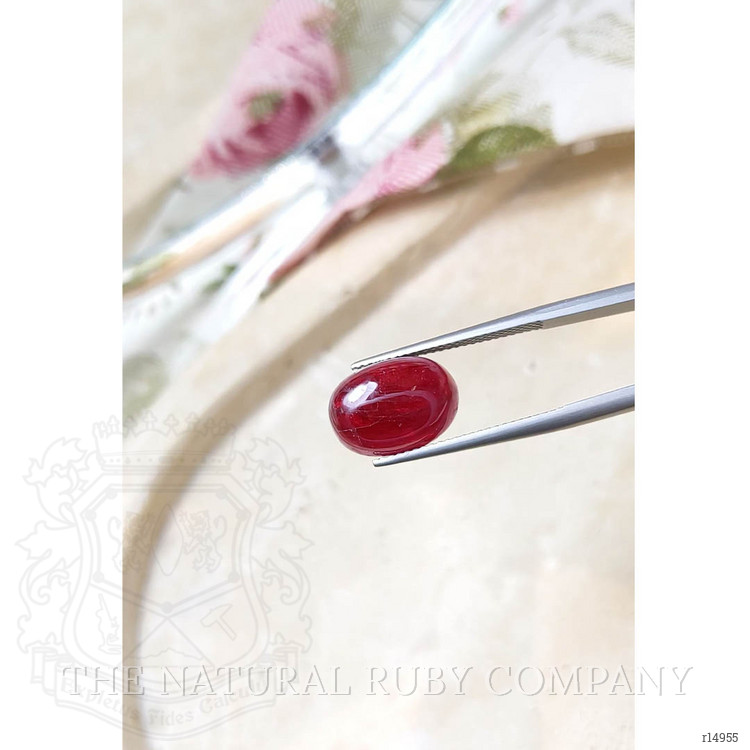
This specimen offered by The Natural Ruby Company is a translucent, oval shaped ruby weighing 9.37 carats, with finished dimensions of 13.50 x 9.80 x 6.50 millimeters. The stone is fashioned as a cabochon, presenting a smooth domed profile and continuous curvature rather than faceted planes. Color assessment yields an intense color intensity, a primary vivid red hue with slight secondary purplish undertones under mixed lighting, and an even distribution of saturation across the table and shoulders of the dome. Clarity is graded included at eye level, with visible internal features that contribute to the gem s natural character. The polish is excellent, producing strong, crisp specular highlights across the dome that attest to careful polishing technique and well controlled lapidary processes. The piece is unenhanced, it has received no heat treatment, no clarity filling, and no diffusion, and its origin is Mozambique, a locale known for producing rubies with robust color and gemological stability.
From a cutting and structural perspective the cabochon design emphasizes color depth and internal texture rather than light return through faceting. The proportions, with a height of 6.50 millimeters, provide a substantial dome that deepens perceived saturation when viewed face up, while the 13.50 by 9.80 millimeter spread maintains an elegant oval silhouette suitable for high end bespoke work. The cabochon was shaped to optimize symmetry and surface continuity, reducing angular stress points that can occur with more aggressive cutting. Internally the stone exhibits silk like veils and localized crystal inclusions typical of natural rubies, and these inclusions are observable to the unaided eye as delicate internal patterns and occasional reflective internal crystals. These features are consistent with natural formation in metamorphic or alluvial-hosted corundum from Mozambique, and they contribute to the stone s identity and provenance without compromising structural integrity. The excellent polish preserves a smooth surface free of etch marks and demonstrates meticulous final finishing, which is particularly important on domed gems where polish quality dictates the clarity of reflected highlights.
From a gemological and practical setting standpoint this ruby is classical corundum, with a refractive index in the range typical for ruby, a specific gravity near 4.00, and a hardness of 9 on the Mohs scale, which makes it robust for ring wear when properly protected. As a cabochon it benefits from protective settings, with bezel mounting recommended for daily wear to shield the girdle and dome edge, while a low chest style setting can allow maximum face up color under diffuse light. For designers seeking to showcase color depth, a closed back in the mounting can intensify the perceived saturation, and a dark metal or dark textile foil behind the stone will visually increase contrast if desired. When lighting the stone for evaluation, diffuse daylight or color corrected LED sources give the most accurate sense of hue and saturation, and oblique lighting can reveal the internal inclusions and silk that authenticate the natural origin. For clients requiring documentation, The Natural Ruby Company can assist with independent gemological reporting, and we recommend routine inspection and professional cleaning to preserve the excellent polish and surface condition. This 9.37 carat Mozambique cabochon is a rare example of strong natural color without enhancement, ideally suited for collectors and designers who value provenance, natural inclusions, and traditional lapidary craftsmanship.


