
- Earrings13
- Reports2
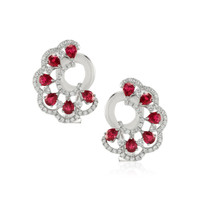
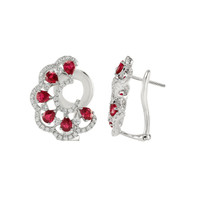
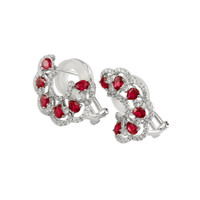
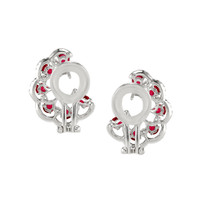
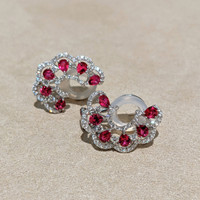
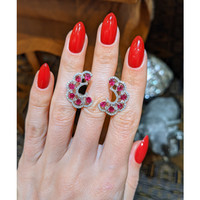
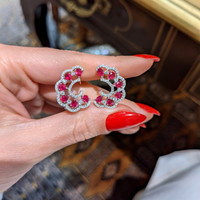


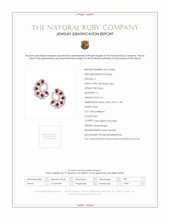
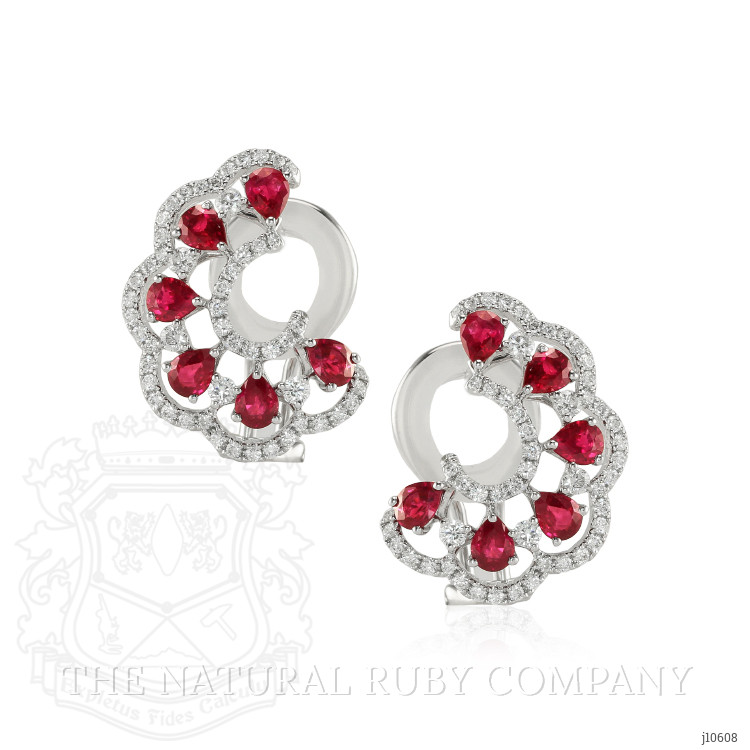
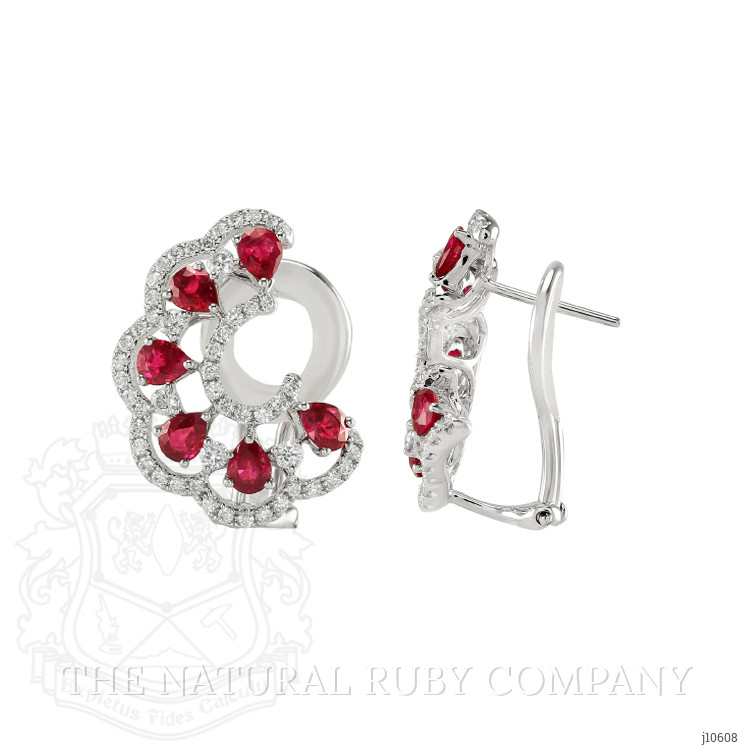
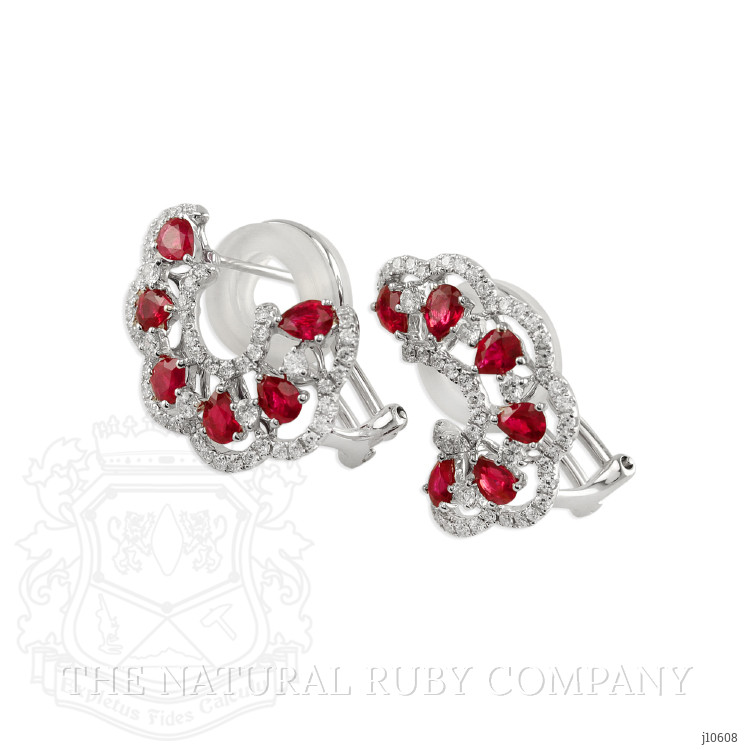
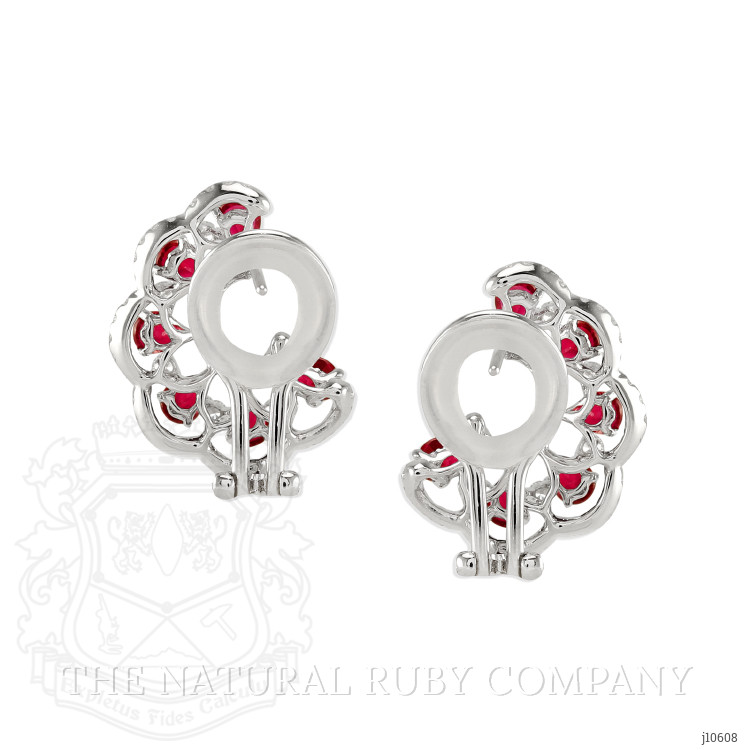
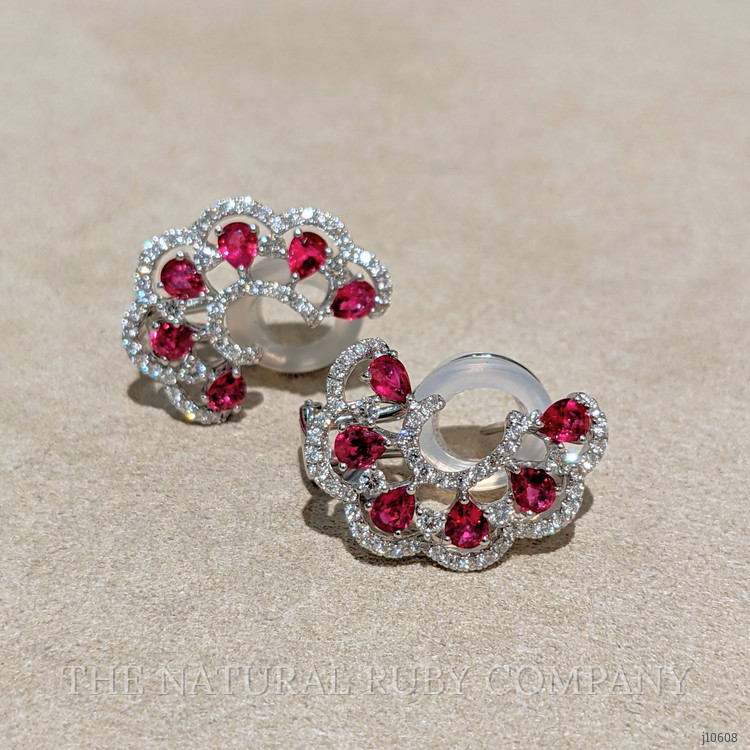
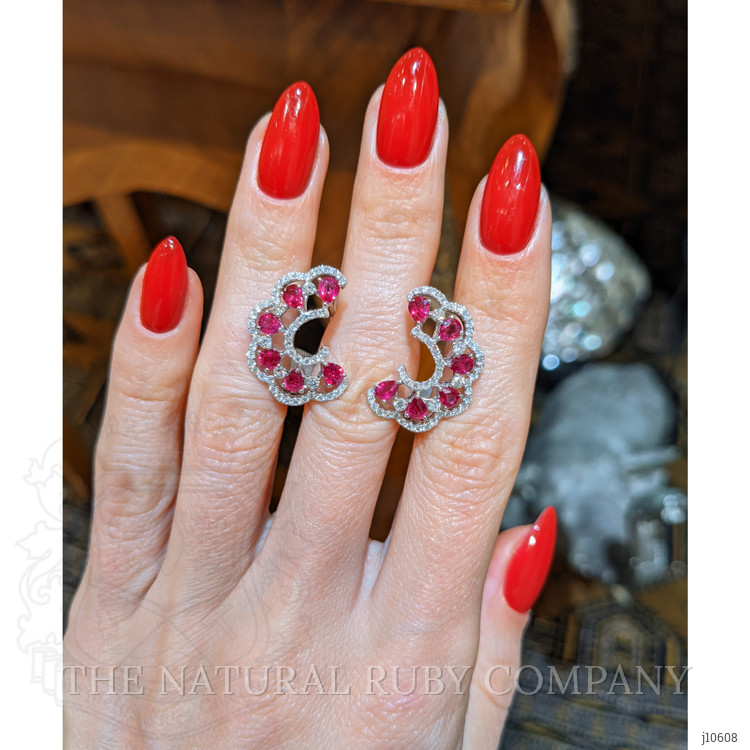
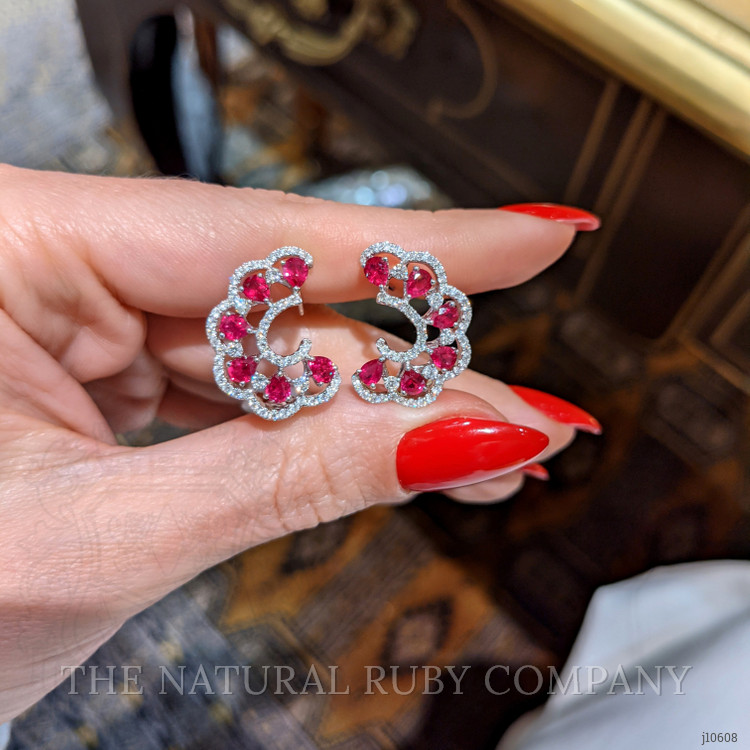

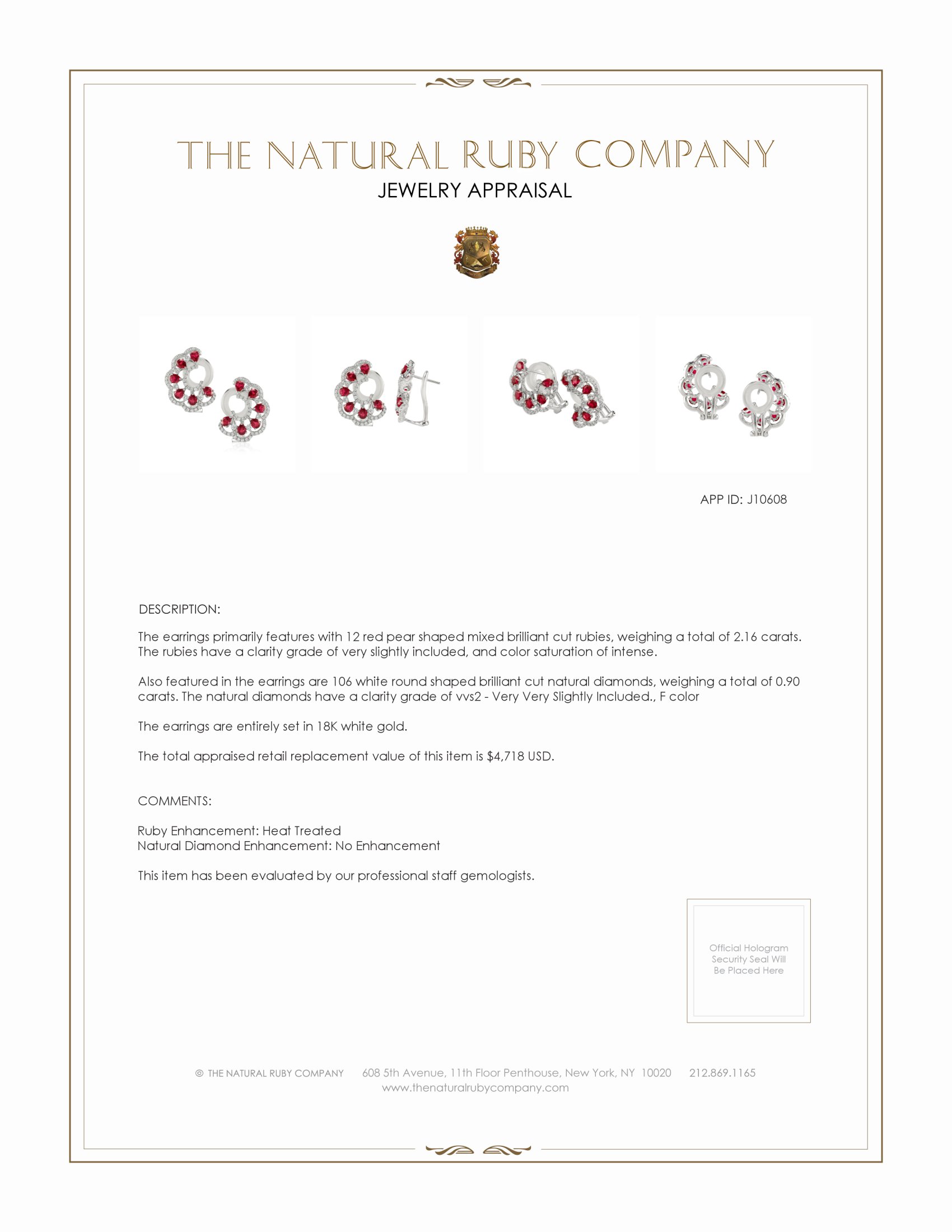
2.16 Ct.Tw.Total Carat Weight Ruby and Natural Diamond Pave Earrings, 18K White Gold
Stone type: | Ruby | Natural Diamond |
|---|---|---|
Quantity: | 12 | 106 |
Dimensions (MM): help | Length: 4 Width: 2 Height: 1.8 | Length: 1.3 Width: 1.3 Height: 1 |
Total weight: | 2.16 Ct.Tw. | 0.90 Ct.Tw. |
Color: | Red | White |
Color intensity: help | Intense | N/A |
Color grade | N/A | F |
Clarity: | Very Slightly Included | VVS2 - Very Very Slightly Included |
Shape: help | Pear | Round |
Cut: | Mixed Brilliant | Brilliant |
Cutting style: | Faceted | Faceted |
Enhancements: help | Heat Treated | No Enhancement |
Origin: help | Mozambique | Unknown |
These earrings are expertly rendered in 18K white gold, a metal choice that balances enduring strength with a warm, precious metal content, making them an excellent foundation for gemstones that deserve secure and refined settings. The design articulates a scalloped circular motif, each scallop hosting a vivid red corundum, commonly identified as ruby, set against a halo of smaller bright white accent stones. Educated buyers will recognize that the most important characteristics when evaluating the central rubies are color saturation, tone, clarity, and evidence of treatment. The most desirable rubies exhibit a pure, vivid red hue with moderate to strong saturation and medium to medium dark tone, characteristics that create the depth and presence seen in these examples. Clarity in rubies is rarely comparable to diamond clarity, because natural rubies typically contain mineral inclusions such as rutile needles and crystal cavities, sometimes referred to as silk, which can enhance the perceived color by scattering light. Responsible buyers should request a gemological report, ideally from a respected laboratory such as GIA or AGL, to confirm natural origin and to disclose any treatments, with heat treatment being common and acceptable in the trade, while glass filling requires careful disclosure because it affects long term value and care.
The accents and mounting speak to craftsmanship and to long term wearability, both critical factors for a piece intended to be passed through generations. The small white stones that frame each ruby are likely well cut melee diamonds or high quality white gem accents, chosen to provide contrast and to emphasize the rubies without overpowering them. For melee stones, an educated buyer will typically seek color in the G to H range and clarity within VS to SI ranges for the best balance of visual impact and cost efficiency. The 18K white gold setting is typically rhodium plated to achieve a bright white finish, and that plating can be refreshed periodically without affecting the underlying metal, which is important for maintenance over decades. The setting structure visible in the design distributes stress across multiple anchor points, reducing the risk of stone loss during normal wear. For buyers concerned about provenance and resale or legacy value, documentation including a detailed bill of sale, a current insurance appraisal, and any laboratory reports will materially increase confidence in the purchase, and they will also support estate planning and future sale or appraisal for heirs.
When considering these earrings as a family heirloom, there are practical and emotional reasons why they will endure and increase in significance over time. Materially, rubies are nine on the Mohs hardness scale, second only to diamond among common gemstones, which means they resist abrasion and hold polished facets well, and when set in 18K gold they are protected from impact and corrosion. Emotionally, the distinctive red color communicates passion, protection, and continuity, attributes that lend themselves naturally to passing a piece from one generation to the next. To establish heirloom status, keep thorough documentation including laboratory reports that specify origin and treatment, professional photographs that record condition, and a dated appraisal that reflects current replacement value for insurance purposes. Store the earrings in a stable environment, away from harsh chemicals and extreme temperature fluctuations, and schedule periodic inspections with a trusted jeweler who can check prongs, replate rhodium if needed, and perform ultrasonic cleaning only when gemology reports indicate no risk to filled or treated stones. For custodial transitions, consider including a written note about the provenance of the purchase and any known treatments or appraisals, because provenance and documentation often add more value to a piece than modest fluctuations in market prices. These earrings combine enduring materials, considered design, and the potential for documented provenance, which together create the conditions for a credible, treasured family heirloom that can be enjoyed now and preserved for those who come after.


Other Earrings You May Like

