
The Mariposa Effect in Emeralds: A Rare Gemstone Phenomenon
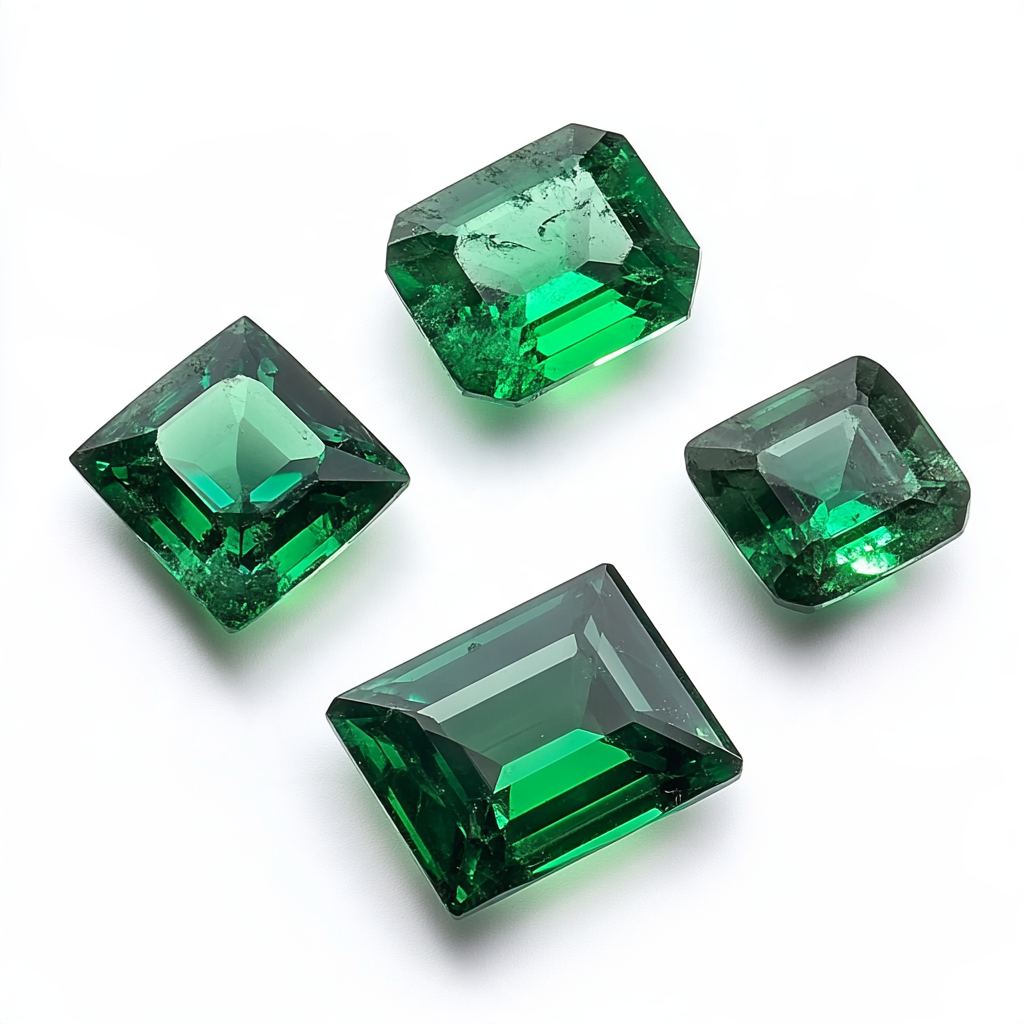
Emeralds are famous for their rich green color, fascinating inclusions, and distinctive internal character. Yet among exceptional emeralds, there is an unusual optical appearance that even many gemstone enthusiasts may never encounter: the Mariposa effect.
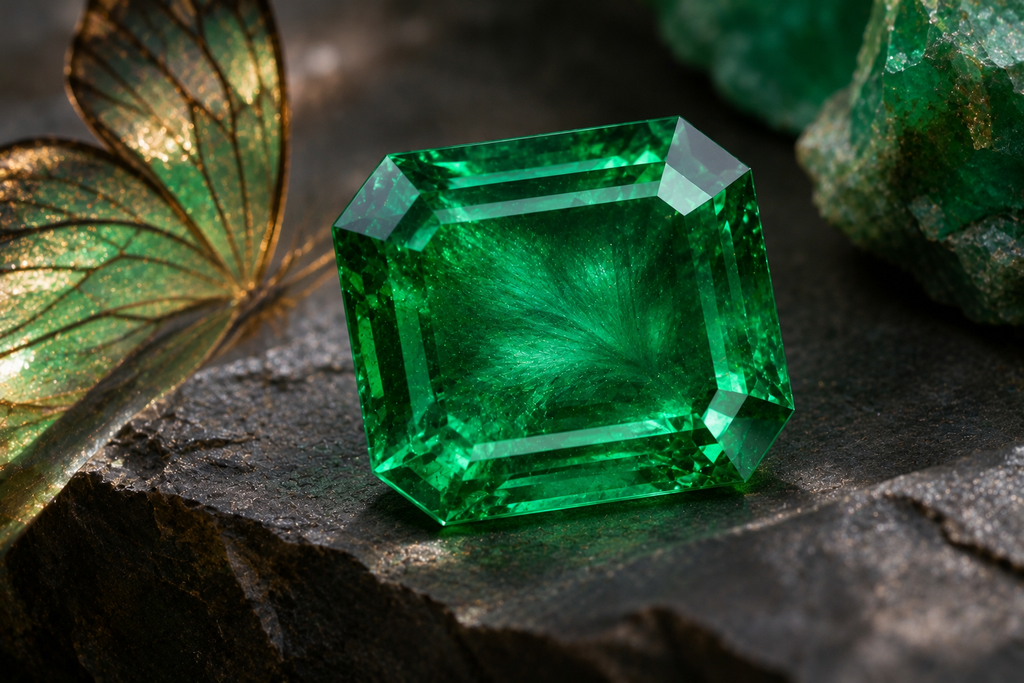
The word mariposa means “butterfly” in Spanish, an appropriate name for an effect sometimes compared to the delicate appearance of a butterfly’s wing. In gemological and trade literature, this phenomenon is closely associated with what has traditionally been called the butterfly-wing effect or gota de aceite, Spanish for “drop of oil.”
Rather than producing a sharp band of light, a star, or a dramatic change of color, the Mariposa effect gives an emerald a remarkably soft, velvety, almost fluid visual character. The appearance can be subtle, and it may become more noticeable as the gemstone is moved through the light.
Its rarity, its connection with the internal growth of emerald crystals, and its unusual beauty make the Mariposa effect one of the more fascinating phenomena found in the world of colored gemstones.
What Is the Mariposa Effect?
The Mariposa effect is a rare optical appearance observed in certain natural emeralds, particularly documented in fine Colombian material.
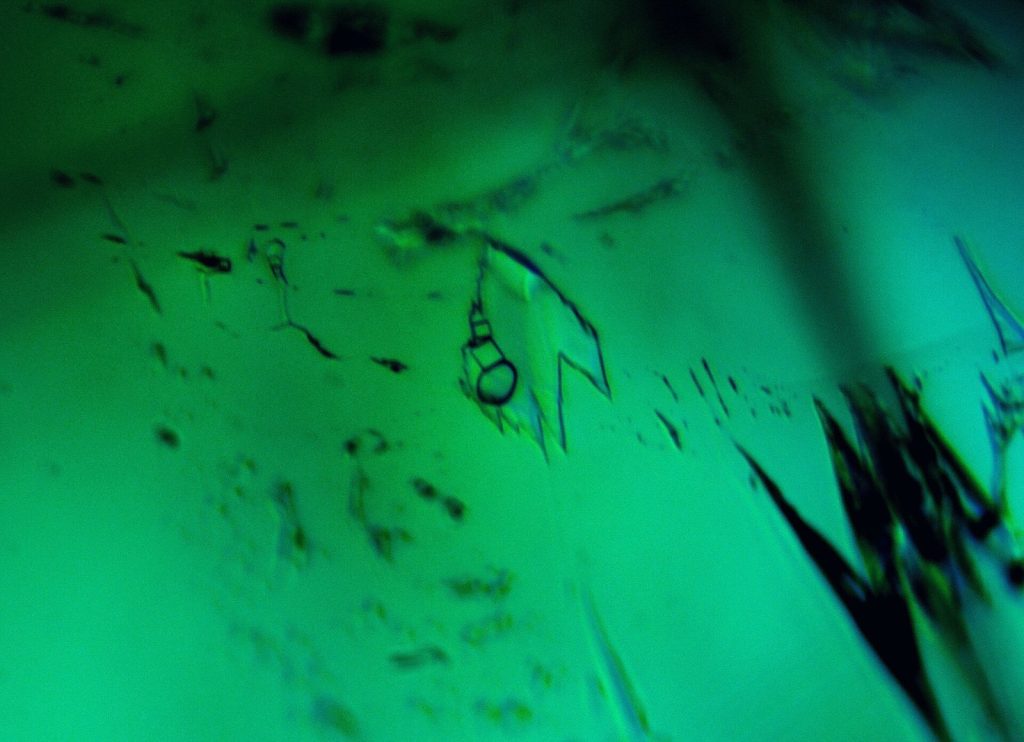
An emerald displaying this phenomenon may appear unusually soft and velvety when viewed through the stone. Instead of light returning from its internal features with sharply defined boundaries, areas of internal reflection can have softer, blurred edges. As the emerald is gently tilted or rocked, these areas can seem to shift through the gemstone, contributing to an almost liquid or gently rippling appearance.
Historically, a closely related description used by Colombian emerald dealers has been gota de aceite, meaning “drop of oil.” The name refers to the visual impression created when the stone is observed: its internal reflections can resemble the soft boundaries and fluid appearance associated with a drop of oil.
Another poetic description is the butterfly-wing effect. Modern laboratory terminology can also use Mariposa in reference to this appearance. GRS, for example, has used the designation “GRS-type Mariposa” for an emerald displaying a rare microscopic velvety appearance attributed to the butterfly-wing growth phenomenon.
Unlike a surface coating, however, the Mariposa effect belongs to the emerald’s internal optical and growth characteristics. It is not simply something applied to the outside of the gemstone.
Why Is It Called “Mariposa”?
Mariposa is the Spanish word for butterfly.
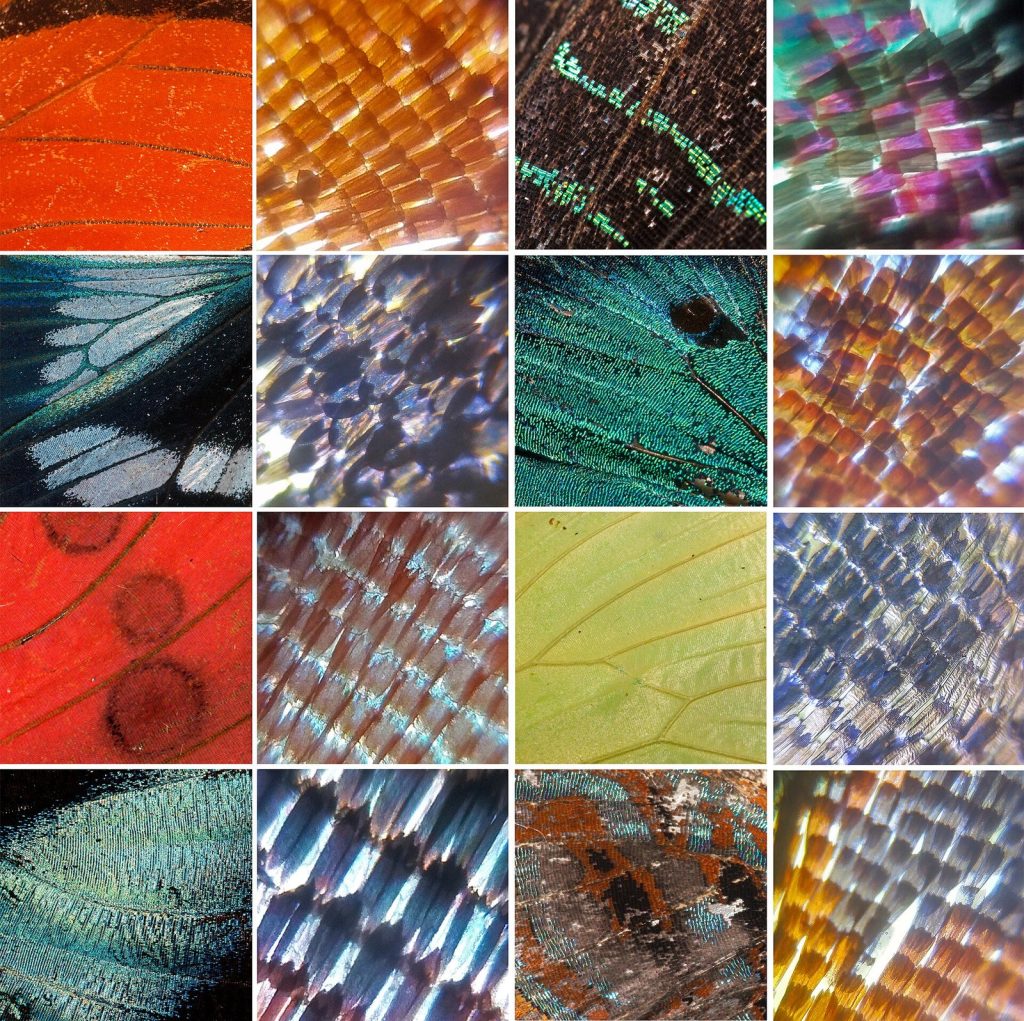
The name connects the phenomenon with the older expression butterfly-wing effect, a poetic comparison used to describe the delicate, soft visual character seen in certain emeralds.
The comparison is particularly appropriate because this is not usually a static feature that looks identical from every direction. The effect can become more apparent as the stone, observer, or light source changes position.
Like the delicate visual texture of a butterfly wing, the beauty lies in subtle variations rather than a single sharply defined feature.
What Does a Mariposa Emerald Look Like?
At first glance, a Mariposa emerald may simply appear to be a particularly beautiful green emerald.
Look more carefully, however, and its internal appearance can be different.
The stone may possess a soft, velvety quality, with areas of green seeming to flow gently into one another. Internal reflections can have diffuse rather than sharply defined edges, creating an appearance sometimes compared with oil floating on water.
Movement is important when observing the phenomenon.
When an emerald displaying the effect is gently rocked back and forth under suitable lighting, the soft zones of internal reflection can change position and appearance. This dynamic quality is one reason photographs alone may not fully communicate the phenomenon.
For an experienced observer, viewing the emerald from several angles can reveal considerably more than examining it from a single fixed position.
What Causes the Mariposa Effect?
The Mariposa effect is connected with the microscopic growth structure of the emerald crystal.
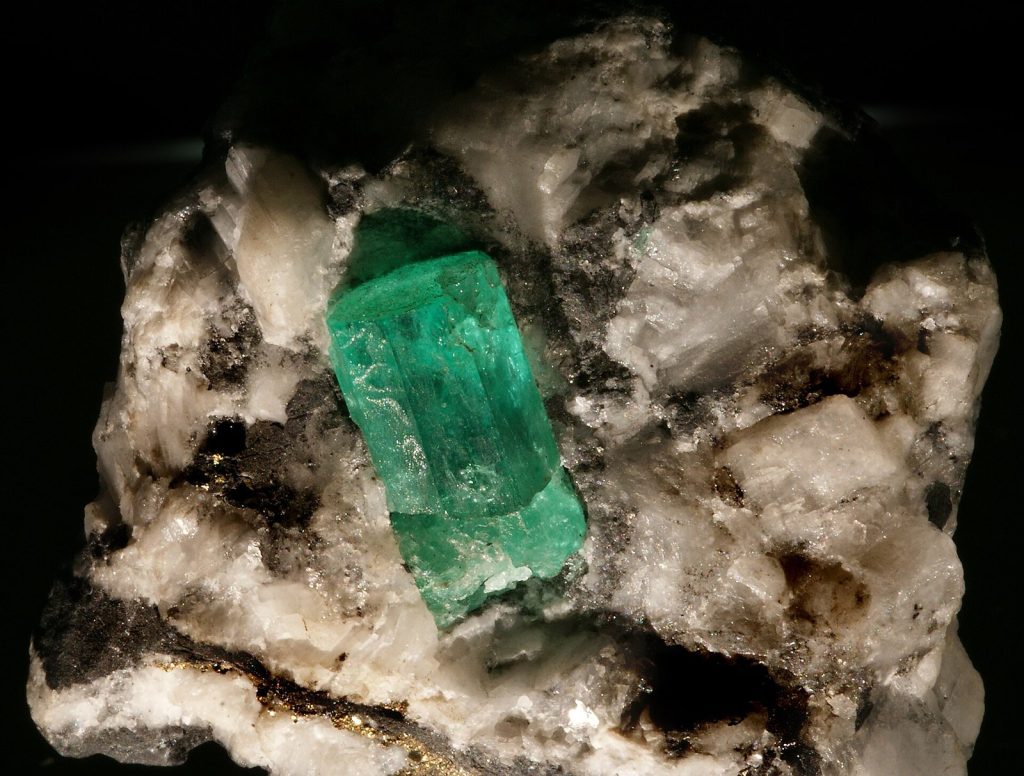
Emerald is the green variety of the mineral beryl and crystallizes in the hexagonal crystal system. During natural crystal growth, changing geological conditions can produce extremely fine structural variations within the growing emerald.
Gemological observations of emeralds displaying the gota de aceite or butterfly-wing appearance have revealed microscopic structures with hexagonal, granular, step-like, water-ripple-like, and softly defined characteristics.
Recent laboratory research has linked the appearance closely to emerald’s crystalline structure. When viewed along particular crystallographic directions, microscopic features can correspond with the hexagonal symmetry of beryl. Variations associated with crystal growth and the distribution of the elements responsible for emerald’s green color may contribute to the unusual optical appearance.
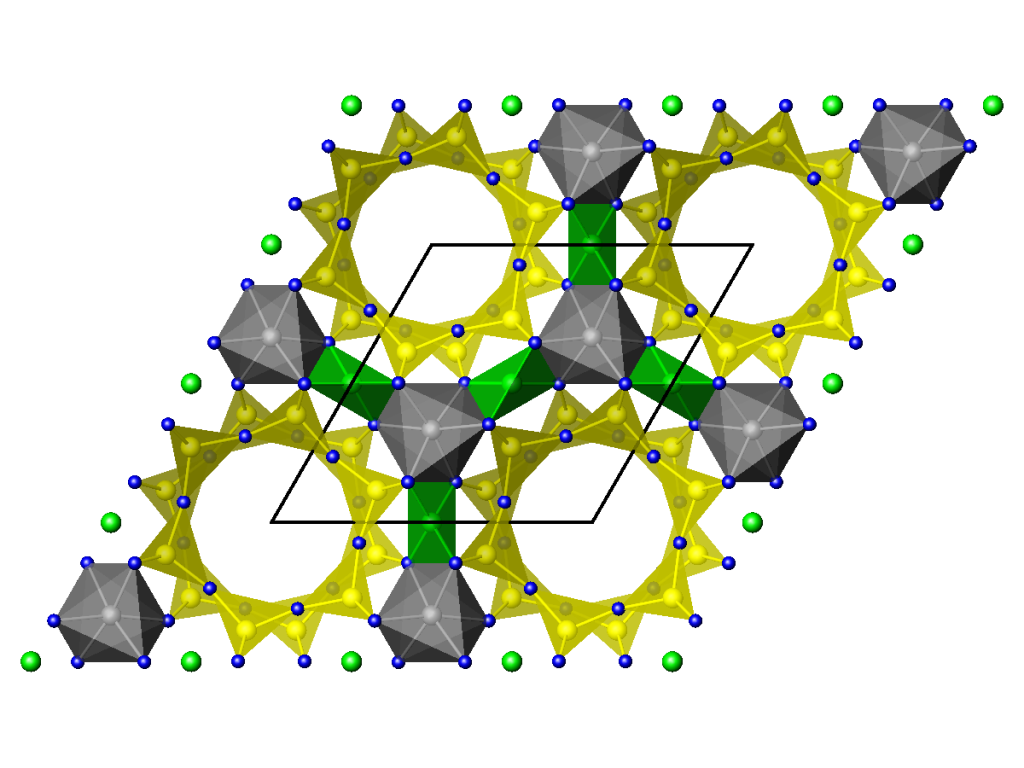
Light interacting with these extremely fine internal structures does not always behave as it would in a more visually uniform crystal. Instead, the resulting reflections can appear softened or diffused, producing the characteristic velvety appearance associated with Mariposa.
The phenomenon therefore offers more than visual beauty. It provides a fascinating glimpse into the complex conditions under which an emerald crystal developed deep within the Earth.
Mariposa and Gota de Aceite: Are They the Same?
The terms are closely connected and are sometimes used to describe the same or closely related visual phenomenon.
Gota de aceite literally translates from Spanish as “drop of oil.” The expression has reportedly been used by generations of Colombian emerald dealers to describe the unusual soft, oily or roiled appearance of certain exceptional emeralds.
Butterfly-wing effect is another name associated with the phenomenon.
Mariposa, meaning butterfly, is a more recent designation that directly reflects this butterfly-wing description. Some laboratories and members of the gemstone trade use Mariposa when referring to emeralds displaying this characteristic velvety microscopic appearance.
For consumers, however, it is important not to assume that every emerald described as fine, velvety, oily, or Colombian automatically displays a genuine Mariposa or gota de aceite phenomenon. The appearance can be subtle, and careful gemological observation is necessary.
Is the Mariposa Effect Caused by Oil Treatment?
No. The name gota de aceite, or “drop of oil,” can understandably cause confusion because emeralds are commonly associated with clarity enhancement using oils or resins.
The phenomenon itself, however, is not simply the appearance of oil used to fill fractures.
The expression describes how the emerald looks internally, not a treatment responsible for creating the phenomenon.
This distinction is especially important when discussing emeralds because clarity enhancement and natural optical characteristics are two separate subjects. An emerald can possess natural growth features responsible for a butterfly-wing or Mariposa appearance while its treatment status must be evaluated independently.
A gemological laboratory can examine an emerald for indications of clarity enhancement as well as other characteristics of the stone.
Is the Mariposa Effect Found Only in Emeralds?
The term Mariposa, in this gemological context, is associated with emerald and its distinctive butterfly-wing or gota de aceite appearance.
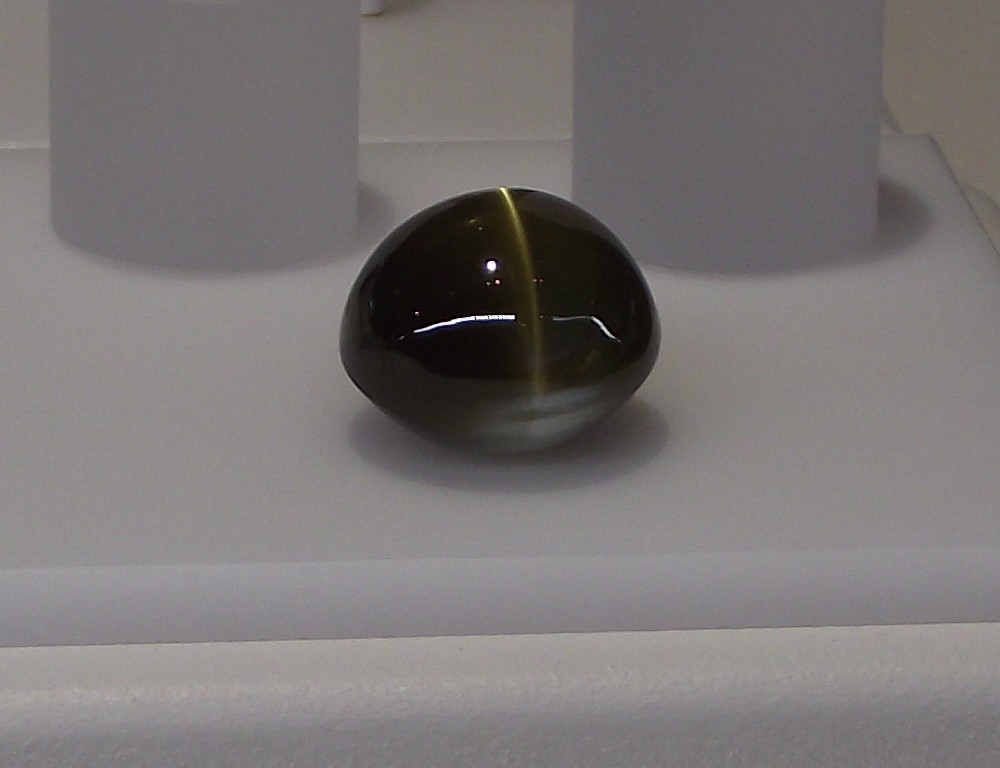
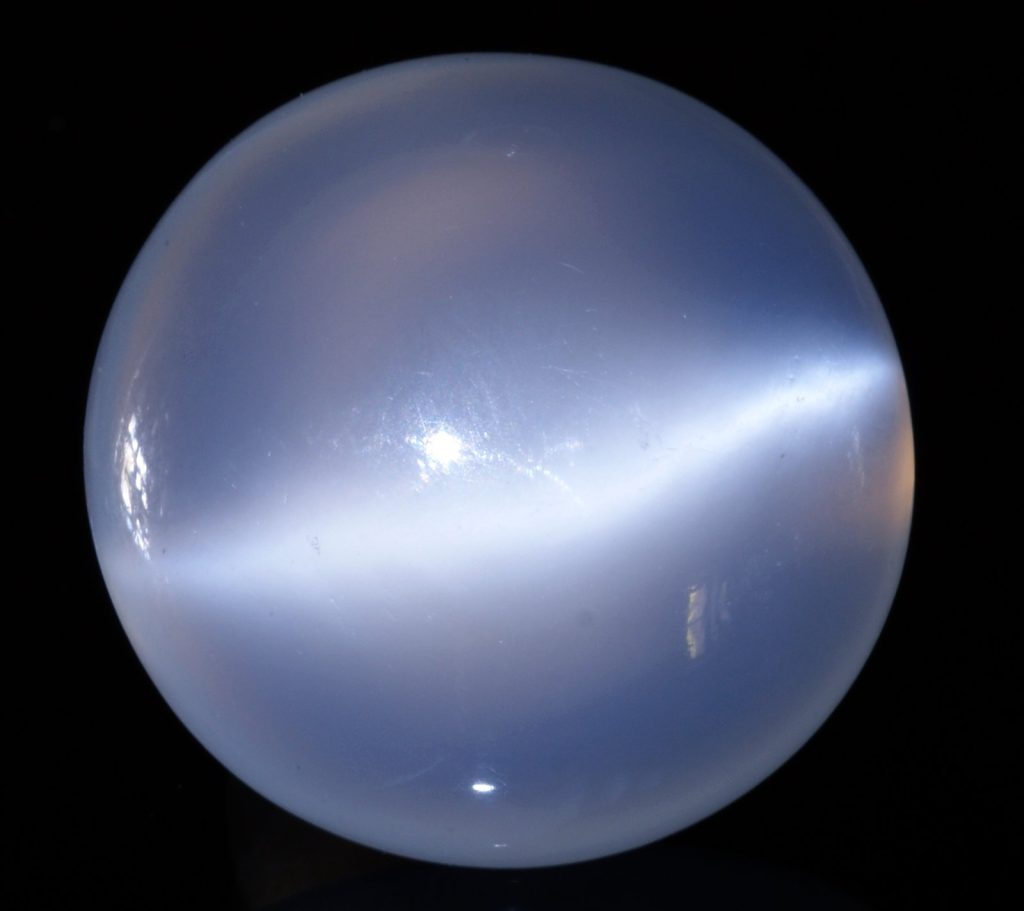
Other gemstones can display their own remarkable optical phenomena. Rubies and sapphires can show asterism, chrysoberyl can display chatoyancy, alexandrite is celebrated for color change, and some moonstones exhibit adularescence.
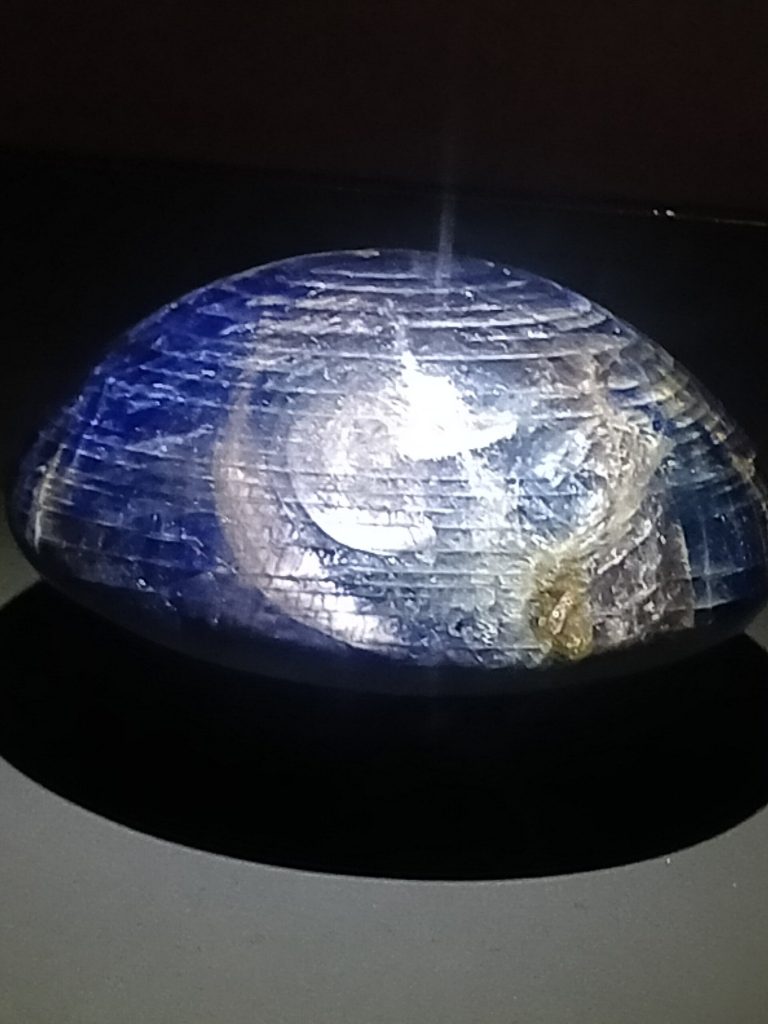
1. Star sapphire (asterism): When light shines on this blue sapphire cabochon, a soft star appears across its dome. The star comes from fine needle-like rutile inclusions lined up inside the stone. Moving the light makes the star glide across the surface.
2. Moonstone (adularescence): This moonstone shows a glowing blue-white sheen that seems to float just below the surface. It’s caused by thin, alternating layers of feldspar that scatter light, so the glow drifts across the stone as it moves.
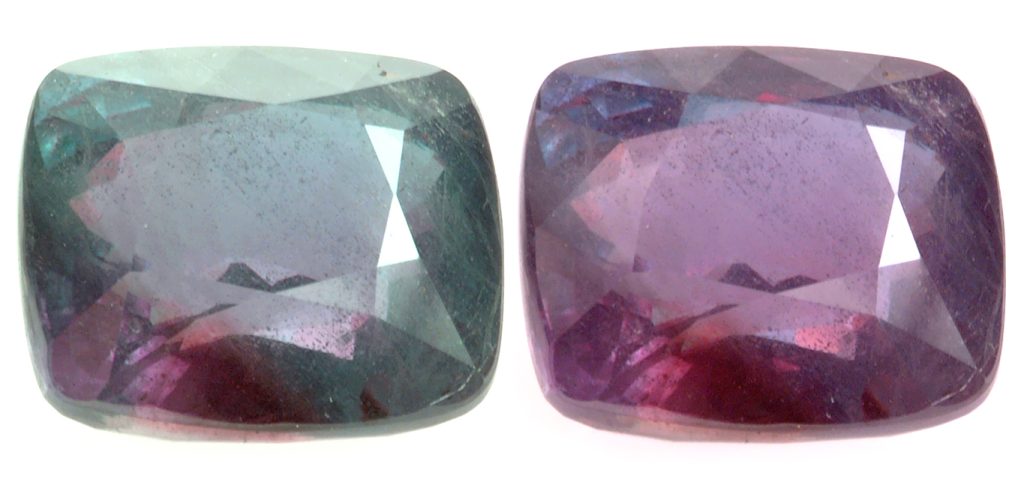
3. Alexandrite (color change): These two photos show the same alexandrite under different light. It looks bluish-green in daylight and turns purplish-red under incandescent light. This color change is what makes alexandrite one of the most sought-after gemstones.
4. Cat’s-eye chrysoberyl (chatoyancy): A single sharp band of light runs across this chrysoberyl cabochon, like the slit of a cat’s eye. Parallel silk-like inclusions reflect the light into that line, which opens and closes as the stone is turned.
Mariposa is different.
It is tied to the microscopic internal character and growth structure observed in certain emeralds rather than to the optical mechanisms responsible for those other phenomena.
This makes it particularly appropriate within the world of emeralds.
Are Mariposa Emeralds Only Found in Colombia?
The Mariposa or gota de aceite phenomenon is historically and gemologically most strongly associated with Colombian emeralds.
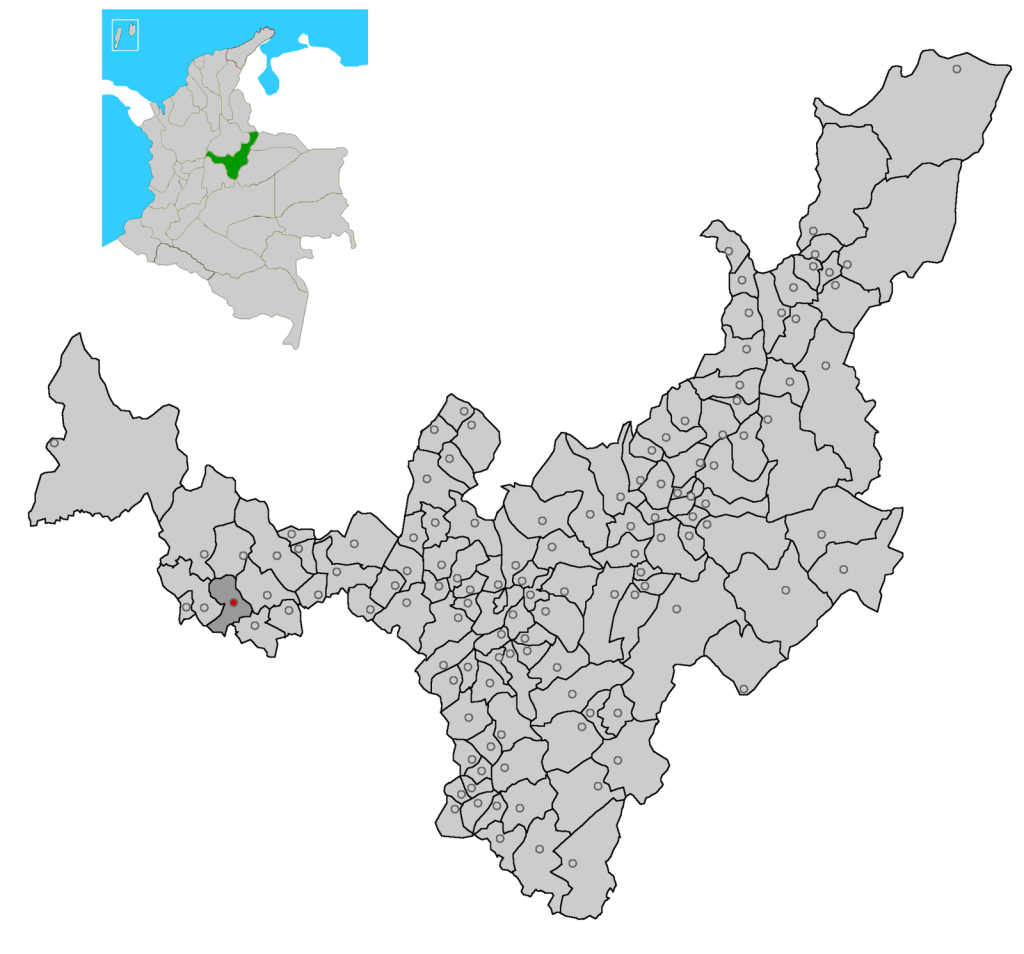
Documented examples have been reported from several Colombian deposits, including Muzo, La Pita, Coscuez, and Peñas Blancas. Colombian emeralds therefore occupy a central place in the history and study of this phenomenon.
However, a careful scientific distinction is important.
Although published observations have predominantly involved Colombian emeralds, this does not necessarily prove that the underlying phenomenon is physically impossible in emeralds from every other geological source. Gemological research continues to develop as new material is studied.
For that reason, describing Mariposa as a phenomenon famously associated with and documented in Colombian emeralds is more scientifically responsible than treating geographic origin alone as its definition.
Why Is the Mariposa Effect So Rare?
Most emeralds simply do not develop the precise microscopic growth characteristics required to create this appearance.
Natural gemstone formation depends on an extraordinary combination of geological circumstances. Temperature, pressure, available chemical elements, fluids, crystal-growth conditions, and changes occurring during formation can all influence the finished crystal.
Even emeralds originating from the same mining region can therefore look remarkably different internally.
The Mariposa effect represents an uncommon combination of crystal-growth features and optical behavior. Furthermore, the phenomenon can be subtle enough that recognizing it may require experience and careful observation.
An emerald may be beautiful without displaying Mariposa, and the presence of ordinary inclusions should not be confused with the phenomenon.
Why Can the Effect Be Difficult to See?
Mariposa is not necessarily a dramatic phenomenon that immediately announces itself.
Lighting, viewing direction, cut, transparency, and movement can all affect how clearly the appearance can be observed.
A stationary photograph may capture the emerald’s color beautifully while failing to communicate the shifting softness of its internal reflections. Video or examination of the actual gemstone while gently rocking it can sometimes reveal the effect more successfully.
Under magnification, gemologists may also examine the microscopic structures associated with the phenomenon.
This is one of the reasons Mariposa is particularly fascinating: it rewards careful observation.
Mariposa vs. Trapiche Emeralds
Mariposa should not be confused with another extraordinary feature associated with emeralds: the trapiche pattern.
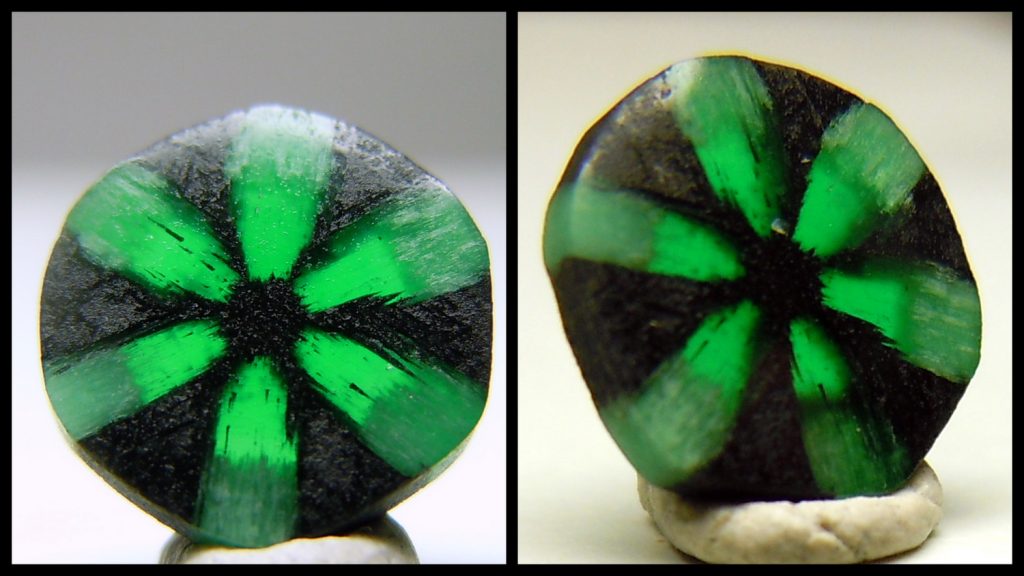
Trapiche emeralds exhibit a recognizable radial pattern, typically consisting of six sectors extending from a central area. Their distinctive appearance is related to the unusual way the crystal grew together with other material during formation.
The Mariposa effect is different.
Rather than producing a clearly visible six-rayed pattern, Mariposa creates a soft, velvety or fluid internal appearance arising from much finer structural characteristics within the emerald.
Both can tell fascinating stories about crystal growth, but visually and gemologically they are distinct phenomena.
Does the Mariposa Effect Make an Emerald More Valuable?
The presence of an unusual and attractive phenomenon can add rarity and collector interest to an emerald, particularly when the effect is well developed and occurs in an otherwise exceptional stone.
However, Mariposa alone does not determine an emerald’s value.
Emeralds are evaluated using a combination of factors including:
- color and saturation,
- transparency and clarity,
- carat weight,
- cut and proportions,
- geographic origin where reliably determined,
- type and degree of clarity enhancement,
- laboratory documentation,
- overall beauty and rarity.
A fine emerald displaying a distinct Mariposa effect may therefore be particularly interesting to collectors and connoisseurs, but each gemstone should still be evaluated individually.
Can a Gemological Laboratory Identify Mariposa?
Because the effect can be subtle and terminology is specialized, professional gemological examination is particularly valuable for an emerald represented as displaying Mariposa.
Gemologists can study the stone using microscopy and other analytical techniques to establish whether it is natural emerald, investigate its internal growth features, determine or estimate geographic origin where possible, and examine it for clarity enhancement.
Some laboratory documentation may also specifically mention an unusual butterfly-wing, gota de aceite, or Mariposa appearance when the laboratory considers the feature sufficiently distinctive.
Laboratory terminology can vary, so the exact wording appearing on a report should always be read carefully rather than assuming all laboratories use the terms in precisely the same way.
A Natural Record Hidden Inside an Emerald
One of the most captivating aspects of natural gemstones is that their beauty is not limited to color.
Every crystal is also a record of its formation.
Tiny inclusions, growth structures, color variations, healed fissures, and microscopic irregularities preserve evidence of processes that occurred while the gemstone was forming deep within the Earth.
The Mariposa effect is an exceptional example.
What appears to the eye as a soft, velvety movement of green is connected with structures created during the emerald’s natural crystal growth. Features measured on a microscopic scale can ultimately influence the way an entire faceted gemstone interacts with light.
It is a reminder that some of the most extraordinary qualities of gemstones begin with structures too small to see without magnification.
The Beauty of the Mariposa Effect
Emerald has captivated people for centuries with its unmistakable green color. Yet the Mariposa effect reveals another dimension to this celebrated gemstone.
It does not produce the sharp star of a star sapphire or the bright eye of a cat’s-eye chrysoberyl. Its beauty is quieter.
A Mariposa emerald can display softness, depth, movement, and a velvety character that changes subtly as the gemstone is viewed from different directions. Its appeal lies precisely in that subtlety.
For collectors, gemologists, and anyone fascinated by natural gemstones, the phenomenon offers a remarkable intersection of geology, crystallography, optics, rarity, and beauty.
The next time you encounter a fine emerald, look beyond its green color. Move it gently through the light and observe what happens beneath its surface. In an exceptionally rare stone, you may be looking at one of emerald’s most intriguing natural secrets—the Mariposa effect.